 The top 1,000 experienced players in pro football, graded and ranked by the B/R Scouting Department. Rookies to be graded separately.Player photos: AP Images
1000 Matt Araiza51Grade
The collegiate "Punt God" hasn't quite translated to the professional game, though Araiza has been a solid option for the Kansas City Chiefs over the last two seasons. The 2021 Ray Guy Award winner averaged 51.9 yards per punt at Texas Tech. That number has dropped to 48.2 in the NFL. He ranked 15th overall last season at 47.6 yards per punt. However, the 26-year-old's directional punting has improved. His touchbacks decreased from year to the next, while his ball placement inside the 20-yard line increased. Also, his net punting average stayed virtually the same despite a slightly lower total rate.
999 Max Brosmer51Grade
Max Brosmer started two games and appeared in six for the Minnesota Vikings. He threw for 328 yards, zero touchdowns, and four interceptions. Brosmer was accurate and made quick decisions, throwing to his first read. If he sees it quickly, the ball will be coming out on time. That said, Brosmer lacks the NFL arm strength and velocity to drive the ball. He's not a mobile quarterback either, so if pressure gets home, he is a sitting duck. He's a fine QB3 and emergency quarterback.
998 Austin Jackson51Grade
Jackson started just 14 games over the last two seasons due to lower-body injuries, including a torn meniscus in 2024 and toe injury in '25 that led Miami to restructure his deal into a one-year, prove-it arrangement. When available last season, Jackson remained volatile. He has enough size, heavy hands and initial power to jolt rushers or create first-level movement when his timing is right, but shaky body control and erratic hand usage routinely pull him out of position. He overcommits to defenders' initial paths, struggles to adjust as reps progress and lacks the recovery skill to save himself once beaten. Jackson's experience keeps him rosterable, but his recent availability and technical inconsistency place him closer to the backup tier than a dependable starting option.
997 Riley Leonard51Grade
Riley Leonard was named the starter in week 18 against the Texans. Leonard played solidly and probably better than expected against that tough, talented, and well-coached defense. Leonard completed 21 of his 34 targets for 270 yards, two touchdowns, and one interception. Like Daniel Jones, he hits the first read routinely. Both are above-average athletes who can scramble and extend plays. Leonard could be an intriguing back to watch develop under the tutelage of HC Shane Steichen, if he sustains his job in Indianapolis. He's physically limited but plays the game similarly to their established starter.
996 Cairo Santos51Grade
Chicago is one of the NFL's most difficult cities for a kicker to properly navigate. Once again, Santos didn't experience significant issues handling the Windy City in 2025. During his nine home appearances, including the postseason, the 34-year-old missed only two field goals and no extra points. However, Santos made a mistake with a short kickoff in the season-opener that created an opening for the rival Minnesota Vikings to capture a victory. Plus, the veteran kicker missed two games with a quad injury.
995 DJ Glaze51Grade
Glaze played every snap in 2025 inside a subpar Raiders environment, where a lethargic run game and frequent obvious passing situations lowered the floor of the entire offensive line. Glaze was particularly exposed in protection, where below-average movement and redirect skills led to too many glaring losses against higher-end rushers. He's a big-bodied, thick tackle with solid play-strength and flashes of halting power, but erratic pad level and strike-timing expose his chest, sap his leverage and create shaky body control. In the run game, Glaze has the dimensions and raw strength to cover up targets and create displacement in spurts, though his technique remains unrefined. His 2025 tape was mediocre. However, a more stable, offensive line-friendly structure under head coach Klint Kubiak offers some room for improved functionality this fall.
994 Myles Harden52Grade
The nickel position has become such an important piece of NFL defenses in recent years, needing not only the tools to cover but also the ability to provide resistance in the run game. Harden, a former 7th-round pick, doesn't lack any "want to," but he's a matchup opposing offenses want to target. He's susceptible to route nuances and release packages, and lacks the length to impact the catch point. His football IQ is still a work in progress, and his instincts, not just to locate where the ball is going, but to read routes in man and zone, are lacking. On top of it all, he struggles to tackle whether in space or squared up. Drafting Emmanuel McNeil-Warren should limit how often Harden sees the field.
993 Anthony Belton52Grade
Belton completed his rookie season with seven starts, six at right guard and one at right tackle. The first-year blocker also worked through an ankle injury that cost him Weeks 4-7 and Weeks 9-11 after a reaggravation. Belton opened the year as Green Bay's primary backup right tackle before kicking inside to cover injuries, where his massive, densely built frame and considerable raw power stood out. He is a blunt-force blocker with heavy hands, pocket-clearing power when uncovered and knockout force against standstill targets. Issues present themselves regarding everything attached to control. His lumbering feet, lower-half tightness, erratic footwork and overreliance on pure power make it difficult for him to adjust to post-snap movement, line up targets and sustain. Green Bay's run-first, play-action-oriented system gives him a pathway to functional development, but the profile still carries a boom-or-bust quality regardless of environment.
992 Deonte Banks52Grade
The upside was always there, but putting it all together on the field just hasn't happened for Deonte Banks. The former first-rounder is constantly playing behind, relying purely on his athletic traits, and struggles to locate the football when it's in the air. It's hard to make plays when you're constantly behind and trying to catch up, and he gives little effort in the run game. Unless something drastic happens this offseason and a puzzle piece falls into place, it's not gonna happen for Banks.
991 Andy Borregales52Grade
The Patriots once again drafted a kicker in 2025 after the Chad Ryland experiment lasted one year—with a tenure by Joey Slye sandwiched between those two points. New England chose Borregales in the sixth round of last year's draft class. Borregales experienced his share of ups and downs, with five missed field goals during the regular season and a pair of missed extra points. The rookie did must two from distance against the Denver Broncos in the postseason, though the weather conditions weren't exactly favorable.
990 Jonah Savaiinaea52Grade
Savaiinaea started all 17 games and did not miss a snap as a rookie, but his durability was the clearest positive during an uneven transition to left guard. The move inside and jump in competition exposed an underdeveloped pass-protection baseline, with persistent oversets, late hands and poor positional leverage. His mass and raw power flashed in the run game, especially on doubles and down-blocks where he could surge and displace defenders in the post. Consistency remained problematic. The first-year blocker often leaned into contact without closing space with his feet, causing overextension late in reps and an unreliable hit rate on climbs. A 2026 move to right guard at least returns him to his collegiate side, creating some optimism. However, his hand usage, leverage and footwork need major growth.
989 Ryan Rehkow52Grade
Rehkow is one of the game's ascending punters. While he's lower on this list, he has the opportunity to gradually climb the position rankings as he learns how to fully harness his immense natural talent. The 27-year-old specialist has massive kicking power. However, last season's hang time was counted among the bottom half of the league. Plus, his ball control must improve after tying for a league-high with 11 touchbacks despite 26 fewer punts than the Cleveland Browns' Corey Bojorquez.
988 Christian Harris52Grade
Harris is a tough player to evaluate heading into the 2026 season because a lingering calf injury has significantly limited his time on the field during the last two campaigns. A few years ago, he looked like a young and promising linebacker, especially in coverage, with 12 passes defended in 2022 and 2023. However, it's fair to question if the former third-round pick can get back on that trajectory after the injury.
987 Teven Jenkins52Grade
Jenkins started four games in 2025 but frequently entered via spot duty and as a sixth offensive lineman. Jenkins is a thickly built guard with solid length and play-strength, and prior years showed flashes of immense finishing power. A serviceable size/power profile worth carrying as depth still exists, but accumulated wear has diminished his movement skills and overall control. His upright playing style and clunky footwork sap his sustain, creating soft edges and quicker disengagements in the run game. Those issues also bleed into pass protection, where erratic hands expose his frame, delay his anchor and leave him vulnerable when forced to redirect. Jenkins still has enough size, physicality, versatility and power flashes to warrant a backup role, but the body control and movement decline keep him below dependable starter level.
986 TJ Sanders53Grade
Sanders didn't get much playing time as a rookie, but is expected to take on a bigger role on the Bills' defense in year two. Regardless, he'll have to make some major steps in both phases of the game, as the second-round pick was pretty underwhelming last season.
985 Jake Browning53Grade
Jake Browning was thrust into the starting lineup in relief of an injured Joe Burrow. The offenses struggled and sputtered under his helm. Browning was 1-3 as a starter and threw more interceptions (8) than touchdowns (6). Browning is a gamer who will keep swinging until the fight is over. He led the Bengals to a comeback victory with a game-winning drive in week two against the Jacksonville Jaguars. He struggled when forced off his spot and made to make plays on the move. Browning was not effective as a starter, and we saw better play from Joe Flacco after the trade. He's a serviceable back, but no more.
984 Brock Wright53Grade
The Lions clearly like having Brock Wright around, and they want to use him in a bunch of different ways for their offense, but he's mostly a tweener and injured his neck last season. He doesn't sustain blocks, he struggles to seal backside ends, and he overruns his assignments too often. He's better from an H-back alignment or on split zone runs. Wright doesn't offer much as a receiving option beyond being a check-down receiver. He looks uncomfortable running routes and catching the football, with a good grab here and there. His technique needs to improve to have any value as a blocker going forward.
983 Demetrius Knight53Grade
It's no secret that Knight struggled during his rookie season. It was expected that the second-round pick might have some issues in coverage, but he was pretty disappointing against the run. The South Carolina product's impact plays were few and far between, and he was caught out of position frequently.
982 Joey Slye53Grade
Slye has never been the most accurate kicker. He converted over 84 percent of his field-goal attempts only once in seven seasons, and that campaign included stints with three different teams. But the Titans leaned heavily on their kicker during a 2025 campaign because the team's offense failed to find a foothold. In fact, Slye's 14 attempts from beyond 50 yards were the league's second-most. Tennessee was starving for points, thus 40 percent of its kicker's total field-goal attempts had to come from long distance.
981 Andrew Vorhees53Grade
Vorhees is a sawed-off, hard-nosed blocker whose best work comes in tight quarters, especially when he can close space early, fit his hands and strain through contact. He can eliminate rushers' runway with jump sets and create quick leverage when he lands first, while showing enough awareness to find work and cover up adjacent rushers when uncovered. The limitations are physical and persistent. Vorhees lacks the athletic ability to consistently redirect, sustain or re-leverage defenders once reps extend, leaving him overextended late and vulnerable when defenders work off his frame. In pass protection, he can survive when he wins early, but isolated reps expose his lack of range, recovery skill and margin for error. His toughness, short-area leverage and awareness give him some interior depth value, but the current profile is closer to a backup guard than a dependable starter.
980 Jacob Martin53Grade
While Martin is coming off a career season where he set personal highs in tackles (39), sacks (5.5) and QB hits (18), it's hard to ignore the fact that he was a starter in just one of the eight prior years. The veteran edge defender can provide some pass-rush depth with his active hands, high motor and solid long-arm move; he just isn't an impact run defender. The majority of Martin's tackles in that phase of the game come when unblocked.
979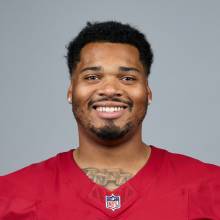 Elijah Wilkinson53Grade
Wilkinson started every game in 2025 for the first time in his nine-year career after the Atlanta Falcons lost their top two right tackles before the season began. That availability helped earn him a two-year deal with Arizona, where he enters 2026 as the presumed starter. Wilkinson is a wide-bodied, thick tackle with good length and enough run-game utility to function in a zone-heavy structure. He's at his best firing off the ball, getting on track and overrunning targets within the flow of the play. Pass protection is the problem. Wilkinson struggles to redirect, recover and shore up movement across his face, leading to too many clean losses when isolated. His size and run-game fit give him spot-starter value, but the pass-protection leakage makes him best suited for a protected role inside a play-action-based system.
978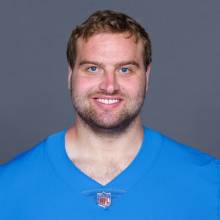 Trevor Penning54Grade
Penning converted from tackle to guard in 2025, starting six games for the New Orleans Saints before being traded to the Chargers and starting four more to close out the season. A 2022 first-round pick, Penning still has not found consistent footing with his footwork, timing or hand usage, and the move inside did not eliminate those issues. He remains a rare finisher when his landmarks and leverage align, with the raw power and demeanor to impose his will, bury defenders and create highlight-level movement in the run game. The problem is that those flashes are surrounded by too much volatility. His pass protection remains subpar because unreliable technique too often diminishes his size and power, leaving him late to contact, off balance or unable to consistently control rushers. Penning can provide emergency value because of his experience at tackle and guard, but his current profile is closer to a backup/swing option with rare finishing flashes than a dependable starter.
977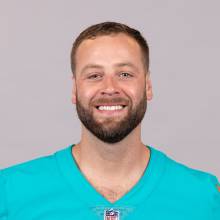 Zane Gonzalez54Grade
For the fourth straight season, Gonzalez is trying to establish himself as a long-term answer with a different team. He may have a difficult time doing so based on how well this year's competition, Riley Patterson, performed with the Dolphins last season. Still, the 31-year-old veteran brings extensive experience and didn't perform poorly with the Atlanta Falcons in 2025. Gonzalez stepped in to stabilize Atlanta's suspect kicking game, which saw the releases of Younghoe Koo and Parker Romo during the season. In nine appearances, Gonzalez converted 86.4 percent of his field-goal attempts, including 15 of 17 from 40 yards and beyond.
976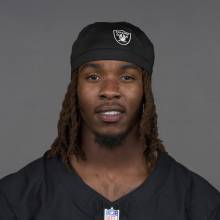 Dont'e Thornton54Grade
Dont'e Thornton is an explosive, deep-threat wide receiver with prototypical height. The Raiders' 6'5 pass catcher has the top-end speed to glide past defenders if unimpeded like a Gazelle in the jungle. Thornton was a very raw prospect coming out of Tennessee, and his rookie season proved that. He caught 10 of his 30 targets but lacked nuance as a route-runner and suffered a few drops. He is a toolsy developmental receiver who needs more work to refine his game.
975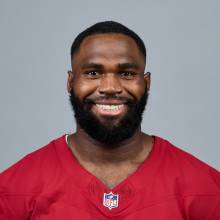 Bam Knight54Grade
Bam Knight primarily served as a kick returner before being thrown into the starting lineup. He started eight games for the Cardinals as an emergency option/backup. He averaged 3.3 yards per carry on 82 carries. Knight had some "ok" moments and runs during last season. He caught the ball as a checkdown option in the shallow areas of the field. Best suited as an RB3/4, but within the right situation, can get you out of a pinch.
974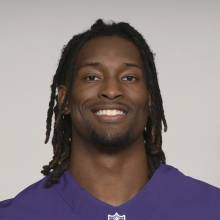 Jalyn Armour-Davis54Grade
Currently a free agent after sustaining an Achilles injury in Week 17, Armour-Davis was claimed by the Titans in August, started 10 games for them, and played the most snaps in his career. He struggled to mirror receivers, trigger quickly enough to impact the catch point, and locate the football in the air. It wasn't an easy season for the Titans' secondary, and after the injury that ended his season, Armour-Davis has a long way back if he's going to fight for a roster spot somewhere.
973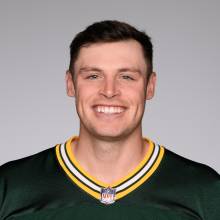 Daniel Whelan54Grade
Plenty of horsepower can be found in Whelan's right leg. The Packers' specialist led the NFL in average yards per punt during the 2025 campaign. He took a significant step forward at 51.7 yards per punt after posting a rate of 46.2 through his first two NFL seasons. The three-year pro could improve his control to a degree since his touchback rate and punts placed inside the 20-yard line decreased from the previous season.
972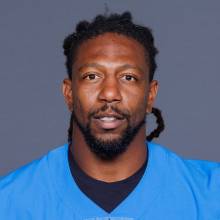 Bud Dupree54Grade
Dupree is certainly at the tail end of his career, and his days as a starter are in the rear-view mirror. But the 33-year-old can provide some value by adding depth to a defense's pass rush. Last season, he still showed a decent rip move to win around the edge and the ability to be an effective looper on stunts.
971 Braxton Jones54Grade
Jones started just four games in 2025 before an October knee injury ended his season, continuing a multi-year pattern of availability concerns after his 17-start rookie campaign. On the field, Jones trended toward a swing-tackle profile due to below-average range, recovery ability and pass-protection margin. He is not a fluid mover, and his lack of range shows up on an island, where wider alignments and speed threats can force him into early stress. His anchor is more adequate than firm, leaving him vulnerable to pocket compression when rushers can build power through his frame. Jones' best value still comes in the run game, where his size and natural play-strength allow him to cover up defenders and generate movement on down blocks, vertical doubles and downhill concepts. He is not a tackle a team wants exposed to a heavy diet of true dropback reps, but his frame, power and experience give him enough utility to function as a swing tackle or short-term stopgap.
970 Nick Allegretti54Grade
Allegretti started four games in 2025, with two early starts at right guard and two at center in Weeks 17 and 18. Allegretti displays below-average physical tools but plays with a gritty, hard-nosed style that gives him value as a combination blocker and interior jump-setter. He strains to stay attached and can keep reps alive with effort, timing and hand activity, but limited movement skills and power show up when he has to redirect against counters, finish late in reps or track smaller targets in space. Allegretti has the inside track to start at center, which would be his second full-time starting season and first at the pivot. An under-center, play-action-oriented system under coordinator David Blough gives the lineman a path toward serviceable short-term play, but his capped physical profile still fits best as a swing interior backup.
969 Quinn Ewers55Grade
Quinn Ewers stepped in and started three games for the Miami Dolphins in his rookie season. He flashed effectiveness and efficiency in the short passing game to make quick decisions when throwing to initial reads. His play declined the further downfield he targeted. Ewers showed that managing the game is in his skill set, but decision-making needs work. He threw passes into highly-trafficked areas and made them available for turnovers. Ewers will need more reps to prove that he is anything more than a backup quarterback.
968 Tyree Wilson55Grade
Wilson was undoubtedly a bust in Las Vegas, making just seven starts in three years after being a top 10 pick. He does have decent edge-setting ability against the run and some power to push the pocket as a pass-rusher, but the 2023 No. 7 overall selection has a lot of work to do to live up to the pre-draft hype. Unfortunately, Wilson's role in New Orleans is blurry, as the Saints head into this season with Chase Young, Carl Granderson and Cameron Jordan at edge.
967 Fred Johnson55Grade
Johnson started eight games in 2025 then re-signed with the Eagles on a one-year deal after providing functional swing tackle play. Johnson is a massive, heavy-handed and high-cut tackle who has improved his patience, leverage and strike-timing under previous offensive line coach Jeff Stoutland. When balanced, the 29-year-old veteran can stay inside-out, land a stiff punch, widen rushers and force them to take the long route. However, middling movement skills and lower-half stiffness leave him slow to redirect and vulnerable to being manipulated out of position on an island. In the run game, Johnson can cover up and wash down targets on angle-drive blocks, but he plays high and gets out-leveraged against movement across his face. He remains a useful spot starter but not a primary solution.
966 Neville Gallimore55Grade
Gallimore is destined to be a career-long backup at this point, but he can provide some value as an interior pass-rusher off the bench. The 6'2", 307-pound defensive tackle is pretty quick for his size to win across guards' faces, and he's coming off a career high with 3.5 sacks last season.
965 Grant Calcaterra55Grade
For a tight end who spends, roughly, 70% of his snaps on the field blocking, Grant Calcaterra isn't a functional blocker. He struggles at the point of attack, whiffs on blocks, and has never developed into an in-line option at tight end. His body type and movement lend themselves to more of a receiving tight end with decent ball skills and ability to stretch the field, and he showcased that while Dallas Goedert was injured in 2024, but hasn't earned much of a role. The Eagles not only drafted a tight end, but also brought in many different options in the offseason. Calcaterra's role going forward is in jeopardy.
964 Harrison Mevis55Grade
A quality kicker is vital when a team features the league's top-ranked scoring offense, as the Rams did last season. Matthew Stafford and Co. moved the ball. Joshua Karty failed to consistently convert, and the team released him in November. Thus, Mevis was provided with an opportunity. The 2024 undrafted free agent missed only one kick during his 12 appearances, including the postseason. Mevis could easily skyrocket up the list of kickers if he plays at a similar level for an entire season.
963 Trevin Wallace55Grade
It feels like this is going to be the make-or-break season for Wallace. During his first two seasons, he's been a liability as a run defender and has just been average in coverage, only showing the ability to click and close against check-downs. Throw in a shoulder injury that required offseason surgery, and the clock is ticking for the 2024 third-round pick.
962 Andre Szmyt55Grade
Cleveland drafted three different high-profile kickers between 2017 and '22 yet didn't find an answer at the position. The acquisition of veteran Dustin Hopkins didn't solve the issue, either. Szmyt might finally be the solution. He built a resume with the UFL's St. Louis Battlehawks before signing with the Browns late in the 2024 campaign. He beat out Hopkins during last year's training camp, then converted 24-of-27 field-goal attempts—including five of six from beyond 50 yards—and all but one extra-point attempt.
961 Robert Jones55Grade
Jones missed all of the 2025 campaign after suffering a broken bone in his neck. He then signed a one-year deal with the 49ers this offseason. His projection is largely tied to his 2024 tape with the Miami Dolphins, where he started 17 games and showed the strength, power and physicality that provided projectable upside. Jones is a thick, heavy-handed guard with a firm anchor and real people-moving ability when he catches defenders on angle-drive blocks or works downhill. He can also provide pocket-clearing force when uncovered. Movement and control are limiting factors. False steps and adequate athletic ability leave him late on backside zone tracks, while his aggressive pass-protection approach shrinks the margin for error with leverage and strike-timing. If healthy, Jones gives the 49ers useful depth, strength and physicality, but his best fit remains as a backup guard who can spot start in a downhill, quick-game/play-action structure.
960 Ozzy Trapilo55Grade
Trapilo appeared at right tackle in one game and worked as a sixth lineman over the first 11 weeks of his rookie season before starting six games at left tackle and rupturing his patellar tendon during his first postseason appearance. Trapilo looked most comfortable in his lone appearance on the right side, while his left tackle tape was predictably uneven. He repeatedly floated past his spot in protection, swung open his hips, redirected late and allowed rushers to pry open his inside shoulder. Chicago mitigated some of these issues with extensive schemed help, but his mediocre movement skills were still easy to manipulate. In the run game, Trapilo is serviceable on combination blocks, using his size and solid hand placement to cover up and wash down targets, but below average foot quickness and high pad level limited his backside cut-off range and sustain when isolated.
959 Otito Ogbonnia55Grade
Two years ago, Ogbonnia was supposed to replace Poona Ford on the Los Angeles Chargers' defensive line. However, the 2022 fifth-round pick failed to meet expectations in Los Angeles, especially as a run defender. He's a two-down player by nature, but needs to take a big step this season in Dallas.
958 Nate Thomas56Grade
Thomas made four starts at left tackle during his second professional season, while also seeing spot duty at right tackle. He displayed intriguing physical traits but unreliable execution. Thomas is a big, stout tackle with heavy hands and good in-line power, allowing him to uproot defenders when he catches them on his track during double-team feeds, angle-drive blocks and climbs. He also presents enough build-up speed to lead around the edge and help secure perimeter lanes. His technique remains robotic and raw, though. Thomas will drop his eyes at the point of attack when the picture changes, cross his feet when expanding against high-side rushes and lose cleanly when forced into recovery mode. His worst reps are glaring enough to keep him below everyday-starter level. After missing his entire rookie season with a knee injury and entering the league as an inexperienced lineman, his power profile does leave room for development.
957 Adam Butler56Grade
The best season of Butler's career came in 2024, when he was a regular starter for the first time and had his most impressive performance as a run defender to date. However, he regressed last year, and the eight-year veteran has primarily been a sub-package player throughout his NFL tenure. Butler is really effective on line games, at both setting up teammates and himself to get pressure, and can rush from multiple alignments. But he shouldn't be asked to do much more than that.
956 Ivan Pace Jr.56Grade
As a rookie three years ago, Pace gained notoriety for being an undrafted free agent who ended up starting 11 games for the Vikings. However, he's fallen off dramatically since then, with his playing time decreasing every year, getting benched around the halfway point of last season. The Cincinnati product can provide value as an off-ball blitzer, but he doesn't bring much more to the table than that as a starting linebacker.
955 Daniel Faalele56Grade
Faalele is a massive, space-eating guard who has not missed a snap over the last two seasons, giving him real dependability despite a capped profile. The 6'8", 380-pound blocker understands how to maximize his size in pass protection with short, inside-out sets that force rushers down the middle of his frame or make them take the long path. This approach can function inside a rhythmic, quick-hitting passing game, but it also creates soft, accessible edges when rushers can stress his foot-speed, force late movement or make him recover after initial contact. In the run game, Faalele walls off targets on angle-drive blocks and covers up slower-processing linebackers at the second level, but he struggles to redirect and intersect movement across his face or sustain when defenders make him adjust in space. His size, durability and ability to keep simple reps orderly give him value, but the movement limitations place a hard cap on his ceiling.
954 Ifeatu Melifonwu56Grade
The Dolphins were forced to play some defenders more than they planned, and Ifeatu Melifonwu played more snaps (527) than at any point in his career. He looks the part of a box safety/big nickel, but plays almost purely on reaction, doesn't read out plays consistently, and looks to hit more than tackle the ball carrier. He's been a backup most of his career, and while he didn't allow a ton of yards (201), he allowed 21 receptions on 22 targets.
953 Larry Borom56Grade
Borom started a career-high 11 games in 2025 during his lone season in Miami and functioned as a serviceable right tackle inside Mike McDaniel's quick-hitting passing game. Borom is a wide-bodied blocker with enough mass and anchor to survive when protected by structure and schemed help. In the run game, he can shield defenders on angle-drive blocks, but he lacks consistent displacement, hand-control and sustain. His below-average redirect skills leave little margin for error, and rushers can progressively access his edges as reps extend. Borom profiles best as a swing tackle or spot starter who can survive in a quick-game, help-oriented environment.
952 Xavier Legette56Grade
The Panthers' former first-round pick has been disappointing in his first two seasons. Xavier Legette has struggled with drops, spatial awareness on the field, and reliability. Physically, he's an impressive athlete and player, but he has not put it all together on the field.
951 Andrew Wylie56Grade
Wylie filled in for five starts at right guard during the 2025 campaign, adding to a career with 100-plus starts, valuable postseason experience and proven versatility. Wylie is a quality swing backup and spot starter at multiple positions, with his best current fit likely inside at guard. He plays with an alert, crafty approach, adequate play-strength and enough functional athletic ability to keep the offense on schedule for short stretches. His processing helps him stay in proper positional leverage relative to the intent of the play, and he generally understands how to minimize exposure. Limitations show up when he is forced into space or isolated against quicker, wider-aligned rushers who can evade his initial strike, causing him to step under himself and struggle to recover from compromised positions. He remains a useful, experienced reserve rather than a full-time answer.
950 Tyler Loop56Grade
Baltimore used a sixth-round pick to acquire Loop. Anytime an organization invests draft capital in a specialist, it means a little more. To Loop's credit, he was nearly perfect inside 50 yards, with only one missed field-goal attempt. Unfortunately, that one miscue occurred at the worst possible time since his miss cost the Ravens a postseason appearance. Still, the rookie showed enough promise where one mistake shouldn't completely outweigh a promising first season.
949 Corey Bojorquez56Grade
Bojorquez has been busy. The Browns specialist led the league last season with 91 total punts. No one else had more than 78. Cleveland's offensive ineptitude aside, Boroquez's usage rate has been extensive. In fact, the 2018 undrafted free agent is back-to-back leader in punts and total yardage. The 29-year-old can be a little erratic, though every specialist is bound to produce a few poor kicks when called upon so often. Even so, Bojorquez's total and net punting averages took notable steps back last season.
948 Benito Jones56Grade
Jones is a pure nose tackle who has impressive strength at the point of attack to reset the line of scrimmage and make tackles near the line of scrimmage occasionally. However, he isn't consistent at holding his gap and doesn't offer much as a pass-rusher.
947 Rasheed Walker56Grade
Walker already outperformed his seventh-round draft slot with extensive starting experience, including 48 starts over the last three seasons. However, his profile remains closer to a low-end starter or high-end swing tackle than a foundational blindside protector. The Green Bay Packers' condensed formations, tight-end alignments, chips and play-action-oriented structure helped manage his exposure, reducing the number of true island reps where his leverage and anchor limitations were likely to show. Walker has the size, natural strength and grip strength to control reps when he lands first meaningful contact, but his strike-timing and placement are inconsistent. He often plays upright with late, high hands, which exposes his chest, compromises his anchor and allows power to compress the pocket. In the run game, he brings physicality and strain, but inconsistent pad level and hand-placement limit how often he can generate and sustain movement at the point of attack. Walker's availability and experience give him value, especially in the right structure, but the technical volatility and pass-protection ceiling keep him below the dependable-starter tier.
946 Noah Igbinoghene56Grade
Playing the last two seasons for the Commanders as a nickel corner, Noah Igbinoghene has found a role in the NFL. He's an inconsistent player in all aspects, but it shows up more in his zone spacing and depth. His eye discipline gets him in trouble, and he doesn't anticipate route concepts or breaks. Every now and then, the former first-round pick flashes his athletic ability and man coverage upside. Igbinoghene looks the part of a big slot, and that's likely the role he'll be competing to back up for in Seattle.
945 Jaylon Moore56Grade
Moore started six games during his first season in Kansas City, seeing time at both tackle spots and serving as a sixth offensive lineman in heavy formations. Moore is a controlled, assignment-sound blocker, who generally arrives at landmarks on time and can shield defenders within the flow of the play. Those traits help offset below-average power and movement skills, which show up on solo drive/base blocks and inconsistent second-level sustain. In pass protection, he is best with schemed help that funnels rushers into his large hands and solid placement, allowing him to latch and force counters. Without help on obvious passing downs, his limited range and anchor create more volatility. Moore profiles best as a swing tackle rather than a dependable starter.
944 Dan Moore Jr.56Grade
Moore maintained his durability during his first season in Tennessee, but his on-field performance took a step back from his career-best 2024 campaign. The change in environment mattered. Moore saw a heavier pass-protection workload, less play-action support and a rookie quarterback in Cam Ward who struggled to prevent pressures from turning into sacks. Still, Moore's individual pass-protection issues were clear. His anchor was subpar against speed-to-power, and erratic footwork in his sets created routine oversets, soft inside access and quick losses. His strike-timing and hand placement also regressed, shrinking his margin for error against higher-end competition. In the run game, Moore remained a functional placement blocker with enough movement skill to track smaller targets and execute on the move, but he did not provide enough displacement or physical control to offset the pass-protection leakage. Moore's durability and prior baseline leave some room for a rebound season under a new staff, but his 2025 tape places him closer to a low-end starter than the solid mid-tier profile he previously showed.
943 Anfernee Jennings57Grade
Last season, Jennings went from being a two-year starter to a role player for the New England Patriots. He can add value to a defensive line rotation as an edge-setter against the run, but don't expect much from him as a pass-rusher. While the 2020 third-round pick starts a new chapter of his career in New Orleans this fall, it's hard to see his playing time increase significantly. The Saints have an abundance of edge defenders after trading for Tyree Wilson during the draft and re-signing Cameron Jordan in mid-June. That's in addition to starters Chase Young and Carl Granderson.
942 John FitzPatrick57Grade
The injury to Tucker Kraft put added pressure on the Packers' tight end room, particularly in the blocking department. They didn't trust Luke Musgrave to be that guy, so they turned to John FitzPatrick to take on more duties. His functionality as an in-line presence gave them more stability in the run game, and while Fitzpatrick wasn't a bulldozer, he executed blocks with timing, knew how to create a lane, and could sustain blocks to an extent. He's smart enough to find holes over the middle of the field and be a checkdown option, but it's blocking first with Fitzpatrick.
941 Dondrea Tillman57Grade
Tillman has put up solid numbers during his first two seasons, most notably with nine career sacks despite making zero starts and being the Broncos' fourth edge rusher. But he actually stands out more against the run with his ability to beat tight ends and make tackles for short gains. The 2024 undrafted free agent is more opportunistic and takes advantage of being the forgotten pass-rusher on Denver's deep defensive line.
940 Alex Forsyth57Grade
Forsyth served as a quality backup center during his first two seasons, including three starts during the 2025 campaign with one coming in the Divisional Round. Forsyth has good size for the position and wins with processing, toughness and an understanding of how to operate within himself to keep the offense on schedule. He's alert in protection, plays on time and uses efficient, strong hands to stay connected when his landmarks are clean. Below-average square power and movement skills cap his ability to create displacement, recover late or handle high-end athletes in space, but his smarts, toughness and assignment reliability keep him rostered as a dependable interior reserve.
939 Ashtyn Davis57Grade
Miami was not kind to Ashtyn Davis as he played more snaps than at any point in the last three years, started more games than ever before in his career, and had more on his plate. He looked uncomfortable in space, was caught flat-footed numerous times, and didn't read routes consistently in coverage. Davis missed too many tackles and was an unreliable safety valve for the Dolphins' defense. It was a year Davis will want to forget, in hopes that he can rebound on a different team.
938 Michael Carter57Grade
Michael Carter offers solid depth and backup running back. Last season, he started five games for the Arizona Cardinals due to numerous injuries in their backfield. Carter rushed for 333 yards and 267 receiving yards, displaying his dual-threat abilities. He brings confidence to the coaching staff in the depth behind the starter and primary backup.
937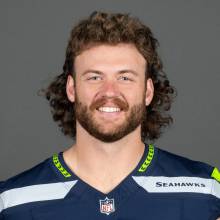 Brady Russell57Grade
Brady Russell is a dependable lead-blocking fullback who either creates a lane or seals off his defender, helping the RB get past the line of scrimmage. He is a fearless lead blocker with a tough, competitive demeanor and is always looking for work. Unfortunately, he only played 66 total offensive snaps last season, with rookie Robbie Ouzts receiving the bulk of the fullback snaps. Russell lacks the offensive versatility/usage to be more than a blocker.
936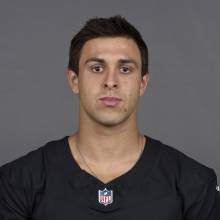 Jack Bech57Grade
Jack Bech is a compact-built receiver who plays at his own pace. His routes are run with good tempo and rarely give defensive backs indicators of his breaks. He worked well out of bunch and stack sets, where he can operate with a free release. Bech is not an overly creative playmaker after the catch, but he understands the importance of quickly transitioning to a runner. He has athletic limitations that could limit his developmental ceiling.
935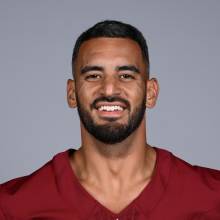 Marcus Mariota57Grade
Marcus Mariota served as the primary backup to Jayden Daniels and stepped in when he went down to injury. Mariota is still capable of using his legs to create out of structure and to carry the ball. He was 2-6 as a starter for the Commanders last season. Mariota struggled with decision-making and protecting the football. As a veteran, his processing should've been sharper; he stared down his initial reads and brought defenders into the window for interceptions. He threw 10 touchdowns to seven interceptions in 10 games. He's a functional backup but a replacement-level starter.
934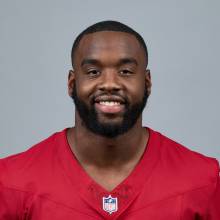 Trey Benson57Grade
Trey Benson has the frame, athleticism, and raw physical ability to make an impact as an NFL running back. Unfortunately, he's had to sit behind a good veteran back in James Conner as a rookie, and last season he was hampered by injuries. As a result, his development has stalled since he was drafted. He doesn't run with the consistent confidence or decisiveness needed to allow his raw athleticism to shine in the open field. His running style wasted time last year, with choppy, indecisive footwork when approaching a lane. The RB1 role will belong to Jeremiyah Love in Arizona for the foreseeable future; Benson has development to do.
933 Jonah Laulu57Grade
Laulu has a good combination of strength and athleticism that has allowed him to show flashes as both a run defender and a pass-rusher so far in his career. But the two-year pro lacks consistency, especially against the run, to be considered a bona fide starter in the NFL moving forward. This feels like the make-or-break campaign for Laulu, going into year three with a chance to prove himself on Las Vegas' thin defensive line.
932 Benjamin Morrison57Grade
A rookie season marred by injuries made for a tough start to Benjamin Morrison's NFL career. He looked uncomfortable and hesitant in transitions, struggled to keep up in man coverage, and had miscommunications/blown assignments in zone. He stayed healthy, started the final three games of the season, and played 100% of the snaps during that stretch, but he'll need to stay that way to grow in his second year as a pro.
931 Marquez Valdes-Scantling57Grade
Marquez Valdes-Scantling offers depth to the wide receiver room with the size/frame to play multiple positions. His speed makes him a functional deep threat, and that's the role that best utilizes his talents. He's more of a WR4/5 at this point of his career but can step in and bring a big-play threat to the offense occasionally.
930 Barrett Carter57Grade
Carter was a liability in coverage, struggling with getting his eyes in the right place to locate threats, and had major tackling issues to have a down season as a rookie. However, the Clemson product did show some promise with his instincts against the run to build off and start heading in the right direction in year two.
929 Blake Brandel57Grade
Brandel started nine games in 2025 across center, left guard and right tackle after a career-high 17 starts at left guard during the previous season. Brandel has a lean, angular build with minimal sand and an upright playing style, leaving him with below-average play-strength and limited point-of-attack power. He wins more with solid athletic ability, quickness and active hands, allowing him to refit, recover, climb to intersect backers and die slowly enough to keep the offense on schedule. His profile fits best in outside zone, play-action and protection plans, which give him guard help rather than extended isolated matchups. His narrow frame and upright posture limit his ability to command the point of attack or finish with authority, but his movement skills, dexterity and a full offseason to adapt to center give him a path to serviceable starter-level play.
928 Broderick Jones57Grade
Jones showed modest improvement in 2025 before a severe neck injury ended his season and created significant uncertainty entering the 2026 campaign. His pass protection was more controlled than prior seasons, but much of the perceived improvement was aided by Aaron Rodgers' quick trigger and Pittsburgh's heavy use of 12/13 personnel to build in help. Jones remains a solid mover with pop in his hands, but his technique remains too erratic. He will duck his head, throw his hands into contact and open quick access across his face, while his run-game sustain is inconsistent once defenders survive initial contact. The injury setback, declined fifth-year option and addition of Max Iheanachor all reflect the volatility of his status. Jones still has starter-level traits, but his current profile is an inconsistent, guardrail-dependent tackle with major health and reliability concerns.
927 Keion White57Grade
Putting White into the edge bucket doesn't quite do his skill set justice, as the Georgia Tech product has been known for his unique versatility since his college days. Also, while the 2023 second-round pick is still figuring it out against the run, he may have found a niche as an interior pass-rusher after getting traded to the 49ers halfway through last season. So, the 6'5", 290-pound defensive lineman could be making a slight position switch moving forward.
926 Gardner Minshew II57Grade
Gardner Minshew is an established backup quarterback with starting experience and leadership qualities to keep a spot on the roster. He is a gamer who has thrived on overcoming limitations and disbelief. Minshew has played a lot of football, making him a good mentor to a younger quarterback. He will serve as QB3 on the roster, with the understanding that he isn't a franchise or long-term starter. Teams that require a serviceable third quarterback, look no further than Minshew.
925 Ikem Ekwonu57Grade
Ekwonu started 15 games last season before suffering a ruptured patellar tendon during the Panthers' Wild Card loss. The injury clouds his availability for 2026 and explains the Panthers' offseason additions of Rasheed Walker and first-round pick Monroe Freeling. Even before the injury, Ekwonu's play remained too inconsistent to lock him in as a long-term answer at left tackle. His pass protection was undermined by erratic set lines, uneven positional leverage, late strike-timing and balance issues, leading to too many quick losses on the high side, through the middle and inside against counters. He has the raw power and stiff punch to jolt rushers when everything lines up properly, but he has not consistently found the landmarks or timing needed to control reps. In the run game, Ekwonu's power shows up more clearly, with the ability to generate force, dent defenders and jar linebackers upon arrival. Sustainability remains an issue. His pads rise, his balance leaks and defenders who survive his initial power can slip, push-pull or work off his frame. Ekwonu now faces a long recovery without the recent film quality to guarantee a starting job when he returns to the field.
924 Evan McPherson57Grade
McPherson experienced some highs and lows during the 2025 campaign. The 2021 fifth-round draft pick set a career-high with an 89.3 field goal percentage and booted a career-long of 63 yards. Conversely, he was under 63 percent from long distance and missed three extra points. McPherson does have a strong leg, and the Bengals won't stop pushing him to convert 50-plus yarders. However, the 27-year-old can do better since he's now missed 10 extra points during his five seasons—which includes one perfect season in 2023.
923 Walker Little57Grade
Little started 14 games in 2025 and opened the year as Jacksonville's left tackle before a Week 13 concussion allowed Cole Van Lanen to seize the job. Little returned in Week 16 and moved to right guard after Patrick Mekari's back injury, then moved back to left tackle in Jacksonville's Wild Card contest after Van Lanen went down. Little's value is built on adequacy across multiple spots than a true starter's trump card. He has enough size, play-strength and quickness to withstand power, cover up targets in the run game and intersect on the move. Although, his below-average range and inconsistent set expansion leave him stressed against wide rush alignments. He is not an overwhelming blocker and lacks the recovery profile to trust as an everyday left tackle. Even so, his versatility and baseline tools make him one of the league's better swing linemen.
922 Cam Taylor-Britt58Grade
Cam Taylor-Britt started the season as the Bengals' starter opposite DJ Turner, but struggled and was even benched at one point for the Week 7 matchup against the Steelers. He gave up four touchdowns, three in the first five weeks, and struggled to maintain consistency while sustaining a hamstring injury before Week 3. He appeared to be on the way back to starter play after riding the bench, but suffered a Lisfranc injury that ended his 2025 season. There wasn't much for the former second-round player to hang his hat on, but hoping a change of scenery could help his game.
921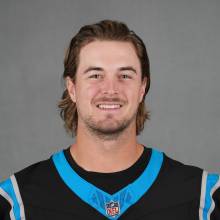 Kenny Pickett58Grade
Kenny Pickett went from a first-round pick to being a backup. He has struggled to make a lasting impact in the NFL. When the 2026 season kicks off, he will be on his fifth team in five seasons. Pickett has solid accuracy, an average arm, and decent athleticism to break contain if he feels the rush closing in. He showed anticipatory throws last season. Pickett tends to stare down his initial read too often, resulting in tighter-window throws. He's an adequate NFL quarterback but not a starter long-term.
920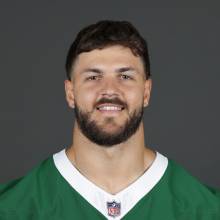 Jeremy Ruckert58Grade
Even though he's a better blocker on the move, Jeremy Ruckert saw 70% of his snaps come from an in-line alignment after the drafting of Mason Taylor. He has good initial technique, but bench presses his blocks too often and loses leverage. Ruckert does a nice job of blocking down and getting to the second level, and can get out in space to lead block. He's a reliable receiving option on underneath routes and catches the ball well, but isn't going to make guys miss or give you much after the catch. Ruckert keeps falling down the pecking order in the tight end room.
919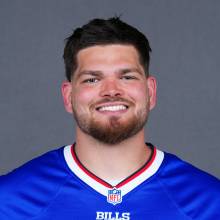 Alec Anderson58Grade
Anderson has six official starts during his first two seasons, though three came as a sixth offensive lineman, with additional work at left guard, right tackle and center. He enters 2026 slated to compete with Austin Corbett for Buffalo's left guard job. Anderson is a scrappy blocker with excellent competitive toughness, good grip strength and a knack for finding ways to finish in the run game through latch strength, leg drive and strain. His active hands help him create leverage and stay attached, but the projection is clouded by limited exposure, especially in pass protection, where he has only a few dozen meaningful true dropback reps at guard. Anderson has enough size, toughness and hand strength to contribute. Until he gets extended snaps, his best usage remains as a versatile interior backup with low-end starter upside.
918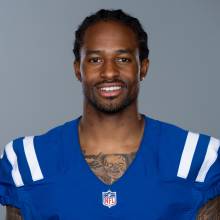 Mekhi Blackmon58Grade
Mekhi Blackmon was traded to the Colts before the start of the 2025 season after missing the 2024 season with a torn ACL, and he had to play more than expected. The results over 784 snaps were varied in a new defense, and he fell to the ground too often, giving up multiple big plays. He handled rotations to safety from corner, was a willing run defender, and flashed his physicality in man coverage throughout the season. The coverage busts and poor pursuit angles compounded an already-injured secondary, and going forward, there will be more competition in the Colts' corner room.
917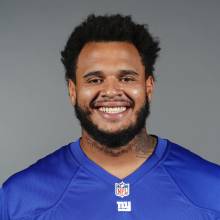 Cory Durden58Grade
After hardly seeing the field for three teams in 2023 and 2024, Durden finally found a home and carved out a role in New England last year. He especially turned heads as an interior pass-rusher during the AFC Champs' playoff run, showing some power to push the pocket. The 27-year-old still has work to do as a run defender, and it will be interesting to see if his 2025 performance was a flash in the pan or the start of an underdog story.
916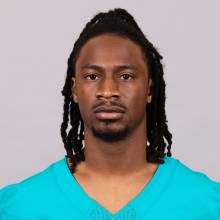 Tutu Atwell58Grade
Tute Atwell is a role-specific wide receiver. Last season, he finished with career lows in yards, targets, and receptions. The majority of his yards came from creating explosive plays down the field. Atwell has the top-end speed to pull away from defenders once he has a step or two on them. With his diminutive size/frame, he lacks a sizable catch radius and struggles to make plays through contact. He's primarily suited for snaps in three wide receiver sets, where he can be deployed from the slot.
915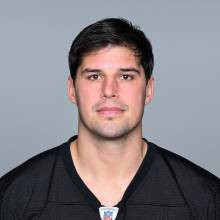 Mason Rudolph58Grade
Mason Rudolph is an established backup/bridge quarterback who can functionally run most NFL offenses. He has proven his ability to step up and provide positive play for the team. Rudolph performs well against blitz and pressure (as shown pre-snap) by processing quickly and getting the ball out quickly. His worst decisions come on plays where he has to hold the football and make plays past the initial reads. He's a veteran quarterback who can be QB2 and QB3 depending on the situation.
914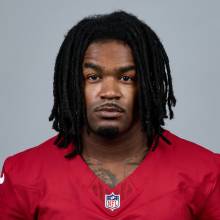 Max Melton58Grade
Max Melton hasn't planted his feet in the Cardinals' secondary, and injuries made it even harder for him to break out last season. The second-year player struggles against the run and compounds identification issues with poor pursuit angles and missed tackles. He gets beaten at the catch point too often, and while he flashes some good moments in man coverage, matching route concepts to the quarterback with his eyes is a work in progress. Melton got behind the eight ball last season and hasn't lived up to his second-round selection.
913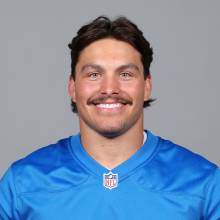 Malcolm Rodriguez58Grade
Rodriguez's career has gone in the wrong direction. The former "Hard Knocks" star went from exceeding expectations as a rookie by going from a sixth-round pick to a 15-game starter to starting no more than six games over the last three years. He has a chance to get back into the Lions' starting lineup—or at least have a bigger role—with Alex Anzalone out of the picture this season, but the Oklahoma State product has to show a lot in camp to win that job.
912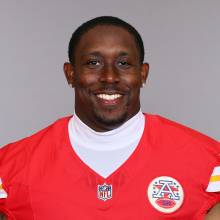 Emari Demercado58Grade
Emari Demercado is a rotational backup running back with open-field speed. He's never surpassed 45 carries or 400 rush yards in a season. He's showcased the ability to generate explosive plays with the football after being forced into action for the Cardinals because of injuries. Demercado doesn't need a lot of carries to make an impact with his speed. He's limited to a backup role and potential kick returner.
911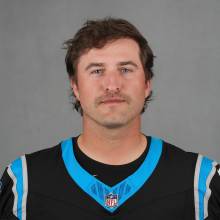 Sam Martin58Grade
The Panthers know exactly what they're getting from the 36-year-old Martin. He's steady and reliable, even if he's not particularly dynamic. While the latter might be somewhat odd to describe a punter, Martin is an experienced and veteran option who is going to execute. Last season, he wasn't counted among the top half in the league for total or net punting average. Yet, Martin finished among the Top 10 in punts placed inside the 20-yard line. At the end of the day, a player doing his job is exactly what coaches ask of him.
910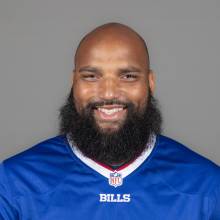 DaQuan Jones58Grade
Between injuries, approaching 35 years old and declining production in recent years, it's easy to see why the Bills weren't interested in re-signing Jones, and why he hasn't found a new team yet. The 12-year veteran just doesn't have the same impact he used to in both phases of the game, and that was really apparent in the second half of last season.
909 Harrison Butker58Grade
At one point, Butker was one of, if not the NFL's best kicker. The Chiefs specialist led the league in scoring for the 2019 season. During the '23 campaign, Butker set a career-high with 94.3 field-goal percentage and didn't miss an extra point. He's been far more erratic over the last two. The 31-year-old veteran missed nine field goals (six over 50 yards) and six extra points during those campaigns. Butker's salary-cap figure exceeds $7 million over the next three seasons. A return to form may be necessary, or the Chiefs could consider other options.
908 Dorian Williams58Grade
Williams has bounced back and forth between being a starter and a contributor off the bench during his three seasons with the Bills so far. Likely a big reason why he hasn't stayed at the top of the depth chart is that his instincts and awareness are still a work in progress, especially in coverage. With Matt Milano no longer in Buffalo, the time is now for the 2023 third-round pick to cement himself as a starter in the league. Otherwise, he'll likely be a career-long backup and special teamer.
907 Tyler Steen58Grade
Steen started all 17 games during his third career season and first as a full-time starter, providing serviceable run-game play but remaining a liability in pass protection. Philadelphia's offense took a step back around him. Healthier versions of Lane Johnson and Cam Jurgens, plus a more play-action-heavy structure, could give Steen a better runway this fall. Still, Steen's individual limitations were obvious. In the run game, he has enough initial burst, density and pop to cover up defenders and feed down linemen on double-teams, but his sustain and body control fade when defenders move across his face. Those same issues carry into protection, where unrefined footwork causes him to drift past his spot against wider alignments, opening a soft inside shoulder and delaying his transition into the anchor. Late strike-timing, slow recognition skills and modest length also give rushers easier access to his edges and adjacent gaps when he has to sort through stunts, games and blitzes. Steen's first full year as a starter leaves plenty of room for growth, especially in a friendlier offensive structure, but his 2025 tape displayed a below-average starting guard.
906 Ja'Tavion Sanders58Grade
While he battled through injuries last season, the results on the field for Ja'Tavion Sanders were underwhelming at best. He was a yards-after-catch player in college and during his rookie season, but he became more of a possession tight end and saw his yards after catch per reception drop from 5.7 to 2.9. He watched Mitchell Evans become more valuable to the offense, and his role in the offense shrank until he missed the final three games of the season due to injury. The road back to relevance is a long one for Sanders.
905 Cameron Thomas58Grade
While Thomas is a depth player at this point in his career, the four-year pro has a decently well-rounded skill set. He can push the pocket and is solid at working the hands as a pass-rusher, and he has some edge-setting ability against the run. The 2022 third-round pick just doesn't bring enough to the table to see him making a big jump moving forward.
904 Jared Wilson58Grade
Wilson moved from center to left guard during his rookie season and finished the campaign with 13 starts, while also working through a high-ankle sprain and concussion. Wilson was a twitched-up, light-in-the-pants interior blocker with clear movement talent but an undeveloped skill set. His quickness showed up climbing to intersect linebackers and redirecting to mirror defenders in space, giving him flashes that few centers in this range can match. The problem was everything attached to play-strength, timing and processing. Wilson's erratic hands and footwork exposed his frame, allowing defenders to take ground, while his late recognition left him slow to pass off or pick up basic stunts and twists. A move back to his natural position over the ball should give him more combination-block opportunities and fewer isolated matchups, creating a cleaner path to accentuate his athletic ability and quickness.
903 Alex Palczewski58Grade
Palczewski has taken a notable path from 64-game starter at Illinois to undrafted free agent to useful Broncos reserve, filling in at multiple spots over the last two seasons, including 10 starts at left guard in 2025. Palczewski is densely built with efficient footwork and good hand usage, doing a nice job staying inside-out and centered through contact to latch, steer and play firm. His lower-half stiffness and robotic style cap his recovery range, leaving him late to redirect when defenders access his edges or bypass his initial punch. He is not overly dynamic or powerful, but the technique, toughness and positional flexibility give him functional depth value. His 2025 tape had shades of a poor man's David Edwards, in that he wins similarly with density, efficient feet, hand usage and centered contact, making him a useful developmental reserve.
902 Cameron Dicker58Grade
At 26 years old, Dicker is as steady as any NFL kicker. Through four seasons, he's the league's career leader in field goal percentage at 93.5. Technically, last year was his "worst" after converting only 92.7 percent—which still ranked second among kickers with at least 30 attempts. Since joining the Chargers, the 2022 undrafted free agent missed only three field-goal attempts inside 50 yards. Dicker isn't used in long distances as often as some other kickers. The 2024 campaign is the only where he tried 10 or more attempts from deep. Consistency within his short game is his superpower.
901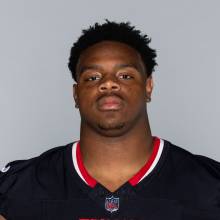 Aireontae Ersery58Grade
Ersery started 16 games as a rookie with uneven results, flashing enough size, power and physicality to project growth, while still looking like a tackle who needs protection structure to function cleanly. His dense build, heavy hands and competitive demeanor showed up when his timing and placement were right, allowing him to anchor on command, jolt rushers and create movement in the run game. He also offered useful bursts on the move, particularly leading around the edge and clearing lanes off his backside. The problem stemmed from instability when isolated. Ersery's erratic footwork, inconsistent strike-timing and shaky contact balance led to glaring losses against both speed and power, especially versus quality edge-rushing competition. Houston's extensive schematic help in the playoffs—chips, tighter formations and more confined pass-protection environments—provided the clearest template for how to maximize him early. Ersery has the mass, play-strength and temperament to emerge as a functional starter, but his hand usage and recovery profile must improve before he can be trusted on a heavy diet of true island reps.
900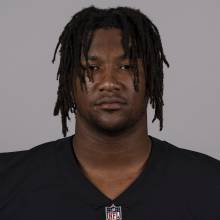 Brandon Dorlus58Grade
Dorlus had some promising moments in his second season and first with significant playing time, showing off some quickness to win around the edges of interior offensive linemen in both phases of the game. He also notched 8.5 sacks, though a lot of those were more opportunistic. Additionally, the 2024 fourth-round pick is too reliant on working around blocks in the running game. That's what holding him back from being a long-term starting defensive tackle in Atlanta heading into a pivotal year three.
899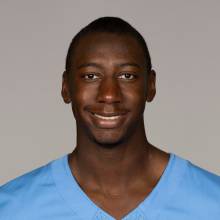 Joshua Williams58Grade
Joshua Williams certainly looks the part of an NFL corner, but has settled as a true backup and only played 17 snaps in 2025. He's a physical player who wants to get his hands on in man coverage, but his feet struggle to stay under him, and he will grab too often. Williams communicates well in zone coverage and typically plays with good spacing. A willing run defender and tackler, his angles to the football can be improved. Williams hasn't put the talent together on the field to this point, and he'll be looking to do that in Tennessee this year.
898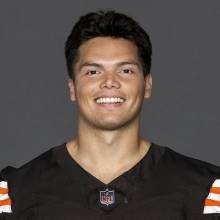 Dillon Gabriel59Grade
Dillon Gabriel is an undersized and physically limited quarterback. His game is built on timing and accuracy. He struggled to connect on deep passes last season and was eventually benched for Shedeur Sanders. Gabriel is a quarterback who needs a robust roster to help elevate his game. With underwhelming arm talent and size, Gabriel doesn't project to be a long-term starter in the NFL.
897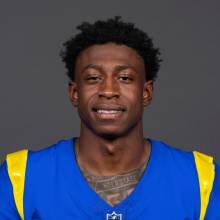 Emmanuel Forbes Jr.59Grade
Emmanuel Forbes is a roulette wheel playing corner in the NFL; you never know what the dice is going to land on, and it might be fun to bet on the outcome. For a guy who got beaten down the field at an alarming clip with an exceptionally high rate of missed tackles, he took the ball away three times and added 18(!) PBUs in 2025. With the range of outcomes seemingly endless for Forbes during any given game, he's a frustrating player to watch. There's a bunch of raw talent in his thin, wiry frame, but the mental lapses, poor angles, and bad plays make him a better backup than an NFL starter.
896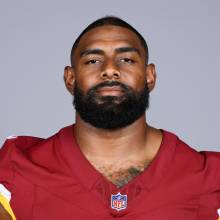 Jeremy McNichols59Grade
Jeremy McNichols is a dual-purpose running back who excels in his role off the bench. McNichols is a trusted 3rd down RB because of his pass protection and pass-catching ability. He will help change the pace and give the defense a different running style. He does run hard and behind his pads. The 30-year-old back's prime is behind him, but he can sub in and make a few plays a game.
895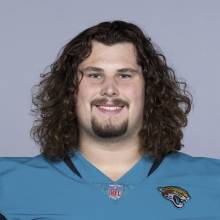 Jonah Monheim59Grade
Monheim was chosen in the seventh round of the 2025 draft and started two games as a rookie while also filling in during several short stints. Monheim is a severely undersized center with good movement skills, play-speed and an urgent, alert style. He understands the intent of concepts, provides timely help when uncovered and has the quickness to overtake combinations or climb and intersect linebackers. In protection, Monheim uses independent strikes to disrupt rush-timing and help offset his lack of length, but his narrow frame and middling power leave him vulnerable to compression when isolated. He faces an uphill battle protecting his edges and holding ground against NFL defensive tackles. Even so, his movement skills, processing and versatility give him useful pivot depth with spot-start potential, especially if flanked by powerful guards.
894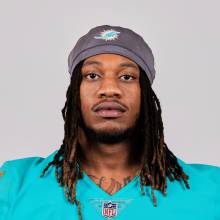 Jaylen Wright59Grade
Jaylen Wright is an explosive athlete with homerun-hitting speed for chunk/explosive plays. He is stuck behind another dynamic and electric athlete, DeVon Achane, but when given opportunities, he has shown he can be a positive playmaker. Wright has flashes of good patience, footwork, and vision to find creases based on the defense's gap assignment and execution. He is not a productive or often utilized pass catcher out of the backfield. An expanded share of snaps and more touches can positively impact the Dolphins' offense. Until then, Wright is a capable backup running back.
893 Jamaree Salyer59Grade
Salyer started five games in 2025, splitting time between left tackle and right guard for an injury-decimated Los Angeles Chargers line before signing a free-agent deal with the Dolphins. Salyer is a shorter tackle with solid length, tremendous mass and crafty hand usage, allowing him to keep defenders in front of him and mitigate below-average redirect and recovery skills. His controlled footwork, independent hands and understanding of angles help him maximize his frame in protection, though quicker rushers can still stress him when forced into sudden recovery. In the run game, Salyer can move people when working linearly and catching defenders on his track. However, he lacks the short-area quickness to consistently sustain when the picture changes post-snap. His toolkit and positional flexibility give him functional value as a quality swing backup with low-end starter capability.
892 Sean Tucker59Grade
Sean Tucker has served as the RB3 on the Buccaneers' offense behind Bucky Irving and Rachaad White. Tucker is an explosive runner with great open-field speed and acceleration. He follows blocks on gap concepts well. Tucker is a volume back who is better with more bites at the apple. He has shown flashes of starting-caliber play when given the touches. Tucker serves as a kick returner in Tampa Bay as another way to get the football in his hands. Overall, he's an athletic playmaker but has yet to carve out a prominent role in the offense.
891 Noah Gray59Grade
Coming off his best season as a pro in 2024, Noah Gray fell flat last season in a campaign that didn't cooperate with anyone in Kansas City. He's their version of a "Y" tight end, where half of his snaps are spent blocking, but he's better on split action blocks and in space. Being an in-line performer isn't high on the Chiefs' priority list at tight end, but Gray has a few reps a game where he's functional. He's a reliable receiver over the middle of the field, but he struggles to make much of anything happen after the catch or separate against man coverage. The path forward is clear with Kelce retiring after 2026, but Gray isn't the one who will take that torch.
890 Emanuel Wilson59Grade
Emanuel Wilson is an adequate backup and rotational running back. At his best, he's working off zone concepts where his vision and footwork allow him to get downhill quickly. He is a one-cut runner who excels after first contact. Wilson is not an overly elusive or explosive runner. He is a backup who can step in as a spot starter once in a while.
889 JJ McCarthy59Grade
The Vikings' former first-round pick had a rocky 2025. J.J. McCarthy played 10 games last season in his first real NFL starting experience. He threw for more interceptions (12) than touchdowns (11). McCarthy had moments during the season where his arm talent was on display, and he made the right decisions at the line of scrimmage. He is inexperienced as a true dropback passer and requires more reps to further his development.
888 Jaylin Lane59Grade
Jaylin Lane flashed his explosive playmaking ability as a rookie for the Commanders. He made solid contributions last season to project a slightly elevated role in the offense in 2026. Lane did a good job turning his explosive speed into a weapon to attack cornerbacks and snap off routes against off-coverage. His hand mechanics weren't the best, leading to a few dropped passes. At worst, Lane should carve out a role as the WR3/4 and the deep threat of the group.
887 Jerome Baker59Grade
Baker has made 12 starts for three different teams over the last two seasons and simply isn't a starting-caliber linebacker anymore. He does have valuable experience to be an asset as a depth piece and can be used on early downs, but teams who are looking for a more athletic defender who can help in coverage should be making other calls.
886 Tyrod Taylor59Grade
At 36 years old, Tyrod Taylor is still a capable backup and emergency starting quarterback. He still can use his legs to avoid the pass rush and get out on the move for yards as a runner. He throws a catchable football with good touch. His arm doesn't have the same zip or velocity behind his passes. He excels at hitting the first read as it is dialed up by the OC. Completing deep passes was an issue last season; he completed 11.8% of those passes with one touchdown and three interceptions. Taylor is capable of running the offense, but there isn't any substantial upside with him at the helm.
885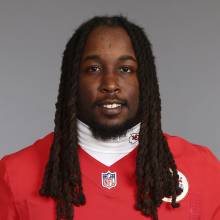 Kareem Hunt59Grade
Kareem Hunt is a rugged and physical downhill runner. Whether gap or zone schemes, he is effective, churning out tough, hard-earned yards. In short-yard situations, Hunt is a go-to option to run with power and a forward/falling lean. Last season in Kansas City, he was a functional checkdown option and a great chip blocker for their tackles in pass pro. Hunt is far from his prime athletically. He has averaged under four yards per carry in consecutive years. While a solid contributor, he's a replaceable talent at this stage of his career.
884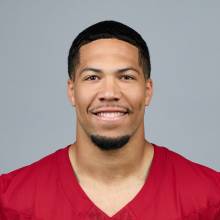 Cody Simon59Grade
Injuries held Simon back during his rookie season last year. But the fourth-round pick became a starter in the second half of the campaign and put some decent tape out there. Right now, he's someone who takes advantage of mistakes rather than making plays by winning one-on-one matchups consistently, though.
883 Tommy Townsend59Grade
Townsend went from a first-team All-Pro in 2022 to joining his second team after leaving the Kansas City Chiefs a year-and-a-half later. Townsend relied more heavily on his short game last season with the Texans. He led the league in hang time yet saw decreases in his overall and net punting averages. Interestingly, those kicks placed inside the 20-yard line and rate of doing so both lessened as well. Instead of trying to retain Townsend's services, the Texans traded for Kai Kroeger, and the 29-year-old veteran subsequently signed with the Titans.
882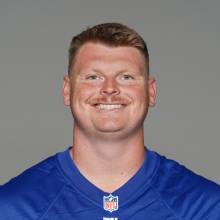 John Michael Schmitz Jr.59Grade
Schmitz worked through multiple injuries to start 13 games last season as part of a run-heavy Giants offense that lowered the pass-game exposure from his first two campaigns. The structure helped quiet his middling athletic ability and movement skills, allowing his leg drive, grip-strength and strain to carry more of his performance. Schmitz is an adequate pass protector who can be picked against twists and will step under himself when redirecting against moves across his face, creating soft edges. When centered, he is difficult to work through once latched and can turn reps into a slog for defenders trying to disengage. In the run game, his sustain skills and effort help impede shed attempts, though his subpar foot quickness limits his range. Schmitz is a limited athlete, but he can provide functional play in a run-heavy structure that reduces how often he has to operate in space.
881 Will Lutz59Grade
Despite playing in Denver, Lutz isn't a big bomber compared to the league's other kickers. He's only attempted 18 field goals of 50 yards or longer since the start of the 2023 campaign. For comparison, The Dallas Cowboys' Brandon Aubrey tried 17 just last season. To be fair, the Broncos have a quality offense under the supervision of Sean Payton. At the same time, Lutz is just under 67 percent from that distance during that stretch. After posting a 91.2 conversion rate two seasons ago, Lutz regressed slightly by missing four field goals in 2025.
880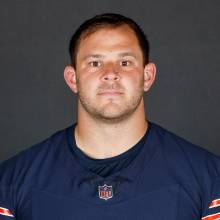 Garrett Bradbury59Grade
Bradbury started every regular-season game for the second straight year, recorded zero penalties for the first time in his career and reached 20 total starts during the New England Patriots' run to Super Bowl LX. Chicago traded for him this offseason after Drew Dalman's sudden retirement, giving the Bears a veteran pivot with proven durability. Bradbury is a squatty, sawed-off center with fluid movement skills, quick processing and strong zone-run utility, excelling on reach/overtake blocks while sorting stunts and games on time. A lack of power remains the limiting factor. His lack of mass and play-strength create marginal anchoring ability, leading to compression and displacement when isolated against nose tackles in protection or drive-blocking scenarios. Bradbury is reliable and experienced, but his skill set is narrow, projecting best as a serviceable starter in a zone-oriented, play-action-heavy system.
879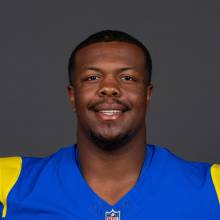 Warren McClendon Jr.59Grade
McClendon started 10 games at right tackle last season for the injured Rob Havenstein and provided functional play inside the Rams' play-action-heavy, offensive line-friendly structure. Matthew Stafford's 2.73-second average time to throw helped mitigate the 25-year-old's below-average athletic ability and range. McClendon has a sturdy build, good length and enough play-strength to keep the offense on schedule. In pass protection, he plays centered with a high outside/low inside hand carriage to clamp high-side rushes, anchor against power and disrupt slower-developing moves. Issues appear when isolated against higher-end rushers, where limited range and dropping his outside foot can open him to clean inside counters. In the run game, McClendon plays firm, covers up targets and maintains balance well enough to occupy defenders. His brief left tackle work in 2024 was shaky, but his '25 film provides a path toward being a functional starter after Havenstein's retirement.