701 Matt Milano65Grade
Milano reached the top of the mountain in 202 by earning first-team All-Pro honors, but he's had a steep fall since then. Injuries have gotten the best of the nine-year veteran, missing 30 games over the past three years, and he doesn't have the same movement skills on the field. But Milano managed to at least finish last season relatively healthy and is good enough to contribute if a team needs help at linebacker at some point in the fall.
700 Marcus Harris65Grade
Before the Titans traded Roger McCreary to the Rams in-season, Marcus Harris had 14 defensive snaps to his name, 12 coming in the game right before the trade. After that, Harris played in seven games with five starts before sustaining a knee injury that would end his season. He is a physical corner that offers inside and outside flexibility and didn't miss a tackle last season. His football IQ, zone comfort, and mirroring ability are all a work in progress, but the shift in defense and health around him could see him make a jump in year two.
699 Johnny Mundt65Grade
Johnny Mundt brings a hard-hitting, finisher's mentality to the tight end room and can be a great addition to a team's 12 and 13 personnel packages. He understands and executes several blocks, lines up defenders on the move well, and stays engaged throughout the rep. He struggled with drops relative to his target volume last year, with a 25% drop rate, and was more of a release-valve option when targeted. Mundt will bring a needed blocking presence to the Eagles' tight end room that it hasn't had in a few seasons.
698 Tyler Huntley65Grade
After a stint in Miami in 2024, Tyler Huntley returned to the Ravens as a more viable backup option behind Lamar Jackson. He played in four games and started two, throwing for 426 yards, two touchdowns, a 103.1 passer rating, and completing 77.6% of his passes. He looked best in the short passing game where he could get the ball out quickly and let their playmakers work. Huntley is a functional backup quarterback and a spot starter with a capped/limited ceiling.
697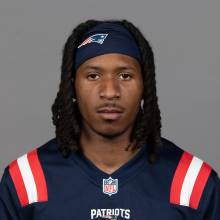 Kyle Williams65Grade
Rookie wide receiver Kyle Williams made his share of plays with only 21 targets on the season. He made plays for the Patriots offense, running after the catch or using his speed before the catch for separation. Williams averaged 21 yards per catch on 17.4 air yards per target. The rookie wideout is explosive with strong acceleration after the catch to put the defense in a bind. He finished with 10 catches for 209 yards and three touchdowns. Not sure if he'll receive a much larger amount of snaps or targets, but he can fill the role of primary kick returner, WR3/4, and the downfield threat in the Patriots' passing attack.
696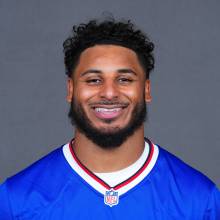 Geno Stone65Grade
Stone's game is predicated on creating turnovers through instinctive identification and downhill driving to the ball. If he isn't able to create turnovers, he'll be a sore spot on the defense, and he was last season for the Bengals. He takes poor angles in coverage and, when tackling, isn't the recovery athlete a free safety should be on the back end, and lacks the tools to man up consistently and play closer to the box. He reads plays out and will mirror the quarterback's eyes, is a willing physical player, and will be a good rotational body to have, but Stone needs a reset after his time in Cincinnati.
695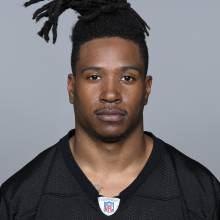 Brandin Echols65Grade
After starting the season as a backup/rotational defensive back, Echols saw the second-most snaps of his career in 2025. Playing predominantly as a nickel, his snaps increased in Week 9 when Jalen Ramsey transitioned to safety. He's proven able to take the football away, with two more interceptions last season, specifically as a zone nickel, where he can mirror the quarterback's eyes and drop into space. He gets stacked vertically quickly and struggles with timing and attacking the catch point, making man coverage difficult for him. Echols flashes excellent plays with his eyes downhill, but is best utilized as a depth piece.
694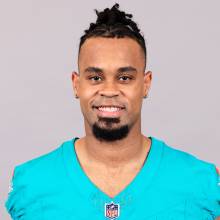 Jalen Tolbert65Grade
Jalen Tolbert is coming off a subpar statistical season for the Cowboys. He started eight games but only caught 18 passes for 203 yards and a touchdown. He's athletic and patient in attacking the defense. Typically a strong-handed wide receiver who rarely drops passes. Tolbert was never going to receive a bulk of the target share with George Pickens and CeeDee Lamb on the roster. Tolbert is an expected starter for the Miami Dolphins in 2026. He's an adequate receiver with good physical tools.
693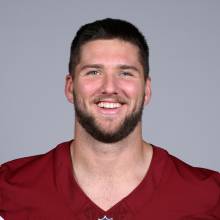 Ben Sinnott65Grade
Having a tight end who can do a little bit of both as a "Y" tight end, block and catch the ball, is a good utility piece to have for an offense. While he struggles with one-on-one blocks in-line, Ben Sinnott is useful as an H-back and on double teams to the next level, where he can seal off linebackers and help create bigger gains for rushers. Using him on the move gives him better opportunities to create rushing lanes and find space in the flat as a receiver. Sinnott flashes route nuance and the ability to create space and is a physical run-after-the-catch player, but he's more useful as a blocker in Washington.
692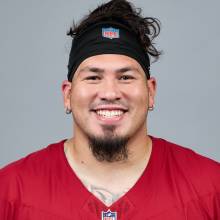 Roy Lopez65Grade
Lopez is definitely a two-down defender who can occasionally push the pocket as a pass-rusher, but makes his money against the run. He's solid at staying in his gap against all types of blocks, and has flashed the ability to absorb contact, recover and make tackles against combo blocks.
691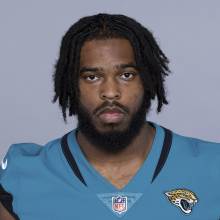 Bhayshul Tuten65Grade
Bhayshul Tuten had a limited sample size as a ball carrier during his rookie campaign. He showcased positive signs if he's ever given full-time starting opportunities. He runs with a low center of gravity and bounces off tackles like the ball in a pinball machine. Tuten is an explosive athlete with great straight-line speed in the open field. Again, the sample size was small, 83 carries and 10 receptions, but the signs are there. He should be battling for the RB1 spot heading into the 2026 NFL season.
690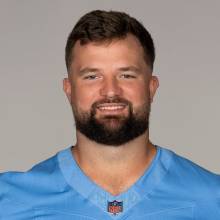 Austin Schlottmann65Grade
Schlottmann has been a career backup, never starting more than four games in a season. His 2025 tape with the New York Giants was quietly encouraging, though. He started four games at center, including quality showings against the Denver Broncos and Dallas Cowboys, plus a solid 30-snap appearance against the Philadelphia Eagles. Schlottmann followed former Giants head coach Brian Daboll to Tennessee—where he now serves as the Titans' offensive coordinator—and enters 2026 with the inside track to start for the first time in his seven-year career. On film, Schlottmann played with a strong, balanced base and tight, firm hand placement, creating impressive jolt and contact balance. He stayed centered on most blocks, was effective on double-team feeds and showed the spatial awareness in protection to keep the A-gaps secure. His raw power and athletic ability are closer to the middle of the pack, but the technique and system familiarity give him a viable path to functional starter play.
689 Carrington Valentine65Grade
Carrington Valentine made receivers earn their yards in man coverage but struggled in zone last season. In short, he is a skilled man-coverage technician. He uses his hands well, times his jabs in the press efficiently, and pairs his footwork and mirroring skills with the receiver to limit separation. His eyes wander in zone coverage, and at the top of routes, his trigger to break on throws is a step behind while taking poor initial angles. Those angles get him in trouble in pursuit against the run and when coming downhill in the quick passing game. Valentine was in a constant battle for playing time last season, and there's more competition in the room for 2026.
688 Kalif Raymond65Grade
Kalif Raymond is a proven, quality veteran wide receiver to have on the depth chart. He serves as a punt returner on special teams and has averaged 10 or more yards per return over his career. Raymond operated as an underneath, quick-passing game receiver. He understands spacing and reading spot droppers leverage post snap. His returner background helps him create yards after the catch. The 31-year-old is a safe but useful asset, with rotational value as a slot receiver and as a returner.
687 Joe Mixon65Grade
Joe Mixon was held out of the entire 2025 NFL season due to an undisclosed, complicated foot and ankle injury. In 2024, Mixon was great for the Houston Texans offense on the ground and through the air. He rushed for 1,016 yards with 309 yards receiving and 12 total touchdowns. He ran hard and with a good burst through the lane and into the open field. His pass-catching ability was an asset for CJ Stroud, both as a designated receiver and as a check-down option in the face of pressure. Accounting for over 1,300 yards from scrimmage isn't a walk in the park. The biggest issue for Mixon is when or if he'll be healthy for the 2026 season. He proved to be a solid starting running back, but the injury leaves his status in the air and brings his grade/ranking down significantly.
686 Arden Key65Grade
Key is a designated pass-rusher whose game is predicated on his first step. The 2018 third-round pick has a good get-off to win with speed and bend around the edge, collecting 30.5 career sacks so far. The former Tennessee Titan will have a chance to take on a bigger role with the Indianapolis Colts this year.
685 Javon Kinlaw65Grade
Kinlaw has bounced back from a bad start to his career with the San Francisco 49ers, posting career-highs in tackles and tackles for loss for two different teams in back-to-back years since leaving the 49ers. The former Jet and current Commander primarily takes advantage of lower competition and mistakes from offensive linemen, though. There is no doubt that Kinlaw has gotten better over the last couple of years, but there is a good amount of fluff to his statistical jump.
684 Brian Robinson Jr.65Grade
Brian Robinson put up a solid statistical season in 2025 as the RB2 behind Christian McCaffrey. He ran with patience through the line of scrimmage and followed blocks well. Robinson is a big, physical back who will run through a defender's face mask. He finishes runs and sets a tone offensively when he gets the ball. He is a quality backup who can step in as a starter if needed. Robinson is a great red zone back with his size, strength, and physicality. He's a solid player who should mesh well with Bijan Robinson in 2026 for the Atlanta Falcons.
683 Greg Dortch65Grade
Greg Dortch was not relied on consistently in the Cardinals' passing attack last season, but he made plays when called on. He has established a role as a return specialist, averaging 26 and 11.6 yards per kick and punt returns. He is a fun and elusive playmaker in space. Dortch primarily plays from the slot but also aligns in the backfield, replacing the halfback in the passing game. The Detroit Lions will benefit from his special teams value alone, but if called on for offensive snaps, Dortch can make impactful plays.
682 Spencer Burford65Grade
Burford started nine games in 2025 sandwiched around a six-game absence due to a knee injury, putting enough functional tape together to enter training camp as a potential starter for the Raiders. Burford is still a little light with a below-average anchor, and his erratic processing can leave him a tick late sorting games, stunts and late movement. However, he has excellent length, solid strike-timing and enough hand pop to establish first meaningful contact, disrupt rushers' timing and stay square in his sets to minimize clean edge losses. His marginal play-strength can still lead to compression against power, but improved snap-timing helped him cover up and seal targets on backside cutoffs while adding pop in the post on combination blocks. A reunion with Klint Kubiak, after a year together with the San Francisco 49ers, gives Burford a favorable runway to compete for a starting job, while maximizing his strengths in an offensive line-friendly structure.
681 Akeem Davis-Gaither65Grade
Davis-Gaither has received more playing time over the last two years and has grown a lot as a run defender. He has solid instincts to keep him around the ball, making a good amount of stops against the run during his first year as a regular starter. However, the six-year veteran still lacks awareness in coverage, leading to big plays in the passing game.
680 Calvin Ridley65Grade
Calvin Ridley is a part of an average supporting cast the Titans built to help rookie quarterback Cam Ward. Ridley established himself as a reliable starting receiver with the most knowledge and the best route-running in the Titans' room. He is a savvy veteran who understands how to get open against man and zone defenses. Ridley isn't a bad athlete, but he has lost a step in speed and explosiveness. When facing press coverage, his routes are at risk of being quickly capped by physical contact, disrupting the timing of his route and the quarterback's drop.
679 Cam Hart65Grade
Of the Chargers' cornerbacks, Hart was the one opposing teams picked on the most, allowing 619 yards and four touchdowns on 68 targets. He still broke up 11 passes and had an interception, but he was attacked more in man coverage. He limited yards after the catch by rallying to the football underneath, but his reaction time and instincts to see routes unfold limit his impact. His catch technique is great, and he triggers downhill quickly from it to the catch point and the flat to make tackles. Hart is a solid third option to have, especially in a zone scheme.
678 Andrei Iosivas65Grade
Andrei Iosivas is the third of the Cincinnati Bengals talented trio of pass catchers. The former Princeton playmaker is a steady wide receiver who understands and plays his role well. Iosivas presents a prototypical X-receiver frame and athleticism, but aligns across the Bengals' offensive formation. He has the football IQ to execute the game plan from multiple receiver alignments. Iosivas is not the crispest or smoothest route-runner. He will be rerouted by physical press coverage. He possesses great leaping ability, ball skills, and high-point passes downfield. He's a solid, contributing receiver when paired with WR1.
677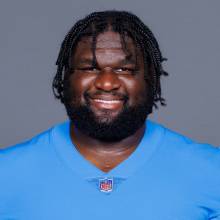 Dalvin Tomlinson65Grade
At his best, Tomlinson is a gap-filling nose tackle who can be an asset as a run defender. However, he is coming off a down year where he wasn't nearly as stout as he's been in the past. It will be interesting to see if that was just an off-season or a sign that the 32-year-old's career is quickly coming to an end.
676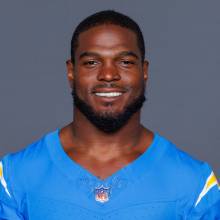 Denzel Perryman65Grade
Perryman has built an 11-year career out of being a good run defender, and he still has impressive instincts and plenty of pop behind his pads when coming downhill to make an impact in that phase of the game. However, the 2021 Pro Bowler has never been much of a factor in coverage, and the injuries have piled up, impacting his ability to move/operate in space. Also, while Perryman is a smart player against the run, that doesn't carry over to the passing game.
675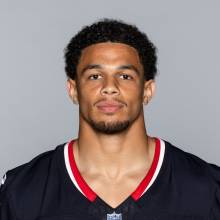 Jaylin Noel65Grade
Jaylin Noel is a versatile wide receiver for the Houston Texans. He works primarily from the slot but can handle manufactured touches. Noel is a strong kick and punt returner; his vision and ability to follow blocks show up on quick screens and backfield touches. He displayed the touch necessary to work in high-traffic areas with high concentration, bringing in passes despite bodies surrounding him. There are a lot of mouths to feed in that Texans' receiver room but Noel deserves a bigger piece of the target share pie.
674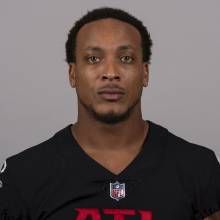 Mike Hughes65Grade
Hughes bounced around a few teams before landing in Atlanta three seasons ago, and he's been their starting number two boundary corner each of the last two seasons. This past year was cut short by injury, but he started 12 games for the Falcons. He did his best work breaking on underneath throws in zone coverage and being a reliable run defender. He struggles in man coverage and locating the football downfield, which makes him a popular target opposite AJ Terrell. He's a better rotational option than starting number two.
673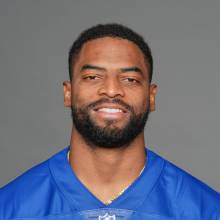 Darius Slayton65Grade
Darius Slayton is a proven veteran receiver with consistent, solid production. He's served as the Giants' X-receiver and deep-ball threat, making the most of his speed. He runs effective routes against man and finds holes in the zone defenses. Slayton has battled drops throughout his career. He's an adequate starting receiver with an established floor.
672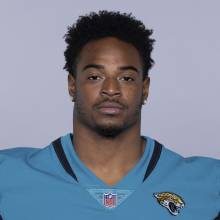 Ventrell Miller65Grade
It wouldn't be surprising if part of the reason the Jaguars let Devin Lloyd walk in free agency is that they like what they've seen from Miller so far. While the sample size for the two-year pro with just 11 career starts isn't big, he showed an impressive combination of instincts and athleticism against the run last year. His route recognition needs work in coverage, but seven passes defended in two seasons with limited playing time is good ball production to build on.
671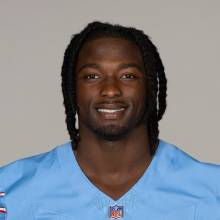 Tyjae Spears65Grade
Tyjae Spears is a quality backup running back with third-down value. He spells Tony Pollard and is a nice complement to his skill set. Spears is the more explosive and dynamic threat in space. He missed the first four games due to a high-ankle sprain that placed him on IR to start the season. Despite missing time, he finished third on the Titans with 45 receptions. Spears is a talented playmaker with good athletic traits to make an impact if given more touches. Right now, he's serving as a change-of-pace back and filling the role well.
670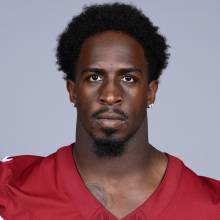 Quan Martin65Grade
In what was a tough season for the Commanders, Quan Martin came in with high expectations, but looked lost in coverage last season. Likely better in a "big nickel" role, Martin took most of his snaps as a safety and struggled to locate routes that weren't coming into view and lacked the feel needed to play further away from the ball. He takes risky angles in pursuit, which led to missed tackles and yards after the catch. He's a downhill thumper and wants to take part against the run with the mentality needed to be impactful, but Martin looked uncomfortable playing in space and against receivers in coverage.
669 DeMarvion Overshown65Grade
Unfortunately, injuries have been the story of Overshown's career so far. He suffered a torn ACL that forced him to miss his entire rookie season, and the Texas product endured a gruesome injury in the other knee the following year. The latter caused him to miss the majority of the previous campaign, and a concussion cut year three even shorter. Overshown is an impressive athlete who has shown decent chops as a coverage linebacker during his limited time on the field. However, it's hard to give him a thorough evaluation at this stage. This will be the first season the 2023 third-round pick didn't have to spend the offseason rehabbing a major injury, so there's a chance he could quickly climb up the ranks.
668 Christian Mahogany65Grade
Mahogany started 11 games before a fractured fibula sidelined him for six weeks. His game is built on force, demeanor and a power-oriented approach that shows up most clearly at the point of attack. Mahogany brings very good thump and knockback power on initial contact, feeds and uncovered work, giving him the ability to jolt defenders and create movement when his aiming points are clean. A tradeoff exists since his style can be rigid and overly aggressive, leading to overextension against slippery defenders, late movement and quick redirects across his face. In pass protection, a similar lack of control shows up when rushers make him adjust after initial contact or force him to reset his hands and base. Mahogany is still more "aim big, miss big" than refined starter, but his natural power, finishing demeanor and flashes of displacement give him enough traits to warrant continued runway if his technique eventually evolves.
667 Tim Settle Jr.65Grade
Settle has always shown potential in both phases of the game, but he has struggled with consistency. The eight-year pro has posted two strong campaigns statistically—2020 in Washington with five sacks and seven QB hits, and 2024 in Buffalo with 31 tackles, five sacks and 10 tackles for loss—but has been more unproductive than productive. If Settle can balance it out with the Commanders, he can become a quality three-down interior defensive lineman. But the 29-year-old's technique has to improve for that to happen.
666 Robert Hunt65Grade
Hunt played just two regular-season games in 2025 due to a torn biceps before returning for Carolina's Wild Card matchup against the Los Angeles Rams. When available, his profile remained consistent with the '24 season and much of his career as a rugged, power-based guard with a broad frame, thick build and heavy hands. Hunt is at his best against tightly aligned defensive tackles, where he can establish first meaningful contact, absorb force and provide pocket-clearing power. That same linear power translates to the run game, where Hunt can cover up, lift and displace down linemen on double-teams or eject second-level defenders who play him head up. His downhill, aggressive style also creates volatility. Erratic strike-timing, high pads and loose hand-placement can sap his anchor and lead to quick losses across his face. Hunt remains a useful, physical starter, but durability and pass-protection consistency limit his value.
665 RJ Harvey65Grade
In Sean Payton's offense, RJ Harvey was an impactful rookie playmaker. He is a shifty, jitterbug-style runner who can shake defenders in a phone booth one-on-one. Harvey made his biggest contribution in the passing game. He was a reliable underneath target and used to defeat heavy blitz calls. He knifes through the first layers of the defense because of his vision, short-area quickness, and patience. Harvey is an undersized running back, and it shows up when he is asked to protect Bo Nix. He does not have the power to stonewall defenders without cutting them at the knees. He's a good number-two, change-of-pace running back, but unlikely to be a long-term starter.
664 Derrick Harmon65Grade
Knee injuries were the story of Harmon's rookie season. While he never needed surgery, a pair of incidents kept him from being 100 percent and limited him to just 12 games (eight starts) in year one. That makes it difficult to accurately gauge how the 2025 first-round pick has fared in the NFL and predict what type of player he'll be moving forward. But the Oregon product did show signs of being a serviceable starter in both phases of the game.
663 Sean Rhyan65Grade
Rhyan opened the 2025 campaign as Green Bay's starting right guard before losing the job, then moved to center after Elgton Jenkins suffered a season-ending injury in Week 10. He started seven games at center despite having almost no prior NFL experience there, giving the Packers enough confidence to extend him as their projected starter entering 2026. The 321-pound Rhyan is a bigger pivot with square power, heavy hands and good pop on contact, giving him the ability to cover up, uproot and steer defenders in the run game when his aiming points are clean. His size and play-strength also give him a functional anchor profile in pass protection. Mental spacing at the position is problematic due to a lack of experience. Rhyan's pass-protection losses often came from late processing, losing levels with his guards and failing to sort pressure quickly enough, leading to leakage and free runners against blitz looks and counter moves across his face. His hand-timing and placement are still more forceful than refined, which creates some volatility when isolated against quality interior rushers. Given the abrupt position switch, some improvement is reasonable with a full offseason at center. However, Rhyan remains more of a functional starting projection than a fully stabilized answer.
662 Tua Tagovailoa65Grade
Tua Tagovailoa is coming off a tumultuous season with the Dolphins. He threw a career-high 15 interceptions, and his decision-making was questionable. He struggled to come off progressions quickly, resulting in being late to his next read. Tagovailoa's game is predicated on quick processing, throwing with timing, and anticipation to defeat opposing defensive coverages. Last season, he showed he still has those attributes. When he is protected and in-rhythm, Tagovailoa can be a surgically accurate passer.
661 Aaron Jones65Grade
Aaron Jones is a savvy veteran running back. He has great vision and patience as a runner with smooth footwork to change directions. Jones is an impactful receiver out of the backfield. He has strong hands and looks the ball in before making his next move. His 2025 season was limited to 12 games due to a hamstring injury, suffered in week two. His production took a step back from his 1,500 yards from scrimmage in 2024. Jones is not an elite running back, but he's more than capable of having a positive impact on the offense when he's on the field.
660 Eric Murray65Grade
The Jaguars signed Eric Murray after playing the most snaps in his career during his final season in Houston, and he played predominantly on top of Anthony Campanile's defense. A top-down, hard-hitting safety in Murray helps change the style of defense you're looking to play with: catch-point collisions, trigger-to-the-flat tackles, and playing fast. Murray isn't the instinctive, man-coverage-style playmaker, but he can handle a lot of jobs within the safety position and helped balance out the safety room in Jacksonville.
659 DeAndre Hopkins65Grade
DeAndre Hopkins is not the same elite caliber wide receiver at this stage of his career. Yet, he still owns a pair of the best hands in football. Hopkins creates less separation than before but if the ball is thrown in his vicinity, he plucks it out of the air. He tracks the ball at a high level and attacks it with great patience, timing, and aggressiveness. Athletically, he's taken a step or two back limiting his ability to beat corners vertically. Overall, he's a functional receiver and starter who can serve as a security blanket and chain mover.
658 Malik Willis65Grade
Malik Willis is a more polished version of himself after sitting and learning behind an established starter. Subbing into the lineup after Jordan Love went down, Willis displayed his arm talent, accuracy, and dynamic athleticism as a ball carrier. His rushing ability adds another element to the offensive playbook: QB keepers, power, and more. Willis is effective and efficient working off play action. He has good ball fakes to hold off linebackers and uses his eyes to manipulate deep-coverage defenders. Willis is a question mark as a long-term starter with only three starts in the last two seasons. Despite the success he showed on the field, he wasn't exposed to many true dropback passing sets. He has a lot to prove this season.
657 PJ Locke66Grade
PJ Locke underwent a risky spinal fusion surgery last offseason that not only improved his everyday life but also kept him on the field. Typically more of an agent of chaos, Locke is a defender who will fly downhill to deliver a big hit whenever possible. He outleveraged himself too often and would take too long to pass off routes, allowing more space for catches underneath and to vacate space. His range on the backend is still there, but he looked uncomfortable in space last season and more reactionary than anticipatory. Locke reunites with Christian Parker in Dallas as a depth piece for a new-look secondary.
656 Germaine Pratt66Grade
Pratt had an interesting 2025 campaign, signing with the Raiders in June before getting released and reuniting with defensive coordinator Lou Anarumo in Indianapolis. He was a much better run defender with the Colts under Anarumo, as his instincts looked off in Las Vegas. That could be an indication of why the linebacker remains available (at the time of writing), with other clubs being doubtful about his ability to play in another system. As far as what Pratt can bring to a defense, he's physical when taking on blocks and has shown the ability to set the edge as a standup outside linebacker. In coverage, he's made some decent plays on the ball in the past, but lacks the athleticism and short-area quickness to be consistent.
655 Xavier Smith66Grade
Xavier Smith serves as the Los Angeles Rams' primary kick and punt returner. He is a valuable special teamer helping the offense with favorable returns. Smith is a reliable backup wide receiver who makes the most out of his targets. He created chunk plays down the field as the WR3 in the offense. Smith was efficient reeling in 18 of his 24 targets for 303 yards. Potentially, he could have a bigger impact if his offensive role is expanded.
654 Zach Ertz66Grade
Suffering a season-ending injury, like an ACL tear, is never easy to come back from, but doing it at 35 years old with a ton more miles and injuries has to make it more difficult for Zach Ertz. He found a resurgence in 2024 with Jayden Daniels at quarterback, with his zone prowess on full display, and continued it for much of 2025 before his injury. That's where Ertz shines; when his football IQ takes over and he settles down in space, it's pitch and catch. His ability after the catch and against man continues to deteriorate, and he didn't add much as a blocker, but if he can find a way back this season, his brain will help out an offense somewhere.
653 TJ Slaton66Grade
Slaton is a two-down run defender, meaning he doesn't offer much as a pass-rusher. The bigger problem with his game, though, is that he isn't someone who can be trusted to defeat all types of blocks. The five-year pro has issues running his feet and moving laterally to avoid getting reached, creating issues against outside runs. However, Slaton is impressive at the point of attack to consistently beat base blocks.
652 Trenton Simpson66Grade
Simpson has struggled to catch on in Baltimore, getting benched and hardly seeing the field around the halfway point of last season. He has plenty of talent and athleticism to be a well-rounded linebacker; it's just a matter of being in the right spot more consistently, especially in coverage. With a new coaching staff for the Ravens this season, the 2023 third-round pick should have a clean slate and one more opportunity to prove himself, but he's running out of time.
651 Isaac TeSlaa66Grade
Isaac TeSlaa was not heavily targeted in the Detroit Lions passing offense last season but he made the most of his targets. He caught 16 of his 27 targets for 239 yards and six touchdowns. TeSlaa made his mark as a big body target with a strong catch radius and ball skills. He didn't drop a pass as a rookie, albeit on a small sample size of targets. He adds a missing dimension to the Lions' passing game as the receiver built to play the traditional X-receiver and possession receiver role. Excited to see how he develops and performs in 2026.
650 Alec Ingold66Grade
Alec Ingold is another Swiss Army Knife at the fullback position. He will align in different positions based on the play call. As a lead blocker, Ingold helped seal defenders and spring DeVon Achane into the open field between the tackles and on the perimeter. Ingold is a functional receiver out of the backfield and/or the H-Back position.
649 Charles Omenihu66Grade
Omenihu's true position blurs the lines between an edge defender and a defensive lineman. But in reality, he's just a pure pass-rusher who can contribute from multiple alignments. The seven-year veteran can win with power and work offensive linemen's hands; he just doesn't make much of an impact against the run.
648 Walter Nolen III66Grade
It's hard to give Nolen a grade heading into the 2026 season because his rookie year was filled with injuries and limited to just six games. So, the Ole Miss product is still very much an unknown in the NFL. But he did show a handful of flashes to provide some optimism for his outlook moving forward, especially as a pass-rusher.
647 Justin Strnad66Grade
Strnad got a good amount of playing time during the first half of last season while the Broncos waited for Dre Greenlaw to get healthy. But with Greenlaw returning to San Francisco in the offseason, Strnad is in line to become a regular starter in Denver for the first time in his career. The 2020 fifth-round pick will have to step up his game, though. He's a good athlete who can be an impactful blitzer with 7.5 sacks over the last two seasons, and he made a few nice plays on the ball in coverage a year ago. But Strnad isn't physical enough to be an impactful run defender and often looks unsure of himself in zone coverage to be trusted as a full-time starter on the second level right now.
646 Jackson Powers-Johnson66Grade
Powers-Johnson settled at right guard to open the 2025 campaign after splitting time between center and left guard as a rookie. His second year was cut short by an ankle injury after seven starts. His tape remained a mix of promising physical flashes and raw technical execution. Powers-Johnson has a sawed-off, stout build with enough play-strength to firm up the point of attack, along with fluid movement skills to redirect and work himself out of some compromised positions. He is also a force when uncovered in pass protection, where his power and demeanor allow him to clear the pocket and punish adjacent rushers. The volatility shows up when isolated against quality interior rushers. His unpolished footwork and hand usage can create quick losses across his face, and his aggressive temperament still leads him into bad positions when he overshoots his landmarks or chases contact without control. In the run game, his strength, movement and finishing demeanor create flashes of a tone-setting guard, but the down-to-down precision still needs to improve. The 23-year-old's physical traits and age leave him with a clear runway to become a solid starter, especially inside a Klint Kubiak system. At this point in time, his current profile remains more projection-based than stable.
645 Josh Palmer66Grade
Josh Palmer's 2025 season was limited to 12 games after he sustained an ankle injury in Week Six. He is a veteran wide receiver with the ability to win downfield. In one-on-one situations, he showed solid route tempo and separation ability. Palmer still possesses the leaping ability to box out defenders and high-point the football downfield. He's an average receiver and depth playmaker to have on the roster.
644 Brevyn Spann-Ford66Grade
The Cowboys' run game was a big part of their success last season, and they should have included Brevyn Spann-Ford in their plans more than they did. He's a physical run blocker who wants to punish defenders whenever he gets the chance. There are moments when he uproots players in line and delivers big hits, but he needs to work on his hand usage to stay engaged more often. Spann-Ford flashes in the passing game with big gains down the seam and using his big frame to make catches over the middle of the field, but he isn't a consistent presence. If Spann-Ford can earn more reps this season, he could take a step forward and help the Cowboys' offense even more.
643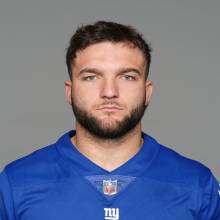 Cam Skattebo66Grade
Cam Skattebo's rookie season was limited to eight games due to a right ankle dislocation, an open tibia fracture, and a ruptured deltoid ligament. Before the injury, Skattebo brought a physical and tone-setting presence to the Giants' offense. He is a fearless competitor who seeks out contact and embraces it. Skattebo runs through the defenders like Juggernaut runs through walls, headfirst and with no regrets. He was steady in pass protection and caught the ball well out of the backfield. Skattebo is an average athlete who lacks the third gear to pull away from the defense. Also, he is not an elusive runner with quick lateral agility. He relies on running through defenders' faces, which is a difficult way to win in the NFL over the long term.
642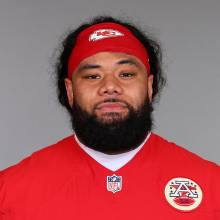 Khyiris Tonga66Grade
Tonga is a nose tackle who has decent athleticism for the position. That helps him have a quick get-off and be solid at avoiding getting reached, on top of the strength at the point of attack to generate knockback power. However, the five-year veteran is susceptible to getting bumped out of his gap by combo block and has always been more potential than production as a pass-rusher, showing flashes but recording just half a sack in his career so far.
641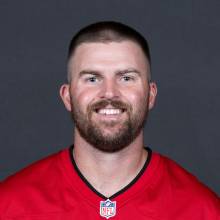 Chase McLaughlin66Grade
After bouncing around the league between eight different organizations (with a pair of stops at two franchises), McLaughlin found a home in Tampa. His first two seasons were easily the best of his entire career. The 30-year-old veteran saw a slight dip in performance last year. After back-to-back seasons with a conversation over 93, McLaughlin converted just under 85 percent in 2025. He missed five kicks within 50 yards—which he didn't do during the previous three seasons combined. However, McLaughlin was exceptional from long distance by tying for the league-lead with 11 makes beyond 50 yards and missing only one.
640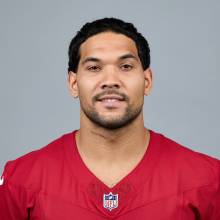 James Conner66Grade
James Conner suffered a season-ending foot and ankle injury in week 3 of last season. He was coming off another strong season, rushing over 1,000 yards in 2024. Before the injury, Conner was averaging a pedestrian three yards per carry with a rush EPA of -3.9. His game thrives off patience and vision to find running lanes by the offensive line. Conner isn't going to create much for himself in the backfield and can be limited by less-than-stellar blocking up front. He is a functional pass catcher, accounting for 414 yards in 2024. It appeared before the injury that he wouldn't have an equally strong performance last season. Conner may be entering the decline of his productive, high-quality NFL career as a starter.
639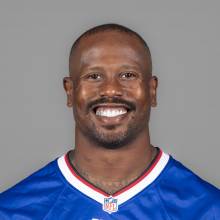 Von Miller66Grade
While Miller hasn't made a Pro Bowl or All-Pro team since having ankle surgery and missing the entire 2020 season, he's still an effective pass-rusher. Don't get it twisted, the future Hall of Famer isn't the same player he used to be, but he can still turn speed to power effectively and work the hands to win around the edge. Any playoff contender that needs an edge rusher should be hitting up Miller's agent sooner rather than later. Just don't expect him to contribute much outside of being a pass-rusher.
638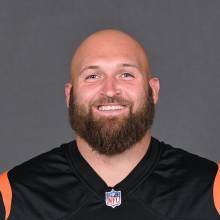 Dalton Risner66Grade
Risner provided a stabilizing presence for Cincinnati during the 2025 campaign, starting 11 games after an injury-interrupted '24 season with the Minnesota Vikings. Risner is a veteran guard whose value is rooted in awareness, toughness and pass-protection reliability. He plays with good eyes and processing speed, rarely gets fooled by line games or post-snap movement and uses efficient technique to stay connected and keep rushers from quickly accessing his frame. His anchor is functional when he is square, but he is not a naturally powerful blocker and can be stressed when rushers force him to redirect or recover late. In the run game, Risner is more positional than forceful, with enough feel to fit, wall off and stay on schedule. His stiffness and average movement skills cap his effectiveness. Conversely, his steadiness, competitive toughness and ability to keep reps orderly make him a useful short-term starter or high-end interior reserve.
637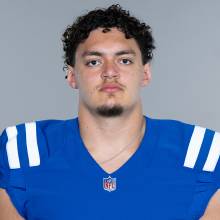 Jalen Travis66Grade
Travis finished his rookie season with four late starts between both tackle spots, playing well enough for Indianapolis to move forward with him as its full-time right tackle entering 2026. Travis is a tall, broad-framed and densely built tackle with very good length, a stiff punch and a sturdy anchor. In pass protection, he casts a wide net and is difficult to work through cleanly. But high-end edge speed can stress his range, causing him to float off his spot, let his pads rise and become vulnerable to speed-to-power counters that work inside and underneath him. In the run game, Travis can cave defenders on double-team feeds, cover up ends on kick-outs and lead around the edge to open perimeter lanes. Sudden movement across his face can still expose his high-cut frame and tardy redirect skills, but his size, power and early functionality give him a viable starter pathway if his set discipline and hand usage stabilize.
636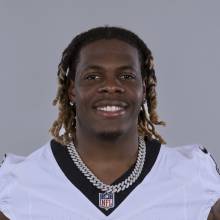 Quincy Riley66Grade
Riley took over as the third cornerback for the Saints in Week 5 and quickly showcased his physicality, man-coverage ability, and ball skills. Still developing his football IQ and route recognition in zone coverage, there was clear upside to warrant getting him on the field opposite Kool-Aid McKinstry. He limited yards after the catch with only 121 allowed on 28 receptions while giving up 377 yards on 50 targets. He'll want to clean up some missed tackles (14.3%) going forward, but the young corner is in a good spot going into 2026.
635 Payton Wilson66Grade
While Wilson posted an eye-catching 126 tackles last season, the majority of his production came several yards down the field rather than high-quality stops. He has the athleticism to close quickly downhill and cover the flats in both phases of the game. However, the 6'4", 242-pound backer needs to become stronger at the point of attack to defeat blocks, and he isn't super instinctual against the run yet. Also, the 2024 third-round pick doesn't have much ball production to prevent completions with just four career passes defended.
634 Mason Taylor66Grade
Playing for the Jets offense brings about certain challenges already, but throwing in three different quarterbacks and the rookie curve, Mason Taylor had a lot to deal with in 2025. Missed assignments, timing mistakes, and drops littered on his tape didn't make for the cleanest year, and it ended prematurely with a neck injury. Taylor showed clean technique and ability as a blocker, but needs to continue to learn the proper angles to attack to stay on blocks. He's a smooth route-runner and moves well on the field, but drifts into coverage underneath and needs consistent concentration. The former second-rounder flashed his talents as a rookie; with a new challenge in the room, he's going to need to up his game in year two.
633 Jonah Elliss66Grade
With Jonathon Cooper's status up in the air at the time of writing, Elliss could be in line to take on a much bigger role during his third NFL season. He's been used as a designated pass-rusher so far, and has been solid at it due to his diverse arsenal as a rusher. However, the 2024 third-round pick hasn't been used much against the run and needs to improve his ability to take on blocks to become a well-rounded starter.
632 Zion Johnson66Grade
Johnson has been durable throughout his first four seasons, but his level of performance has not consistently matched the physical profile that made him a 2022 first-round pick. Johnson looks the part with a sturdy frame, good play-strength and enough athletic ability to function across concepts. However, inconsistent technique has kept him closer to the functional-starter tier than the high-end guard group. His best stretches in 2025 came late in the season, when his footwork and hand placement improved enough for him to line up targets more cleanly, create better displacement in the run game and play with firmer strikes in pass protection. Sustainability is the issue. Johnson still gets caught with uneven eye discipline, inconsistent leverage and shaky base integrity, leaving him late to recover when rushers force him to redirect or counter. His hands are not reliable enough to consistently maximize his frame, and his finish quality can fade when defenders survive initial contact. The 26-year-old's durability, physical tools and age still give him viable starting value, but he remains more projection than certainty as he enters a new environment in Cleveland.
631 Xavier Worthy66Grade
Xavier Worthy has elite top-end speed, being the fastest man in NFL Combine history. He has flashed separation-creation with his route-running ability. Worthy lacks consistency running through the catch point. His chemistry with Mahomes needs to improve on deep passing concepts to unlock his full potential.
630 JK Dobbins66Grade
J.K. Dobbins showcased over the last two seasons; he remains a quality starting running back and contributor. He's rushed for 905 yards in 2024 and 772 in 2025. Unfortunately, both seasons were cut short by injuries. Dobbins has played in 23 of the available 34 games since 2024. As a runner, he is patient and disciplined, effectively running between the tackles and outside. He runs behind his pads with strength and contact balance when meeting defenders in the alley. Dobbins' missing games are almost a foregone conclusion, which is unfortunate because he's a good player.
629 Nic Scourton66Grade
Unfortunately, Scourton will miss a crucial season of development after tearing an ACL during training camp. That clouds his projection moving forward. Last season, Scourton stood out with his ability to turn speed to power as a pass-rusher. After he recovers, he needs to add a changeup to keep offensive tackles on their toes, but assuming he bounces back, he'll have a solid foundation to build off. The second-round pick also made a handful of quality plays against the run as a rookie, sniffing out crack blocks from wide receivers and beating blocks from tight ends to make stops. He just needs to be more consistent and better against offensive linemen.
628 Jonathan Allen66Grade
While he has some name recognition, this isn't the same Allen who made back-to-back Pro Bowls in 2021 and 2022. The 31-year-old is still a decent run defender and can occasionally push the pocket, but his tackling and effectiveness as a pass-rusher have been diminishing over the last few years. Also, Allen's age started to show in the second half of last season.
627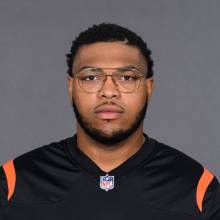 Orlando Brown Jr.66Grade
Brown rebounded in 2025 after a broken fibula limited him to 11 starts during the previous season, starting all 17 games and re-establishing himself as a durable, functional left tackle. Brown's game is built on size, length, snap-timing and veteran craft rather than range or recovery athleticism. In pass protection, he wins by staying square, protecting his inside shoulder and using his mass to create a long, difficult path through his frame. He does a good job establishing first meaningful contact, forcing rushers to work around his length and anchoring well enough to absorb power when his hands arrive on time. The limitations remain clear. Brown lacks high-end foot speed and range, which creates short corners and slower high-side losses against top rushers who can stress his edge. His run blocking is more about size, positioning and occupying space than consistent movement creation. Brown's profile is capped, but his length, mass, anchor and ability to lose slowly make him a solid low-variance starter when healthy.
626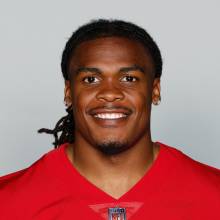 Ji'Ayir Brown66Grade
A more comfortable player near the line of scrimmage, Ji'Ayir Brown goes from making an excellent defensive play to a head-scratching one at a moment's notice. He's shown the potential he had coming out of Penn State and loves to trigger downhill with bad intentions, but in space he takes poor angles to the football and loses track of his responsibilities. Brown has flashed coverage playmaking with a couple of interceptions against the Panthers and six passes broken up last season; however, there wasn't enough consistency in his game to be confident in him when the ball was in the air. He enters a make-or-break season with the 49ers with a lot of questions swirling about his future.
625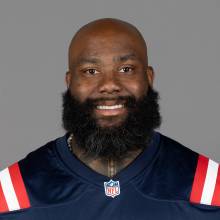 Morgan Moses66Grade
Moses completed his 12th season with 21 total starts, further cementing his status as one of the league's true ironmen. After a rough opening stretch, likely influenced by a Week 2 ankle injury, he settled near his usual baseline. Moses is a massive, wide-bodied tackle with premier length and a veteran understanding of how to weaponize it, using timing and hand-placement to establish first meaningful contact and keep rushers off his frame. Those skills help offset below-average movement skills that have become more exposed with age, especially when his pass-protection volume rises. Wide alignments can stress his range, cause him to lean at the top of the pocket and leave him vulnerable across his face late in reps. Moses still brings a sturdy anchor, functional run-game power and meaningful leadership value, but the declining recovery range keeps him in the capped-starter tier.
624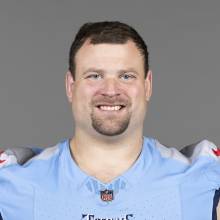 Kevin Zeitler66Grade
Zeitler reached 220 career starts (including postseason) during the 2025 campaign, starting 16 games at age 36 and continuing one of the most durable, steady guard careers of his era. Zeitler is no longer the top-10 right guard he was throughout most of the last decade, but his dense build, good play-strength, processing and veteran savvy still allow him to stay functional. He rarely puts himself in poor positions, understands where help is coming from and plays with enough leverage and hand timing to remain firm in tight quarters. Decline shows up in his lack of wiggle and recovery range when forced out of phase, especially against movement, counters or space-oriented run-game demands. Zeitler still brings toughness, reliability and enough anchor to stabilize a line. At this stage of his career, he fits best as a functional starter or high-end veteran stopgap.
623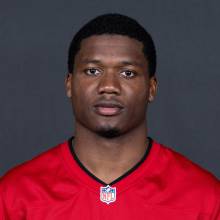 Bucky Irving66Grade
Coming off a breakout rookie season in 2024, Bucky Irving started his sophomore season on the right foot. He sustained shoulder and foot injuries in week four against the Eagles. He did not return to the lineup until Week 13 against the Cardinals. His touchdowns significantly dropped from eight to one last season. When healthy, he is an impactful player for the Bucs' offense. He plays with surprising body control and contact balance. He has a high motor and keeps his legs churning for extra yards. Irving's vision and patience are keys to his success as a ball carrier. He finds running lanes and executes cutbacks well. After off-season surgery, hopes are that Irving returns to his healthy 2024 form.
622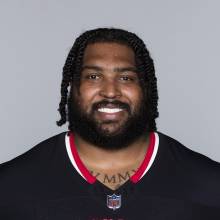 Tytus Howard66Grade
Howard was traded to Cleveland this offseason and signed an extension to man right tackle as part of the Browns' offensive line reset. He pieced together one of his better seasons last year, primarily at right tackle while also logging starts at both guard spots. Howard is a big-bodied, long blocker with heavy hands. Improved body control and hand usage helped him better collect movement across his face and transition into his anchor. He remains a below-average lateral mover with lower-half stiffness that caps his redirect and recovery skills. In the run game, his size and power allow him to cover up and move defenders on angle-drive blocks and double-teams. When his urgency level is high—as it was in 2025 and similarly in his '22 contract year—Howard can beat defenders to the spot, strike first and play closer to solid than below-average, while his guard/tackle flexibility provides Cleveland insurance along a rebuilt front.
621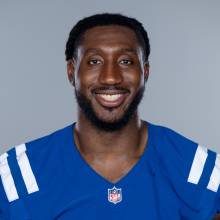 Mo Alie-Cox67Grade
Mo Alie-Cox won't make the first pursuit defender miss after the catch, but he'll drag him a few yards in the process. He's a physical player with the ball in his hands who does most of his work for the Colts as the "Y" tight end. He spends ~70% of his snaps blocking and provides extra utility as a pass blocker. Alie-Cox will get outleveraged in the run game, but he creates lanes for the running backs by using angles and consistently turning his body. He'll continue to have a spot in the Colts' offense because of his willingness to do the dirty work.
620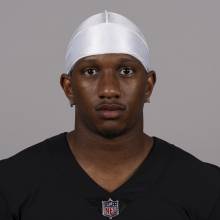 Michael Penix Jr.67Grade
Michael Penix Jr. 's 2025 season was cut short by an ACL tear that required surgery. Before suffering the injury, his on-field play was inconsistent. Penix Jr possesses the arm strength to drive the ball into tighter windows and to power it downfield. He excels at attacking the short areas of the field, while his success in the intermediate areas varies. The issue he has to overcome is deep-ball accuracy. Penix Jr. still does not fully engage his footwork to step into his throws and will launch passes from a flat-footed base, resulting in inaccurate throws downfield. His overall accuracy wanes, leaving yards and potential points on the field. Adding another injury to his lengthy history, there's a lot Penix Jr has to overcome to be viewed as a franchise quarterback long-term.
619 Adam Trautman67Grade
Reliable, effective, and smart. These are the reasons Sean Peyton brought Adam Trautman with him from New Orleans to Denver. He's consistently making the right block at the right time and helping to create lanes for their backs to the second and sometimes third levels of the defense. His versatility between pass pro and run blocking helps keep him on the field for the Broncos' offense, too. Trautman brings a steady presence as an outlet receiver who reads the defense well and settles in soft spots. He's not an overwhelming receiving option, but he doesn't need to be to bring good value as a snap earner.
618 Jahdae Barron67Grade
The first-round pick of the Denver Broncos in 2025 found himself moving around the defense a lot in his rookie season. When Patrick Surtain got injured, Barron played more boundary corner for the Broncos, and that could be where they envision him going forward. He's a natural, reactive athlete with growing NFL instincts who struggled to cement himself in a highly competitive, talented secondary. A willing run defender, he'll need to clean up his tackling technique going forward, but saw some success shutting down tight ends as a "big nickel" or dime defender last season. While Barron's rookie season may have been a disappointment, it's too early to write him off yet.
617 Tanner McKee67Grade
Tanner McKee has played in four games and started two since joining the Eagles in 2024. He offers great size/frame for the quarterback position and arm talent to make more than enough NFL-caliber throws. McKee throws with good touch over the heads of underneath defenders. He throws with anticipation and sees things quicker than expected for a backup QB with little playing experience in the NFL. McKee struggled in the pocket under pressure, as he is not a nimble-footed or dynamic athlete capable of evading it quickly. He is a bit of a throwback pocket passer with elite height in the pocket and the potential to be a long-term starter in the NFL.
616 Pat Bryant67Grade
Pat Bryant made a positive impact on the Denver Broncos' offense overall during his rookie campaign. He displayed a growing connection with quarterback Bo Nix, maintaining a healthy focus on when he broke contain and started a scramble drill. Bryant worked back to his signal caller for easier receptions. He blocked well in the run game using his frame and strength to seal defensive backs. Bryant filled the "power/big-slot" role well in Coach Payton's offense. He lacks elite acceleration and top-end speed, which makes him more of a functional starter than a high-ceiling player.
615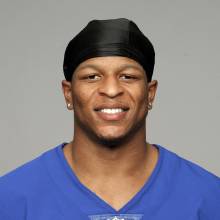 Andru Phillips67Grade
One of the biggest mixed bags at the nickel position is Andru Phillips. He plays with the tenacity and aggression you want to see at the position, but takes too many chances, piles up penalties, and relies on holding in man coverage. After Week 7, there was a noted change in his playing time and a larger focus on zone coverage. Letting Phillips drive down on throws, attack the quick passing game, and blitz from time to time focuses his aggression and limits his negative impact. There's a lot of natural talent, and the ball production took another step forward last season, but he has work to do to avoid being protected from himself.
614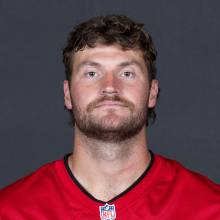 Payne Durham67Grade
Despite the limited usage in the passing game, Payne Durham is a physical presence on the football field and has shown the ability to make contested catches. He's a physical blocker, which is where he does most of his work and executes several assignments well in the run and passing game. He does a great job working blocks, getting to the second level, and keeping his head on a swivel to find work. Durham will never be the focal point of a passing attack, but with more 12-personnel sets on the way for the Bucs, he'll have the chance to earn more targets with his ball skills and reliability.
613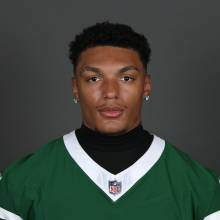 Braelon Allen67Grade
Braelon Allen played only four games last season due to a left knee MCL sprain, which led to season-ending surgery. When healthy, he is a big, strong one-cut runner who excels once he gets downhill, north-south. He adds a "rumbling thunder" element to the rushing attack. Allen has solid foot quickness and lateral agility to sidestep defenders and move patiently through the second level of the defense. He hasn't proven to be more than a functional running back, and his pass protection still needs improvement. Allen is a viable backup to change the pace whenever Breece Hall needs a breather.
612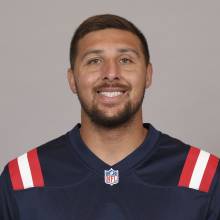 Austin Hooper67Grade
The Falcons want to utilize more 12- and 13-personnel under Kevin Stefanski, and beginning with Austin Hooper is one way to streamline that process. He's a true "Y" tight end who can move around the blocking formation and give the run game what it needs. Hooper does a nice job timing to the second level, giving the effort and physicality needed in-line, and he will help open lanes for the running backs. He's a reliable receiver with good hands and adjusts to the football well, but his route tree is limited at this stage in his career. Hooper could see the field a lot for the Falcons' offense next season.
611 Kyle Van Noy67Grade
While Van Noy had a good year in 2024, he took a step back last season, where a lot of his production came when unblocked. That makes it difficult to project how effective the 35-year-old will be moving forward. At his best, the former Pro Bowler can be a well-rounded edge defender who contributes in both phases of the game.
610 Christian Elliss67Grade
The Elliss family has a couple of hybrid off-ball/on-ball linebackers in it, as Christian's brother, Kaden, serves in the same role for the New Orleans Saints. However, the former isn't nearly the same caliber of player as the latter. Christian Elliss is a solid blitzer to get pressure when rushing the passer. But he's just serviceable or replaceable when it comes to being a run defender or in coverage on the second level.
609 Cedric Tillman67Grade
Cedric Tillman is an adequate starting wide receiver. He has the size and strength to excel as a possession receiver on the perimeter or as a power slot. Tillman is a solid route-runner at his size and is good at attacking zone defenses. He catches the ball with strong hands and away from his frame. Tillman is not a great athlete in terms of explosiveness and top-end speed to stretch the field. Additionally, he has never played a full season in his three-year career. He's been snake bitten by injuries; if he can stay healthy, he's a net-positive pass catcher and player.
608 Geno Smith67Grade
Geno Smith is coming off a disappointing season and a rough two-year stretch. He has turned the ball over at an alarming rate (32 INTs) in that span. He hasn't declined physically or with accuracy. He can still drive the ball well and drop passes in the bucket. His issues stem from being under heavy pressure, If protected, he's capable of being a solid starter.
607 Omar Speights67Grade
Going from being an undrafted free agent to a 17-game starter in just a year is an impressive beginning to Speights' career. He stands out the most against the run, where his instincts and ability to operate in a phone both help him make quality tackles near the line of scrimmage. However, the 25-year-old still doesn't look comfortable in coverage and working in space to be a complete player at this stage.
606 Adonai Mitchell67Grade
Adonai Mitchell is one of the league's more athletically gifted wide receivers. He checks the boxes for what number-one receivers possess. Mitchell has the height, weight, and speed to be an offense's primary X receiver. He is a smooth and fluid mover with a strong route-running skill set. Mitchell can play multiple receiver positions. The issue is, he has yet to play to the level of his raw talent. From drops, mental lapses, and overall inconsistency, Mitchell may have a high ceiling, but the floor isn't safe.
605 Nathan Shepherd67Grade
There isn't anything special about Shepherd's game, but he's a solid all-around player. Against the run, he has the strength to win at the point of attack or uses a hump move to catch linemen leaning and make tackles near the line of scrimmage. The eight-year veteran also has decent pass-rush chops, pushing the pocket as a bull rusher and working the hands to win around the edge.
604 Evan Engram67Grade
The inconsistencies with Evan Engram make him an unreliable tight end to count on at this stage in his career. Sean Peyton used Engram's yards-after-catch ability and gave him opportunities on screens and in space to make plays for the offense. His concentration drops have been an issue throughout his career; contact through the route throws him off, and he isn't impacting the game as a blocker, nor is he asked to. The former first-rounder is a big slot who locates space over the middle of the field and brings versatility after the catch. Engram is entering the final year of his deal with the Broncos, and they've added some competition to the room, so he'll have to earn it.
603 Jaden Hicks67Grade
There were big expectations and shoes to fill for Jaden Hicks in Kansas City last season. The Chiefs let Justin Reid walk in free agency, which paved the way for Hicks to assume that role in Spags' defense. It didn't play out the way they envisioned. He looked like a fish out of water in zone coverage, particularly buzzing down underneath; he overleveraged himself to the quarterback too often, and took a step back with more responsibilities on his plate. There were still moments of ball skills, being an enforcer in the run game and quick-passing game, and recovering to make a play downfield, but those flashes were fewer in year two.
602 Jake Brendel67Grade
Brendel remains a useful overachiever at center, winning with quickness, efficiency and timing rather than size or raw power. He is undersized, but his movement patterns are clean enough to consistently reach landmarks, fit with proper leverage and shield defenders in a way that works inside Kyle Shanahan's balanced, rhythm-based offensive structure. In the run game, Brendel is more effective than his frame suggests as the drive man on double-teams and combination blocks, where he can deliver a surprisingly firm punch into already-engaged down linemen before climbing, while being effective on reach blocks. He also has enough burst to intersect second-level targets when the angle is clean. In pass protection, he can sort games, stay in phase and use timing, leverage and quick hands to survive most controlled reps, but the limitations show up when he is isolated late. Brendel can struggle to hold ground against power, bounce off contact and allow separation or leakage when defenders work through his frame. His quickness, awareness and system fit keep him functional, but the lack of mass and anchor strength leave him closer to a capped starter than a difference-making center.
601 Ka'imi Fairbairn67Grade
Fairbairn doesn't get enough credit for his consistency. Last year, he tied a single-season NFL record with 44 made field goals. In 2018, he led the NFL in scoring. The Texans' kicker converted at least 91 percent of his attempts in three of the last four campaigns. Over time, Fairbairn established himself as a dangerous long-distance kicker, too. Early in his career, Houston's coaching staff didn't push the kicker's boundaries. As such, Fairbairn never attempted more than six field goals over 50 yards in any of his first seven seasons. He's converted 22 over the last two. Though all four of last year's misses came from beyond 50.
600 Jalen Sundell67Grade
Sundell won Seattle's starting center job in training camp and started 13 regular-season games before returning from a midseason knee injury to snap for all three playoff games. His chemistry with former college teammate Grey Zabel was evident throughout the year, particularly on combination blocks where their timing and fits helped fuel Seattle's run game. Sundell's value is rooted in quickness, range and zone-blocking utility. He is effective on reaches, overtakes and second-level climbs, using his burst and angles to intersect targets and keep the offense on schedule. In pass protection, he was functional inside Seattle's run-heavy, play-action-based structure, playing with clear eyes, sorting A-gap threats and providing timely help when uncovered. A lack of mass and anchor strength are limiting factors when isolated. Interior rushers could push-pull him out of position or gradually walk him back. Sundell was a solid system starter in 2025, but his lack of sturdiness and scheme versatility create a defined ceiling unless his play-strength and hand usage improve.
599 Rock Ya-Sin67Grade
The Lions dealt with a multitude of injuries last season, and Rock Ya-Sin played a valuable role in piecing together the secondary. He does his best work when he can be physical with powerful, well-timed jabs at the line of scrimmage and throw off route timing. That's where his comfort shows itself, and he can take control of the rep. When rushed, his physicality turns to grabbing, and the penalties increase. He's a decent zone player when the routes are in front of him, but doesn't have the instincts to feel routes and break points consistently. Rock Ya-Sin performed well down the stretch for Detroit and is a solid player to have as part of the secondary.
598 Bobby Okereke67Grade
Okereke was a solid all-around linebacker during his first two years in New York, but he wasn't the same after suffering a herniated disk at the end of the 2024 campaign. Last season, the seven-year pro looked less explosive and wasn't nearly as impactful, with a lot of his stops coming via clean-up tackles.
597 Roger McCreary67Grade
The 2025 season was full of twists and turns for Roger McCreary. He started the season in a contract year for the Titans as one of the best young nickel corners in the game, but didn't have the start he was looking for before being traded to the LA Rams. In his first appearance for the Rams, he injured his hip and was put on IR. When he came back, McCreary looked healthy, explosive, and still the physical player he was, and when the Rams needed a corner to turn to, he stepped up and played on the outside. He played well for the Rams, but wasn't tested much in the postseason, and now he is in an interesting situation for the Detroit Lions. McCreary is best at nickel, but he'll aim to earn a starting role, no matter where it is.
596 Cam Little67Grade
The biggest leg in NFL history belongs to Little. The rookie took the NFL by storm in 2024. His 93.1 field-goal conversion rate ranked third among kickers with 25 or more attempts. Last season, his field-goal attempts became must-watch television. A 70-yard make during the preseason started a clock to see when Little would break the league's official record. In Week 9, Jacksonville's kicker did so by converting a 68-yard attempt against the Las Vegas Raiders. For good measure, Little also set the outdoor record with a 67-yard kick in Week 18 against the Tennessee Titans. The second-year kicker's field-goal percentage did dip slightly, though he firmly established himself as a legitimate weapon for the Jaguars.
595 Trey Amos67Grade
While an incomplete grade for a rookie season that was cut in half due to injury, Trey Amos showed much of the same player we saw at Ole Miss. He does a nice job re-routing receivers at the line of scrimmage, dropping underneath and on top of routes to take them away, and his length allows him to impact the catch point. Amos showed a ton of grit against the Seahawks, playing through a hip injury that would eventually end his season. He didn't move the same, was in obvious pain, and still managed to finish the game. Still considered a relative unknown, Amos will have a lot to prove going into year two.
594 Matt Goncalves67Grade
Goncalves kicked inside to guard in 2025 and started 16 games after logging eight starts as a rookie offensive tackle. The move helped unlock his best trait: run-blocking. Goncalves generated consistent vertical push on doubles and angle-drive blocks while arriving square and under control on climbs, making him a plus contributor inside one of the league's best run games. In pass protection, his inexperience became evident. Simulated pressures created some mental errors. The 2024 third-round draft pick can be baited out of position by counters, delaying his transition into the anchor. Goncalves has a stiff, firm punch to jar rushers when his timing is right. Ultimately, he was most comfortable off play-action when he could close space and establish first meaningful contact. His run-game value is real, but the pass-protection processing and hand-timing keep him in the functional-starter range.
593 Omarion Hampton67Grade
Omarion Hampton was battle-tested in his rookie season. He got off to a slow start before finding his footing in Week 3. As Hampton began to produce as the lead back, he suffered a fractured ankle in week five against the Washington Commanders. He was sidelined until Week 14. The Chargers' rookie missed a good chunk of the season, which slowed development and acclimation to the speed of the NFL game. In his 124 carries, Hampton showcased his speed, acceleration, and outstanding run power. He is a physical, powerful finisher on contact, difficult to bring down with his forward momentum. His contact balance is great, and he is a functional receiver with good hands in space. He needs more reps as a pass protector to hone in on his technique.
592 Darien Porter67Grade
While Kyu Blu-Kelly saw the majority of reps opposite Eric Stokes until Week 11 and was getting lit up, Darien Porter's time had to wait. He got his opportunity after Blu-Kelly was benched against the Cowboys and started every game the rest of the season. The athletic ability and pure talent are off the charts, and while he committed more penalties than you'd like, Porter got better as the season went along. Flashing the closing speed, ball skills, and press-man coverage that got him drafted, Porter has set the stage for a breakout year two in Las Vegas.
591 Tyler Guyton67Grade
Guyton started 11 games as a rookie and 10 last season, with injuries keeping him out of practice and slowing much-needed developmental reps. Guyton entered the league as a one-year starter with high-end physical tools and a raw skill set, which remains largely where he sits entering Year 3. He has a prototypical frame, build and athletic ability. As a result, he displays good natural power, flashing as a twitched-up, physical blocker who can clear the pocket when uncovered, dent down linemen on double-team feeds and engulf rushers once latched. He has also started incorporating changeup sets, including three-step short, to disrupt rushers' timing. Though his posture, balance, footwork and hand usage remain volatile, especially against counters or post-snap movement in the run game. His ceiling remains considerable, but he needs sustained health and reps to refine his technique.
590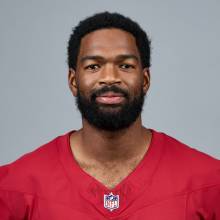 Jacoby Brissett67Grade
Jacoby Brissett is a 10-year veteran and a good bridge quarterback. In 12 starts last season, he threw for over 3,300 yards, 23 touchdowns, and eight interceptions. The Cardinals' quarterback brought stability and effectiveness to their passing offense. His play allowed the organization to evaluate the receiving corps, though it did not produce many wins.
589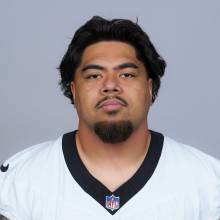 Taliese Fuaga67Grade
Fuaga started 13 games in 2025 while battling knee, back and high-ankle injuries. Still, the core appeal of his game remained obvious with his play-strength, power and a heavy-handed presence at the point of attack. Fuaga is at his best when he can square defenders, initiate first meaningful contact and use his thick build and stiff punch to dictate terms early in the rep. That approach gives him a sturdy floor against power and allows him to create movement in the run game when his landmarks are clean. Issues stem from his pass-protection margin remaining narrow. Fuaga has mediocre range, body control and recovery skill, which leads to quick losses when rushers prevent him from landing first or force him into late adjustments. He experimented with changeups, including vertical-to-jump sets, to disrupt rush timing, and those answers helped at times, but they also left him vulnerable to decisive wins across his face. In the run game, Fuaga has real knockback power and second-level finishing ability, but his middling adjustability shows up against movement across his face. His power profile gives him starter-level value, but reaching a higher tier will require cleaner hand-timing, better set discipline and a scheme that lets him play forward more than it exposes him in space.
588 JK Scott67Grade
Much like his Chargers special teams counterpart, Cameron Dicker, Scott has been consistent. Since signing in Los Angeles prior to the 2022 campaign, the 30-year-old punter has averaged over 46 yards per punt, with only his first season as part of the team falling below that number. In fact, Scott incrementally improved in that specific area during each campaign and posted a career-high last year at 47.8 per punt. Each season, Scott also posted an average of over 41 net yards per punt after not doing so during his first three years with the Green Bay Packers.
587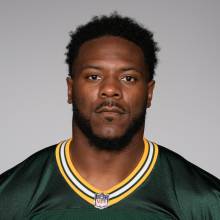 Zaire Franklin67Grade
It's been an interesting two-year run for Franklin, going from a career season and making his first Pro Bowl in 2024 to having arguably his worst season since becoming a starter last year. He does have the speed and athleticism to shoot gaps in the running game, but struggles when taking on blocks. In coverage, Franklin's speed can help him click and close, but he wasn't nearly as impactful a year ago. Also, he was late in recognizing route concepts and struggled with his angles and leverage in space. It will be interesting to see if the former Colt can bounce back with a change of scenery in Green Bay this season.
586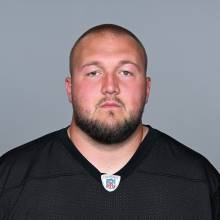 Mason McCormick67Grade
McCormick started all 17 games with just one penalty, providing Pittsburgh with steady, assignment-sound play at right guard in just his second season. He is not an overwhelming physical talent, but his active hands, quick refits and excellent strain allow him to stay attached, die slowly when initially beaten and prevent clean sheds. McCormick displays enough play-strength and movement ability to function across concepts, while his leverage, toughness and hand activity make him more difficult to discard than his raw traits suggest. The limitations show up against wider interior alignments and quick movement, where he can drift, redirect late or be a tick slow to pick up loopers. McCormick is a classic greater-than-the-sum-of-his-parts starter whose technique, effort and consistency make him a net positive despite a capped ceiling.
585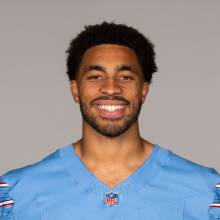 Chimere Dike67Grade
Chimere Dike serves as the Titans' primary punter return specialist. He averaged 17.3 yards per return and two return touchdowns. Dike has field-flipping speed and displays it on special teams and as a wide receiver. He handled reading zone coverages well as a rookie and gaining yards after the catch. There will be an uphill climb to fight for targets with the talent pool in their receiver room but he has a defined role carved out on special teams.
584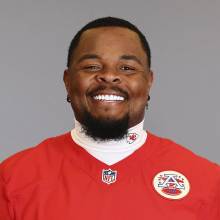 Jawaan Taylor67Grade
Taylor finished his seventh season overall and third with Kansas City in 2025, starting 12 games before a triceps injury sidelined him for the final five. After reducing his penalty totals each year with the Chiefs, Taylor signed with the Falcons on a modest one-year deal that could provide real value if the cleaner discipline holds. His false-start issues are tied to the rigidity of his game, with Taylor often trying to steal the early runway needed for his size, length and play-strength to take over. Taylor remains a functional starting right tackle with prototypical size, length and enough play-strength to neutralize most rushers when he stays square. His pass sets are built on short, choppy steps that help him stay inside-out to his landmarks, followed by a two-hand strike designed to initiate contact and engulf rushers before they can access his edges. The limitations show up against slippery, high-end athletes who can evade his initial punch, force him to redirect and create quick edge losses. In the run game, Taylor can fit, cover up and wall off targets, but high pads and occasional understeps limit his sustain, finish and ability to adjust late in reps. He has learned to maximize his size and length in pass protection, but the movement ceiling and run-game limitations keep him in the functional starter tier.
583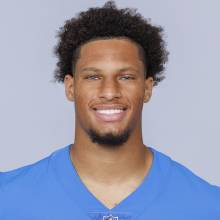 Oronde Gadsden II67Grade
Oronde Gadsden was a great surprise for the Chargers last season and immediately became one of the best deep-threat tight ends in the NFL. His tracking and catch radius made him a player Justin Herbert could trust to haul in most targets thrown "off target" or into coverage. While he isn't a natural athlete in space, getting the ball to him in stride lets Gadsden locate space to exploit and accelerate. The former fifth-round pick was the best and healthiest option in the Chargers' tight end room last season, which sustained multiple injuries, even though he doesn't help the run game. With multiple new additions at tight end, Gadsden will have his work cut out for him battling for reps.
582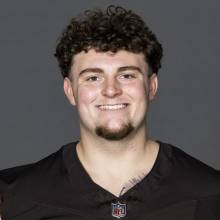 Mason Graham67Grade
While Graham certainly fell short of expectations as a rookie, he played well enough down the stretch to be optimistic about his outlook moving forward. The 2025 No. 5 overall pick made a handful of plays against the run, using both his strength to reset the line of scrimmage and his athleticism to slip blocks. Graham also had a few flashes as a pass-rusher, getting pressure with power and working the hands.
581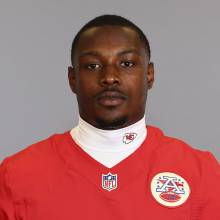 Chamarri Conner67Grade
A safety who is better in the box than in coverage, Chamarri Conner brings dime backer looks and execution to the defense. His instincts take him to the football, but he isn't always capable of locating it or taking it away. Conner struggles to tackle consistently and often takes poor angles to the ball carrier, but tends to make electric plays once or twice a game. His reps in the slot magnified his poor man coverage ability, but he started playing more in the box as a safety, which improved his play last season. He gave up the most yards in coverage in his career in 2025, and while he brings value against the run, he's been a player that offenses will target.
580 Alvin Kamara67Grade
Alvin Kamara is an established dual-threat running back. He started 11 straight games for the Saints before an MCL sprain and ankle injury in Week 12 against the Atlanta Falcons forced him out of action for the remainder of the season. Before the injuries, Kamara was solid, but he clearly appeared to have lost a step athletically. He runs with great vision and elusiveness/slashes in and out of traffic. He remains one of the best at following his blocks to daylight. He finished the season with the worst yards-per-carry of his career, at 3.6, and didn't have the same impact as a pass catcher either. Kamara's pass protection left a lot to be desired. All in all, he remains a capable playmaker in an NFL offense.
579 Eric Wilson67Grade
Wilson is a hybrid edge defender/off-ball linebacker who fits well in Brian Flores' defense that likes to give opposing offenses a variety of looks. As a run defender, he has good instincts and solid overall athleticism to beat blockers to the spot, racking up a career-high 17 tackles for loss last season. However, the nine-year veteran struggles to take on blocks and make an impact in coverage. Also, Wilson has only been a regular starter for three seasons.
578 Mike McGlinchey67Grade
McGlinchey started all 17 games last season and delivered another solid season, largely matching the level he has played at since arriving from San Francisco in 2023. McGlinchey is a tall, experienced right tackle with solid burst, good run-game feel and a clear understanding of timing, angles and concept intent. He is effective as a lead blocker around the edge, efficient on combinations and capable of cutting off the backside when his landmarks are clean. In pass protection, he can settle at his spot, stay inside-out and protect his inside shoulder, while using a circle-punch and two-hand strike to create early leverage inside rushers' frames. The tradeoff is a rigid, somewhat robotic style that works best when his snap-timing is clean and he can beat rushers to the spot. When that timing is disrupted, the margin narrows quickly. Rushers can freeze his feet, shorten the corner or compress him with speed-to-power. McGlinchey remains a functional starting right tackle because of his run-game intelligence, experience and ability to end reps quickly against most competition. However, his pass-protection ceiling is capped by limited pliability, recovery range and anchor consistency.
577 Cam Ward67Grade
The 2025 first overall pick displayed immense physical talent during his rookie campaign. Cam Ward made the unbelievable splash plays once the defense forced him to play off-script, creating second and even third-reaction throwing opportunities. He has great pocket strength to fight through contact and extend plays. Ward's accuracy waned the further he threw down the field. His decision-making and anticipation of throws from true dropback sets were lacking. That said, it appeared the game began to slow down for Ward late in the season. He began to make more routine reads and throws from the pocket. He has immense potential and upside, but his flashes need to become routine plays from the pocket.
576 Kyle Dugger68Grade
Still a dangerous robber player who drives downhill from the safety position, Kyle Dugger wasn't the same player last season as he was in the past. Always looking to jump routes and read plays before they revealed themselves, Dugger was caught out of position too often, and he was eventually benched in the last game of the season. He's more natural in the box; reads out runs well, and throws his body around in the run game. His instincts and run game prowess could prove useful in Cincinnati, but his up-and-down results should give him a short leash going forward.
575 Chau Smith-Wade68Grade
While he didn't give up a ton of touchdowns last season, when offenses needed a first down against the Panthers, Chau Smith-Wade was the guy they went after. He's a good and willing tackler who is best in zone coverage, where he can read the play and quarterback, then trigger downhill, but didn't impact the catch point enough in high-leverage situations to break up passes. Smith-Wade likes to jump routes and tends to hop toward a receiver or direction, putting himself slightly out of position. He wore a lot of different hats for the Panthers last year out of necessity, but should focus solely on nickel going forward.
574 Isaiah Pola-Mao68Grade
Forced into playing more post-safety than he was comfortable with in 2025, Isaiah Pola-Mao struggled to find his footing. An early-season injury to Lonnie Johnson put more on Pola-Mao's shoulders, and the comfort from deep never came to fruition, but down the stretch, with more reps closer to the line of scrimmage, he started to turn it around. He shows good play recognition and a feel for coverage as a two-high or intermediate defender, but is better as part of a safety rotation. Putting too much on his plate overcomplicates his role.
573 Jonnu Smith68Grade
After a rejuvenation back in 2024, Jonnu Smith reunited with Arthur Smith in Pittsburgh and had a completely different season. His targets were cut in half, his yards per reception were the lowest of his career (5.8), and his yards after catch over expected, via NFLPro, were +1 yard, his lowest. The talent after the catch is still there, but the creativity to get Smith into space was drastically different in 2025. The alignment variety makes him fun to watch, but funneling screens to him on a bad offensive team isn't the best way to get the most out of his unique skill set.
572 Tyler Davis68Grade
Davis could start for a handful of teams around the league; he just happens to be on the Rams' deep defensive line. Still, the 6'2', 300-pound defensive lineman has carved out a role as a versatile run stuffer, using his natural leverage and compact frame to his advantage and contribute off the bench.
571 Shaq Thompson68Grade
At this stage of his career, Thompson is more of a rotational player/spot starter. That's the role he played in Buffalo last season, and he was a solid player in both phases of the game. The 11-year veteran is best when attacking downhill, in either coverage or against the run, and he can still lay some wood when tackling.
570 Dayo Odeyingbo68Grade
Odeyingbo's first season in Chicago was cut short due to a torn Achilles, and he wasn't playing particularly well in the eight games before the injury. At his best, the Vanderbilt product is a solid all-around defensive end who can win with power and an arm-over move as a pass-rusher, and uses his strength well to set the edge. But the five-year pro blossoming into a high-level starter would be a surprise at this stage.
569 Charlie Woerner68Grade
One of the rare utility men in the NFL, Charlie Woerner brings a bevy of blocking experience, utility, and versatility to the tight end position. He's not going to light up the stat sheet, but he'll line up anywhere and bring his best with him. From motion blocks to in-line capability, Woerner does it all, and the intelligence to handle all of his duties and play on the fly is truly impressive. He won't be the strongest blocker or even the most disruptive, but the different ways he's utilized are special around the NFL.
568 Malcolm Koonce68Grade
At the conclusion of the 2023 campaign, Koonce looked like he was in line to receive a big payday. He had eight sacks in the last nine games of the season to build some momentum heading into a contract year, only to see it all go for naught by tearing an ACL about a week before the 2024 season opener. The injury impacted the Buffalo product's explosiveness a year ago, which is the root of his game. Koonce has a second chance to prove himself in Las Vegas this fall, but it remains to be seen if he can get back to his pre-injury form.
567 Deone Walker68Grade
Consistency was a concern for Walker coming out of Kentucky, and that remains as one of his biggest issues in the NFL. But the flashes did become more frequent for the former Wildcat as a rookie, especially against the run, allowing him to build some momentum heading into year two. It's just a matter of the 6'7", 331-pound defensive tackle holding his gap more frequently and winning more as a pass-rusher.
566 Patrick Ricard68Grade
Pat Ricard isn't your traditional fullback. The 300-pound former defensive lineman has been a net-positive player for the majority of his career. Ricard is a powerful downhill/lead blocker who will knock defenders out of the RB's path like a bowling ball taking out pins at the bowling alley. He works well on tandem/duo blocks in the run and passing games. He is not a threat out of the backfield as a receiver, limiting his offensive versatility. Ricard isn't a dynamic athlete or mover either. In all, he's a good player and blocker.
565 Elijah Higgins68Grade
The Cardinals like having tight ends who can serve as receivers and move all around the formation, and as a former college receiver, Elijah Higgins fits the bill. He's a smooth mover who can sink his hips to get in and out of his breaks well and find space. Higgins has sure hands and settles down in zone well, but he's still improving as a blocker and fits more as a tweener at this point in his career. He's a more capable receiver than an in-line blocker and helped the Cardinals exploit space underneath with sneaky yards after the catch.
564 Tre' Harris68Grade
One of Tre' Harris' calling cards as a prospect was his route running and separation skills against man coverage. As a rookie, he showcased that ability translated to the NFL well. Harris showed his value against zone defenses and solid chemistry with Justin Herbert. He utilized his size and strength wisely to combat tight man coverage defenders and box them out of the catch point. His lack of explosive athletic traits could limit his max potential. Harris is fighting for targets with multiple talented players but if given the opportunity, he can produce in the Chargers' offense.
563 Austin Corbett68Grade
Corbett has battled injuries over the last few seasons, but he still managed 11 starts in 2025 before signing with the Bills as a free agent. Corbett is a crafty, sturdy blocker who plays on time in the zone run game, understands the intent of concepts and does a good job sorting movement, fitting square and steering defenders away from the ball. His somewhat narrow frame and mediocre arm length shrink his margin for error with positioning and hand usage, leaving him with below-average recovery skills when defenders cross his face or knock him off schedule. Even so, he generally plays within himself, limits risk-taking and has enough anchor to avoid getting walked back consistently. Corbett profiles as a steady, unspectacular starter with valuable interior versatility.
562 Dre'Mont Jones68Grade
Jones is a solid pass-rusher who can win a variety of ways, showing the strength and leg drive to turn speed to power and the quickness and agility to work the edges or as the looper in line games. He's also shown the ability to get pressure on the interior or the edge to add some versatility to his game. The seven-year veteran just isn't much of a factor against the run.
561 Charlie Kolar68Grade
Opportunity awaits Charlie Kolar in Los Angeles, as he's been stuck behind Isaiah Likely and Mark Andrews as the blocking tight end for Baltimore. He's a physical and effective blocker with great timing on double teams and a strong understanding of his blocking assignments, which will work well for Mike McDaniel and John Harbaugh. But there's more under the surface for Kolar as a receiver that wasn't unearthed in Baltimore. He's a good and efficient mover for his size, and his impact as a blocker makes him an ideal target for "leak" and play-action concepts. He's going to pair well with David Njoku in 12 personnel sets, with room to grow in that offense.
560 L'Jarius Sneed68Grade
L'Jarius Sneed has played in 12 games over the last two seasons after being traded to the Tennessee Titans, but when he's on the field, his presence is felt. Lower body injuries take their toll, and he's had chronic knee issues for the last three seasons, and added a quad injury last season that forced him to IR. Sneed wants to play a hard-nosed style of defense with well-timed jabs, holding through the route, and trying to throw off route timing anyway he can. His experience is felt in man and zone where he continues to put himself in the right positions, but can't always react the way he used to. He's headed back to Kansas City, where all of his success came from, in an attempt to get healthy and be a solid rotational piece for their young secondary.
559 Mitchell Evans68Grade
Running the football in Carolina is a requirement of Dave Canales' offense, and they've paired a couple of tight ends together who help with that. Adding Mitchell Evans to Tommy Tremble united former Notre Dame alums and created a Bash Brothers scene for the Panthers. Evans has good hands and the ability to exploit and find space in the passing game well, but his value as a rookie was his blocking ability. He could hold his own against a number of defensive ends, helped cave in sides of the defense to create holes, and uses his hands well as a blocker. Evans has room to grow as a receiver, but his impact as a blocker will continue to be important for the Panthers going forward.
558 Christian Kirk68Grade
Christian Kirk battled a nagging hamstring injury that forced him to miss a few games last season for the Texans. On the field, Kirk displayed his ability to play all over the formation, win with his route running, and show good football IQ. He is a good addition to a receiving room, if healthy. Kirk doesn't have the same athleticism as he did at the earlier stages of his career, but he is still capable of winning after the catch. He is a quality veteran receiver who can help push the passing offense along in his role, working in the short and intermediate parts of the field.
557 Isaiah McGuire68Grade
As a pass-rusher, McGuire is more of an effort rusher who has enough size and strength to push the pocket and get pressures or sacks against longer developing pass plays. The three-year pro makes his money against the run, setting the edge and defeating blocks in a variety of ways to make tackles near the line of scrimmage. With Myles Garrett out in Cleveland, look for McGuire to take on a much bigger role this season.
556 Jarran Reed68Grade
At this point in his career, Reed is more of a rotational player for the Seahawks. He can be a boulder in the running game, as he is hard to move and makes a handful of stops near the line of scrimmage. The 33-year-old does have a decent pass-rush motor, but he doesn't bring much more to the table than that against the passing game.
555 Josh Uche68Grade
Uche falling out of favor with the Philadelphia Eagles last season is a bit of a mystery, because he was playing well during the first eight weeks. While he only registered one sack, the former Eagle generated a good amount of pressure during his limited opportunities and provided serviceable play against the run. It will be interesting to watch how the 2020 second-round pick performs with a bigger opportunity in Miami.
554 Teddye Buchanan68Grade
Buchanan's game is rooted in his athleticism, so it will be interesting to see how he bounces back from a torn ACL, meniscus and sprained LCL in his right knee. That injury ended his rookie season early, but the fourth-round pick did exceed expectations by making 13 starts and recording 93 tackles last fall. In year one, Buchanan's ability to absorb contact against the run and close in coverage stood out. But he does have room for growth with his instincts, ability to escape blocks and short-area quickness.
553 Jalyx Hunt68Grade
As a pass-rusher, the majority of Hunt's product still came via effort or when unblocked, but he did show growth with his hand usage last season to help go from 1.5 to 6.5 sacks from year one to year two. That being said, what's kept the 2024 third-round pick from being a consistent starter so far is that he struggles to set the edge consistently and is reliant on using his athleticism to work around blocks to make an impact as a run defender. However, Hunt's three interceptions in 2025 were pretty impressive to earn back some versatility points.
552 Jordan Poyer68Grade
The Bills had a need at safety when Taylor Rapp got injured last season, and they welcomed Jordan Poyer back into the fold with Arms Wide Open (you're welcome). He battled a hamstring injury for nearly all of the season; that, along with his age, affected his ability as a man-coverage defender and his recovery, but he still brought his football IQ and instincts to the field. Much of his best football from 2025 came down the stretch for the Bills' postseason run before missing the final game of the regular season, and then aggravated his hamstring injury in the Wild Card round.
551 Carl Granderson68Grade
Granderson has only spent two out of seven career seasons as a full-time starter and was more of a rotational player last year. But he's a good contributor, as the 6'5", 261-pound defensive end uses his size well to turn speed to power as a pass-rusher and set the edge against the run. He also has a dirty spin move as a counter and made several plays while taking on pullers in 2025.
550 Malcolm Roach68Grade
Roach is a bit of a unique defensive tackle in that he's a role player with just eight career starts, but is a much better run defender than pass-rusher. The six-year veteran is strong at the point of attack to defeat one-on-one blocks and hold his gap against combos, collecting a good amount of stops in both situations. As a pass-rusher, he did notch six sacks in 14 games (including playoffs) last year. However, a lot of those came via clean-ups as Roach isn't a consistent winner when rushing the passer.
549 Olamide Zaccheaus68Grade
Olamide Zaccheaus excels on underneath/short passing routes where he attacks open spaces and gains yards after the catch. He has a compact frame with good football IQ post-snap to locate vulnerabilities within the defensive secondary. Zaccheus is a quality playmaker suited to be a good WR3 for an offense. He should benefit the Atlanta Falcons offense.
548 Harrison Phillips68Grade
After a down year in Minnesota during the previous campaign, Phillips bounced back and returned to form as a run defender after getting traded to New York before the 2025 season opener. His block recognition is excellent, putting him in a good position to stay in his gap, and the eight-year veteran has the strength to shed blocks and uses a few moves as change-ups to escape and frequently make tackles near the line of scrimmage. However, Phillips still offers little to nothing as a pass-rusher and is a two-down player.
547 Bradley Chubb68Grade
Chubb certainly isn't as explosive as he used to be after the knee injury, but he can still be a productive pass-rusher with his ability to turn speed to power. However, the former Bronco and Dolphin doesn't make much of an impact against the run. At this point in his career, the 30-year-old is closer to the "just another guy" category than he is to being a true difference-maker.
546 Jermaine Eluemunor68Grade
Eluemunor trended toward greater stability over the last two seasons with the Giants, including 16 starts in 2025, and profiles as a functional short-term answer at right tackle. His value stems from size, width and composure in pass protection. Eluemunor plays with a square posture, gains adequate depth on vertical sets and does a solid job forcing rushers to work through his frame rather than giving up immediate access to his edges. The Giants also helped manage his exposure against top rushers with chips and tight-end help on many true dropbacks, reducing the number of clean island reps he needed to survive. That structure helps mask below-average late-rep recovery, but a limited ceiling is clear when facing higher-end rushers who can stress his twitch, force him into recovery mode or string moves together. In the run game, Eluemunor can generate movement on contact and cover up defenders with his frame, but he does not consistently sustain, steer or finish deep into reps. He is not a high-upside tackle, though his size, experience and ability to keep most reps orderly make him a steady, low-variance starter.
545 Cade Mays68Grade
Mays started 12 games in 2025 and established himself as a brute-force center. His game is built on size, length and raw strength, giving him the ability to create displacement and secure interior lanes when he can work vertically in gap-oriented, downhill concepts. Mays is at his best playing square, fitting with force and using his anchor to absorb power in pass protection. He showed progress last season with the Carolina Panthers by keeping his head out of blocks and reducing some of the volatility that can come with his aggressive, brawling style. Limitations still show up when he is forced to operate laterally, redirect in space or survive isolated true one-on-one pass-protection reps against quicker interior rushers. His hand usage remains more forceful than refined, and his movement skills cap how consistently he can recover when defenders make him adjust after initial contact. Mays is not an all-situations center, but his size, anchor and vertical run-game power give him a path to functional starter value in a scheme that lets him play forward and limits space exposure.
544 Jeremy Reaves68Grade
Jeremy Reaves was called upon to play more in 2025 than ever before in his career. In a defense full of coverage busts and miscommunications, Reaves was more of a steady presence than expected. He looked shaky, at times, when trying to read out routes in zone, but triggering downhill when a route opened up in front of him was electric. When playing fast, Reaves can show off his speed and looked solid as a man defender when asked. He plays the run well from depth or in the box and started to get more comfortable down the stretch.
543 Chop Robinson68Grade
Even as a draft prospect, Robinson wasn't viewed as much of a run defender. So, it's no surprise that he's struggled in that department during his first two NFL seasons. However, the Penn State product has always been a high-level athlete who can get after the quarterback and was a good pass-rusher as a rookie. Robinson regressed in year two, though, in that he wasn't winning nearly as much and struggled to finish reps. That makes this season a big one for the upcoming third-year pro.
542 Arik Armstead68Grade
At this point in his career, Armstead is a role player and spot starter. He's a decent interior pass-rusher who has the athleticism to work the edges of an interior offensive lineman, but the 11-year veteran doesn't make much of an impact against the run anymore. Armstead still has a niche, but it's pretty clear he's on the downside of his career.
541 Colton McKivitz68Grade
McKivitz built upon his late 2024 improvement with the most consistent season of his career last year, settling in as a functional right tackle for the 49ers. His game is rooted in efficiency, positioning and hand usage more than standout physical traits. McKivitz is broadly built with solid play-strength and enough short-area quickness to reach run-game landmarks on time, create quick leverage and stay on schedule as a positional blocker. That same efficiency translates to pass protection against tighter alignments or when San Francisco uses help to funnel wider rushers back into his grasp. His range to expand set points against wide alignments is only adequate, leaving him stressed by high-side rushes when he cannot win early with his hands. Late inside counters can also challenge his posture and balance near the top of the pocket. McKivitz is not a high-ceiling tackle, but his technical growth, independent hands and fit within the Niners' structure have made him a useful homegrown starter.
540 Jerry Jeudy68Grade
Jerry Jeudy finished second on the Browns in targets and receiving yards. He wins with route running and creating separation. Jeudy uses short-area quickness and leverage to win his reps against man coverage. He still has the open-field speed to catch and run if thrown into a void. Jeudy continues to struggle with drops and making tightly contested catches. After six years in the league, he has established himself as a functional starting receiver and contributor but very inconsistent.
539 Jordan Stout68Grade
Stout is the league's reigning first-team All-Pro punter. He was rewarded by following John Harbaugh from the Baltimore Ravens to the Giants and signing a three-year, $12.3 million contract. His average annual salary now tops all punters. Stout has been a quality punter since entering the league as a 2022 fourth-round draft pick. However, he's still ascending. The 27-year-old set career-highs last season with averages of 50.1 yards per punt and 44.9 net yards per attempt. Though Stout tends to power through kicks and drive them down the field than generating high-end hang time.
538 Will McDonald IV68Grade
McDonald makes his money as a pass-rusher, owning the best spin move in the NFL and the ability to turn speed to power. That's how the 2023 first-round pick has accumulated 18.5 sacks over the last two seasons. However, he is a liability in the running game, struggling to set the edge consistently.
537 Chris Boswell68Grade
Boswell is the best kicker in Steelers history. He gets extra credit among current kickers, because the field at Acrisure Stadium is widely considered the game's worst surface for specialists. Yet, the 35-year-old veteran took a slight step back this past season. After back-to-back campaigns with a conversation rate over 90, Boswell's field-goal percentage dipped under 85 for only the third time during his 11-year career. Still, another good season will make Pittsburgh's current kicker the franchise's all-time leader in made field goals and points scored.
536 K'Lavon Chaisson68Grade
Chaisson is certainly a designated pass-rusher at this stage, but he's revived his career with 12.5 sacks over the last two seasons. The 2020 first-round pick has really expanded his repertoire, winning around both edges with a variety of moves and by turning speed to power. That gives Chaisson a good role in Washington, as the Commanders have struggled to get after the quarterback in recent years.
535 Will Fries68Grade
Fries returned from a devastating 2024 leg injury to start all 17 games during his first season in Minnesota, reclaiming much of the baseline performance that made him one of the league's more underrated guards. Fries is a tall, physical guard who wins with competitive toughness, good play-strength and a finisher's mentality, especially when he can fit square, strain through contact and impose himself on angle-drive blocks. His hands, leverage and anchor are still good enough to survive in protection, but the 2025 tape was not quite as clean as his pre-injury peak. He was less reliable at intersecting, sustaining and finishing second-level targets, and his hand usage in pass protection was less refined, exposing his frame and leading to more compression than his best Indianapolis Colts tape. Fries still brings starting-caliber toughness and tone-setting value, but his post-injury profile settled closer to a functional starter than the ascending guard he appeared to be in 2023.
534 Austin McNamara68Grade
McNamara's first full season as an NFL punter bordered on exceptional. The 2024 undrafted free agent wasn't on a regular-season roster during his first year out of Texas Tech. He won the job during last year's training camp on his way to becoming the Jets' "sniper." The 25-year-old McNamara finished second last season in kicks downed inside the 20-yard line, fair catches forced and overall hang time.
533 Cam Jurgens68Grade
Jurgens gutted out 14 starts last season while dealing with lingering back issues, plus knee and concussion setbacks during the year. A diminished version of the player, who had looked like an ascending top-five center, was the result. Even so, Jurgens remained a solid overall starter. The injuries around him and Philadelphia's inefficient offensive structure limited how often his best trait—twitchy, explosive movement—was weaponized in space. He still showed the quickness to reach, climb and work laterally, but his play-strength and anchor were below his top form, especially when absorbing power down the middle of his frame or overtaking on double-teams. When caught in compromised positions, his recovery skill also looked less dynamic than it had at his peak. Jurgens' processing and athletic profile still give him a clear path back toward high-end center play if his back fully heals and Philadelphia's new Shanahan-adjacent structure places him on the move more often. For now, his 2025 grade reflects a functional starter with legitimate rebound potential but enough health uncertainty to keep him below his prior trajectory.
532 Tate Ratledge68Grade
Ratledge started all 17 games as a rookie and showed steady growth as the season progressed, particularly with his processing against movement, line games and simulated pressures. As his recognition improved, he was quicker to shore up penetration, pass off threats and get into his anchor, thus allowing his play-strength to show up more consistently. Ratledge has enough power to create movement on doubles, strain in the post and climb with good timing to wall off linebackers once latched. His tall, sawed-off build and tardy strike-timing still create issues, exposing his chest and leading to some glaring lapses in leverage and control when defenders beat him to first meaningful contact. Detroit's play-action-heavy structure and Jared Goff's quick release also helped minimize the number of high-leverage, true dropback reps the rookie had to survive. Ratledge's first season showed starter-level traits and encouraging growth, but his hand-timing and leverage consistency still need to sharpen before he becomes a dependable every-week guard.
531 Sebastian Joseph-Day68Grade
Joseph-Day is about to play for his fifth team in as many years, signing with the Steelers in free agency, but he can be a valuable depth piece for Pittsburgh's run defense. The versatile defensive lineman can hold his own and make tackles near the line of scrimmage from several alignments, playing anywhere from a base end to a 2i-technique. Joseph-Day just never has been and still isn't much of a factor as a pass-rusher.
530 Jake Matthews68Grade
Matthews extended his remarkable consecutive-start streak to 196 games in 2025, remaining the NFL's premier ironman regardless of position. His value remains rooted in reliability, technical competence and a run-game profile that fits best in zone-heavy structures. Matthews is a sound zone-blocker with efficient footwork, clean positioning and enough strain to stay attached, steer and finish when he reaches his landmarks on time. In pass protection, he remains functional, but the anchor has become the clear limiting factor. Power-rushers can compress him into the pocket. The issue has been more exposed over the last two seasons as Atlanta moved away from the top-five play-action rates that previously helped reduce true dropback stress. Matthews can still survive with timing, angles and experience, but he is more dependent on structure than the higher-end left tackles. His durability and week-to-week steadiness carry value beyond what the trait scores fully capture, but the current profile is a reliable, system-sensitive starter rather than a high-end blindside protector.
529 Mike Onwenu68Grade
Onwenu remains a hulking, power-oriented guard whose best value comes when he is allowed to play inside and lean into his mass. At 6'3" and 350 pounds, he can cover up and displace defenders in downhill run concepts, while bringing a firm anchor to halt the bull-rush in pass protection. His size and play-strength are legitimate carrying traits, and his proven guard/tackle versatility gives New England useful lineup flexibility. The limitations are tied to movement and range. Onwenu's mediocre recovery skills show up when isolated against wide rush alignments, late movement and quickness across his face. He is not a guard who consistently wins by redirecting or adjusting in space. His hands are functional but not especially refined, which narrows his margin of error when defenders force him off his initial track. Onwenu is best viewed as a functional starting guard with real power and anchor value, but his movement limitations keep him closer to the capped-starter tier than the high-end group.
528 Javonte Williams68Grade
Javonte Williams is a downhill hammer and physical running back. He becomes a bowling ball with momentum when he attacks north and south. Williams runs through tackles and excels after initial contact. He averaged 3.9 yards after contact per carry, per NFL Next Gen Stats. Williams is a functional, at-best, checkdown option in the passing attack. He's an ok pass protector who gives full effort. He is not a high upside back, but he fills the functional starting role admirably.
527 Jaxson Dart68Grade
Waiting a few games behind an established veteran quarterback served Jaxson Dart well during his rookie season. The former first-round pick started 12 games and showcased his prowess as a quick-game passer combined with his plus-level athleticism. Dart established himself as a running/scrambling threat last season. His pocket mobility and backfield creativity help him evade the defensive pass rush for second-reaction throws. As a passer, his game is to quickly read the action and make the right decision from the pocket. He is a vertical climber in the pocket but will drift backwards to buy time for routes to develop, facing heavy defensive pressure. Dart must protect himself more when running the football. He was evaluated for a head injury multiple times last season. He missed two games for an official concussion, diagnosed after facing the Chicago Bears.
526 Dante Fowler Jr.69Grade
While Fowler had a down year statistically, going from 10.5 sacks in 2024 to just three in 2025, his movement skills are still there. The tape shows an athletic and quick edge-rusher who can work the edges, but he certainly is a designated pass-rusher at this point in his career. The 2015 No. 3 overall pick has carved out a good niche, though. It's helped him overcome a devastating knee injury shortly after getting drafted to play 10, going on 11 seasons in the NFL while racking up 58.5 career sacks and counting.
525 Tyler Nubin69Grade
There's a trend to watch with the Giants' defense: for all their talent, they're giving up too many big plays, and defenders are hesitating when they could make a play. Tyler Nubin is the microcosm of their 2025. One down: he's breaking on a throw and meets the receiver at the catch point; then, another, he'll miss the route concept and be late. He seemed more comfortable in the box against the run and driving to the flat against the quick game or check downs, closer to the action, where he didn't have to think as much. Getting depth in coverage led to poor angles, hesitant drops, and difficulty feeling routes both behind and in front of him. The talent is there, but it'll be a big year three for Nubin.
524 John Bates69Grade
The entire offense for the Commanders was plagued by injuries and inconsistencies throughout 2025. While John Bates didn't have his most consistent performance, he's still one of the premier blockers at the position in the NFL. He brings power, maintains connectivity, and wants to finish plays to the ground whenever possible. Bates can open run lanes with force or with angles created through body positioning, and does a nice job of working double teams to the next level. He's also a sound pass protector when asked to do it. Bates isn't going to be out on the field to showcase his impact as a receiving option, but in David Blough's offense next season, we should expect better results in the run game.
523 Kendrick Bourne69Grade
Kendrick Bourne savvy veteran wide receiver with strong instincts and football IQ. He thrives as a No. 3 receiver and chain mover in the passing offense. Bourne's play style is that of a route-running slot receiver. He locates the soft spots against zone defenses quickly and is ready for the ball. Bourne understands how to play the receiver position and make an impact as a first and second-level threat. He is not a great athlete in terms of speed and explosiveness, and that's not how he wins. He is not a high-volume receiver who will or should dominate targets, but as the third receiver on the depth chart, Bourne stabilizes your receiver room.
522 Jack Jones69Grade
The talent has always been there for Jack Jones, but he's been the picture of inconsistency throughout his career. He took on the Miami Dolphins' scheme change for himself and got off to a rough start before settling in, limiting busted coverages and being stickier in coverage. He does better when he can match routes to the quarterback with his eyes in zone, which allows him to break on throws more cleanly. Jones struggles when the receiver stacks him at any point in the route, and there are times when it appears he loses interest in a rep. Consistency is his enemy.
521 Darren Waller69Grade
From the minute he stepped on the field for the Miami Dolphins last season, Darren Waller was instant offense. You wouldn't know he was away from football for over a year, working his way back to the field in Week 4 of the 2025 season. He showed the ball skills and top-tier athleticism that made him one of the dominant forces at the position for a time during his career, and he put up six touchdowns in the process, the second-most of his career. However, the injuries were constant and prevented him from having any staying power; he only played 233 snaps last season. Waller isn't going to block for an offense, but if he's healthy, he's still a dangerous weapon to utilize.
520 Austin Booker69Grade
Booker has the potential to break out as a pass-rusher this season. A knee injury limited him to just 10 games in 2025, and he managed to record 4.5 sacks while showing off an impressive long-arm move and a couple of counters off it. The 2024 fifth-round pick is more opportunistic against the run, making tackles when unblocked or against tight ends, but the flashes are there to suggest he can become at least serviceable in that department.
519 Da'Shawn Hand69Grade
With 6.5 career sacks in eight years, Hand is who he is at this point: a good two-down run defender on the interior defensive line. The veteran has managed to carve out a niche in the NFL, defeating all kinds of blocks and proving to be a reliable gap-filler in the trenches. Just don't expect the former fourth-round pick to do more than push the pocket occasionally as a pass-rusher.
518 Jarvis Brownlee Jr.69Grade
Nickel corners have to be their own versions of honey badgers in each individual system they play in because you're going to get run at. Jarvis Brownlee is always ready to square up and throw his body around, not just in the run game, but as a press-man nickel who will float outside. The trade to the Jets began the transition to nickel, and Brownlee was ready to take on the task. He's still a developing talent and must clean up the penalties, but he played well for the Titans as a rookie and was forming that path for the Jets before his injury. He speaks the same language as Aaron Glenn and, with a full offseason in the system, could be a starter for them in 2026.
517 DJ Reader69Grade
Reader is toward the end of his career and not as dominant and productive as he used to be. A big reason for that is he isn't as good at shedding blocks, but the 10-year veteran knows plenty of tricks of the trade and can still plug up the A-gaps. He's also still solid at pushing the pocket with his size and strength.
516 Noah Fant69Grade
Coming off a season where he was nicked up and played the fewest snaps of his career, Noah Fant hasn't lived up to expectations. The straight-line speed is still there, and he's a good natural receiver, but he drifts into coverage, and unless there's room for him to get up to speed, he doesn't provide much after the catch. He fumbled the ball three times last year, which is a bit of an anomaly, but generally doesn't put the football on the ground. While not a natural blocker, he gives good effort and extends, but needs to work on his hand placement. Fant isn't in the position to be an every-down starter, but can provide solid reps.
515 Joey Bosa69Grade
Injuries are always a concern with Bosa, but he can still contribute as a pass-rusher when healthy. The five-time Pro Bowler is still effective at pushing the pocket with power and working the hands to get pressure despite the dip in sack production over the last few years. But he did regress and wasn't very impactful as a run defender last season.
514 Ty Okada69Grade
The emergence of Okada last season softened the blow of Coby Bryant leaving in free agency, as he was a reliable piece of the puzzle in the absence of Julian Love. While he started to gain confidence and comfort as the season went along, he did a nice job of filling against the run, tackling in the flat against running backs/receivers, and making timely plays. Okada will be a better role player than a full-time starter, but that's just how Macdonald wants it. With the drafting of a young, instinctual ball hawk in Bud Clark, Okada can help in the intermediate area where he shines picking up over routes and triggering to the flat.
513 Jowon Briggs69Grade
Look for Briggs to make a name for himself during the 2026 campaign. He got more playing time in the second half of last season, after the Jets traded away Quinnen Williams, and really stood out as a pass-rusher. The 2024 seventh-round pick can push the pocket when bull rushing, has a good push-pull move as a change-up and has shown some flashes of winning with finesse moves. Briggs needs to be more consistent as a run defender moving forward, but he also showed potential with his ability to defeat blocks to have a higher ceiling in the run game.
512 Malik Washington69Grade
Malik Washington served as a manufactured touch wide receiver on offense and a dynamic returner on special teams for the Miami Dolphins last season. He is alignment versatile which made it easy to get him the football in space on WR screens, angle routes out of the backfield, etc. Washington is quick and explosive with good contact balance for an undersized receiver. He's shown good change of direction and route running. On special teams, he averaged over 26 yards per kick return, 13 yards per punt return, and one punt return touchdown. Going into the 2026 season and under a new regime, will he be asked to play a traditional receiver role or more of the same? As of right now, he's an adequate starter with more to prove.
511 DJ Jones69Grade
Jones is a pretty impressive run defender who can defeat a variety of blocks in a variety of ways. He has the strength to win at the point of attack, can run his feet to avoid getting reached or scooped, and has a few finesse moves he can make offensive linemen whiff with. As a pass-rusher, the nine-year veteran's production is primarily manufactured or via clean-ups. But he can be effective on stunts and line games.
510 Pete Werner69Grade
Werner has made a career out of being a solid run defender, owning the instincts and ability to defeat blocks to be around the ball throughout the game. However, he isn't much of a space player and struggles in coverage. The five-year veteran's lack of ball skills and awareness lead to a lot of completions, and he doesn't have the short-area quickness to make many stops against the passing game.
509 Jordan Battle69Grade
Jordan Battle was an iron man for the Bengals defense last season and turned in the most interceptions of his young career. He didn't create the interceptions, but he was in the right place at the right time, which comes with being around the ball. He's a willing and physical run defender who plays his best near the box, where he can sort through the trash and make plays. But he missed 21 tackles last season (per Pro Football Reference) and allowed far too many big plays in the process. Battle showed he could handle more rotations and deep zones when staying on top of routes last season, but his recovery range is limited, and he tends to be a step slow in recovery. The former third-round pick is entering a contract season, and with Bryan Cook in the fold, that should allow Battle to play more in the box and have his best possible season.
508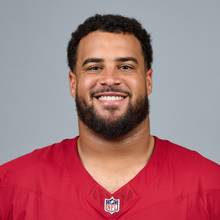 Isaiah Adams69Grade
Adams worked through thumb and back injuries to start 11 games last season inside the league's most pass-heavy offense by attempts, giving him difficult exposure for a young guard. Despite the environment, Adams became one of the more pleasant surprises when watching his film. He is a burly, wide-bodied guard with very good play-strength, heavy hands and above-average contact balance, allowing him to hold up as a surprisingly effective one-on-one blocker in protection. When centered, he can absorb force, stay attached and create enough movement in the run game to look like more than just a placeholder. Arizona's additions of Isaac Seumalo and second-round pick Chase Bisontis suggest the team still has questions about Adams' long-term reliability. But his most recent tape showed starter-quality traits. If Adams stays healthy and maintains that level of play, he has a realistic path to solid-starter value.
507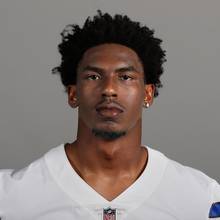 DaRon Bland69Grade
It's been quite the fall for DaRon Bland, who was an All-Pro in 2023 after a record-setting season. But two foot surgeries later, on the same foot, he doesn't look like the same player. He still does a nice job in "catch" technique and off coverage with communication, but his change of direction and drive on the ball isn't the same. Putting him in space didn't work much last season, with Bland struggling in zone coverage. The footwork that allowed him to be a menace at the catch point and jump routes for interceptions and pick-sixes has disappeared, but there's hope he will be healthy to start 2026 and return to form in a new defense.
506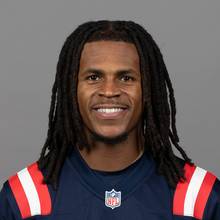 DeMario Douglas69Grade
DeMario Douglas is a proven and solid starting wide receiver. He's an established route-runner and separator, making himself available quickly. Douglas possesses the speed to serve as a vertical slot receiver on deeper routes. He turns into a playmaker after the catch, gaining positive yards. Douglas is an asset when utilized, despite not being the WR1 of the passing offense.
505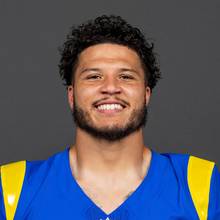 Blake Corum69Grade
Blake Corum is the primary backup running back for the Rams. He has been impressive with his limited workload, rushing for 746 yards and six touchdowns. Corum runs with immense patience and balance between the tackles. His short-area quickness and burst bring a different element to the backfield. Corum has a whopping +13.3 Rush EPA, showcasing his effectiveness in the backfield.
504 Jalon Walker69Grade
Walker provided plenty of flashes as a pass-rusher during his rookie campaign to suggest he has a bright future, showing off some impressive athleticism and quickness to win around the edge. However, a lot of the 2025 first-round pick's production came when he was unblocked or via stunts, especially when working against the run. The Georgia product can improve significantly by winning one-on-one opportunities more frequently and making plays on his own. He may have to wait until 2027, however, after suffering an ACL injury during training camp.
503 Javon Hargrave69Grade
It wasn't too long ago that Hargrave was widely considered one of the best interior pass-rushers in the NFL. He can still push the pocket and has a nice arm-over move as a counter, but he isn't nearly as impactful as he used to be. The 33-year-old has been battling injuries recently and is at the tail end of his career, but Hargrave can still contribute on third downs.
502 Tyrel Dodson69Grade
Dodson is a good overall athlete who has been an impressive coverage linebacker in the past, but is coming off a down season. He struggled with his instincts and awareness a year ago, often looking lost in the Dolphins' defense. Maybe the coaching change in Miami will help the six-year veteran return to form because it feels like he's running out of chances to be a starting linebacker in the NFL otherwise.
501 Devonte Wyatt69Grade
While Wyatt has never been much of a run defender, he's put together a pretty good start to his career as an interior pass-rusher. The 2022 first-round pick's combination of power, athleticism and motor constantly put him in the quarterback's lap. However, Wyatt will be coming off a significant injury that cut his 2025 campaign short, so it will be worth keeping tabs on how that impacts his game moving forward.
500 Kwity Paye69Grade
Paye is an interesting pass-rusher because he has the traits to become a very good one and had a three-year run where he recorded 22.5 sacks from 2022 to 2024. However, he's still pretty one-dimensional, relying heavily on winning with power, and is coming off a down season by tying his career low with just four sacks. The 2021 first-round pick is a good edge-setter against the run and has the strength to defeat blocks to make tackles for short gains, though. It's just a matter of whether he can turn the corner as a pass-rusher to live up to the pre-draft hype.
499 Eric Stokes69Grade
In a corner room that lacked a steady presence, Eric Stokes brought that to the table in 2025. Better in zone coverage, where he can drive down on routes or stay on top of them, Stokes was great in limiting yards after the catch last season and put himself in the right position to make tackles. He read out run plays and quick screens well and was a willing participant to help stop them when needed. Stokes could have had more ball production, but his punch timing was a tick slow and allowed conversions he'll want back. After a rough stretch in his career recently, Stokes bounced back well for a Las Vegas team that needed his presence.
498 TreVeyon Henderson69Grade
TreVeyon Henderson is an explosive playmaking running back for the New England Patriots. In his rookie season, he accounted for 1,132 yards and 10 touchdowns from scrimmage. Henderson is a patient runner with good vision and is adept at following his blocks to daylight. Paired with explosive burst and top-end open-field speed, he's a big play waiting to happen. Henderson's feet are quiet like a mouse, but his acceleration booms like a stick of dynamite. He must improve his pass protection by providing a stronger anchor at the point of attack. There's a bright future for the soon-to-be second-year runner.
497 Jalen Coker69Grade
Jalen Coker is a reliable pass catcher when he's on the field. The UDFA for Carolina has proven to be one of their best route-runners and has the best pair of hands in the receiving room. A preseason injury cost him the first month or so of the season. Coker is a strong, high-floor receiver with inside/outside versatility and showed up big late in the season and in the playoff loss against the Rams.
496 T'Vondre Sweat69Grade
At 360 pounds, Sweat defines what it means to be a boulder against the run. He's hard to move out of his gap, even against double teams and combo blocks, and can shed blocks to make tackles near the line of scrimmage frequently. The 2024 second-round pick does lack some lateral movement skills and overall athleticism, but he plays the nose tackle position well by being a true gap-filler.
495 James Pearce Jr.69Grade
Pearce had an impressive rookie campaign as a pass-rusher, notching double-digit sacks with 10.5 in year one. His ability to turn speed to power and use a cross-chop move as a counter keeps offensive tackles on their heels. That, combined with his athleticism and closing speed, gives the Tennessee product a bright future. However, Pearce was a non-factor against the run, and his off-the-field concerns have already surfaced in the NFL.
494 Michael Dickson69Grade
Dickson presents the NFL's best combination of leg strength, hang time and ball control, thus his standing as the game's top punter. An argument can be made that the 2018 fifth-round draft pick had a down year for him. His average yards per punt and net punting average were both down compared to the previous two campaigns, while he allowed the highest average yards per return than at any point in his career. Yet he still ranked top-nine in average yards per punt, net punting average, return percentage, punts pinned inside the 20-yard line, fair catches forced and average hang time—which indicates a well-rounded specialist.
493 Anton Harrison69Grade
Harrison started 15 games last season and remained a mixed profile, with high-end flashes, glaring losses and enough steady stretches to land as a middle-of-the-pack starter with remaining growth potential. Harrison has good size, raw strength and athletic ability to match up physically with most edge-rushers, and his pass-protection tape shows flashes of real answers, including Hamilton technique to unlock long-arms and jarring strike-power when his hands land cleanly. A lack of consistency remains problematic. High hands, tardy anchor-timing and stepping under himself against high-side rushes can shorten the corner and lead to quick compression. In the run game, Harrison shows power on kick-outs and feeds with useful range leading around the edge, but backside zone work can get leaky when he crosses over on cutoffs and overtakes. He just turned 24 earlier this year, and the tools suggest a higher ceiling if his technique stabilizes.
492 Zyon McCollum69Grade
After a course-correcting 2024 season, Zyon McCollum took a step back in 2025, and his inability to locate the football down the field showed up. He struggled to mirror release packages and allowed receivers to stack him vertically, giving up seven touchdowns, the most in a season in his career. While his zone acumen and ability to read out routes continue to grow, and his impact against the run, with his lowest missed tackle rate and highest stops in his career, increased, his total coverage impact regressed.
491 Bryce Young69Grade
2025 was the best year of Bryce Young's career. He threw for 3,011 yards, 23 touchdowns and 11 interceptions, all career highs. He filled the role of a game manager well for Dave Canales' offense. He is a quick processor and an accurate passer—displayed that when protected. Physically, Young is underwhelming and limited. His height inside of muddy pockets and lack of arm talent limit his ceiling and make it more difficult for him to become a franchise-altering quarterback.
490 Will Reichard69Grade
Drafted kickers tend to be a scary investment, because a history of high-profile flameouts is prevalent. However, the Vikings found themselves a keeper in last year's sixth-round draft pick, Will Reichard. The record-holder for most points scored at the FBS level experienced some inconsistencies as a rookie. In Year 2, he emerged as a first-team All-Pro, as the only kicker with over 30 field-goal attempts to convert 93 percent or better. Also, Reichard has yet to miss an extra point as a professional.
489 Bernhard Raimann69Grade
Raimann started 16 games in 2025 and remained a solid all-around left tackle, though his pass protection was not as clean as his '24 form. Raimann's game is built on movement skills, body control and strain. In the run game, he is a sticky blocker who can reach landmarks, wash down targets on backside cutoffs and overtakes, and intersect linebackers on climbs before steering defenders away from the ball once latched. In pass protection, his lighter, sawed-off frame still creates softer edges, and his snap timing and positional leverage were less consistent last season, leading to more short corners and oversets than he allowed at his best. He still has useful answers with his circle-punch and double-under technique, allowing him to create leverage, play longer than his frame suggests and keep rushers at his fingertips when his timing is right. Raimann's athleticism, toughness and sustain skills keep him in the dependable starter range, but the pass-protection variance and modest anchor cap him below the high-end left tackle tier.
488 Uchenna Nwosu69Grade
Nwosu isn't as quick as he used to be, but the eight-year veteran can still work the hands and has the bend to win around the edges as a pass-rusher. He also has a decent long-arm move and is solid at turning speed to power to push the pocket, collecting seven sacks for the Super Bowl Champs last season. Nwosu just isn't an impactful run defender anymore.
487 Joe Tippmann69Grade
Tippmann kicked back out to guard after Alijah Vera-Tucker's season-ending injury and started all 17 games, improving over the second half of the season while the Jets shifted toward a run-heavier identity. Tippmann is a loose, fluid mover with solid play-strength. Cleaner footwork helped reduce under/oversets and kept him centered in pass protection. He still needs to pass off penetrators faster and diversify his hand usage when isolated, especially against rushers who stem inside to draw his hands down the middle before working back outside to access his edge. In the run game, Tippmann was effective in the post on Deuce and B-blocks with Armand Membou, while adding value as a puller and climber. His average size and power cap his effectiveness on base and angle-drive blocks, but the late-season growth and above-average movement profile point toward further untapped upside.
486 Lukas Van Ness69Grade
Van Ness has had a frustrating career to date. He infamously never started in college and has always been a bit of a project, especially for a first-round pick, owning a good combination of size and athleticism at 6'5", 272 pounds with a 9.39 Relative Athletic Score as a prospect. That's shown up in flashes in the NFL, but the Iowa product needs to be more consistent to live up to his draft status. With the Packers trading away Rashan Gary in the offseason and Micah Parsons potentially missing time at the beginning of the season, Van Ness should have plenty of opportunities to prove himself, where 2026 is a "now or never" type of campaign for Van Ness.
485 Zach Bako-Bewele69Grade
Bako-Bewele started 12 games in 2025 before a partially torn patellar tendon ended his season in Week 15 and required offseason surgery, interrupting what had been a steady two-year run as Green Bay's starting right tackle. Bako-Bewele remains a loose, fluid mover whose value is rooted in quickness, timing and fit inside the Packers' offensive line-friendly structure. He reaches landmarks on schedule, plays with good leverage and has the range to cover space in the run game on combinations, climbs and cutoffs. In pass protection, Bako-Bewele can get to his spots quickly and protect the corner against speed when the rhythm of the rep stays clean, but his profile is still capped by middling play-strength. Green Bay's condensed formations, tight-end alignments, chips and play-action-oriented structure also helped manage his exposure, reducing the number of true island reps where his anchor and play-strength limitations were most likely to show up. Power-rushers can compress his anchor. Furthermore, his smaller frame gives defenders more access to work through him or capture edges when his hands and base are not perfectly synced. Bako-Bewele is a useful, athletic right tackle in the right structure, but the injury and persistent strength concerns keep him closer to the functional starter tier than the high-end group he once chased.
484 Quinshon Judkins69Grade
Quinshon Judkins was a lone bright spot for the Cleveland Browns offense in 2025. The second-round draft pick rushed for over 800 yards with seven touchdowns. He displayed great strength and balance. Judkins' game is built on vision and patience to set up blocks and attack quickly, working downhill. He was a reliable checkdown option in the Browns' passing offense by reaching his landmarks quickly. He gave the Browns' offense an identity to lean on. Judkins' pass protection was inconsistent, choosing to cut off free runners rather than standing tall and meeting them at the point of attack. Unfortunately, Judkins suffered a season-ending injury in Week 16 versus the Buffalo Bills. He dislocated his ankle and fractured a fibula. He was closing in on a potential 1,000-yard rushing season to begin his career before the injury disrupted it.
483 Tyler Shough69Grade
Tyler Shough's rookie season began by sitting behind Spencer Rattler for nine games. He received his first extensive game action against the Buccaneers in Week 8. Shough's first start wasn't smooth, facing the Los Angeles Rams, but he found his footing beginning with the Carolina Panthers on the road and showed why the Saints selected him with the 40th pick in the draft. Shough displayed good pocket presence and mobility as the edges crashed in. He was impressive working off play action concepts from under center, throwing with timing, anticipation, and accuracy. Shough's mechanics were sound, throwing from a strong and leveled base inside the pocket. Some decision-making under pressure and using his eyes to move defenders will need to improve, but the future is bright based on his rookie film.