482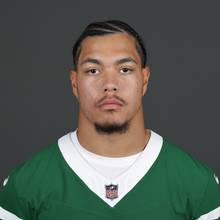 Dane Belton70Grade
Dane Belton has a nose for the football. He has at least one interception in all four NFL seasons, and last year he recorded an interception, five passes defensed, and three forced fumbles. Doubling his season high in tackles last season (120), Belton continued to show the Giants that he was their best safety and one of their most consistent players. He needs to improve his angles to the football, and while he can play on the back end, he does his best work floating around underneath and attacking. He's still in New York but in the AFC now with the Jets, where he'll compete to start alongside Minkah Fitzpatrick.
481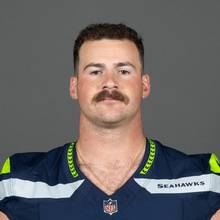 Robbie Ouzts70Grade
Robbie Ouzts' impact on the Seahawks' rushing attack will go unnoticed by the blind eye, but he was a key component of their rushing success. He is a physical, tough blocker in space and downhill on power concepts/iso runs. Ouzts blocks until the whistle and has the play strength to pancake defenders. He isn't a receiving threat right now and can use more reps as a pass protector to further his development.
480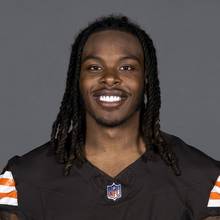 Martin Emerson Jr.70Grade
Martin Emerson was on a special trajectory before fighting through injuries in 2024 and then tearing his Achilles tendon before the 2025 season. The ball production took a massive hit in 2024, which was a result of his slower transition speed and inability to decelerate as quickly. Whatever lower-body issues he was playing through impacted his play. A year without football and coming off a serious question raises tons of questions about the player he could be, but he'll have the opportunity to earn a role for the Saints this season.
479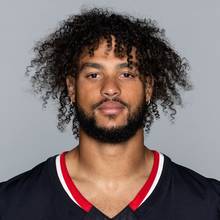 Xavier Hutchinson70Grade
Xavier Hutchinson stepped up whenever the Houston Texans needed him. He's coming off a career year where he finished with 428 yards receiving on 35 receptions and three receiving touchdowns. Hutchinson is a crafty and savvy route-runner with adequate athletic traits. He is a quick and sudden mover at the top of his routes. Hutchinson is a dependable pass catcher who helped the Texans' offense; he isn't a budding star but should be the glue guy for Houston.
478 Zaven Collins70Grade
Collins has had an interesting career, getting drafted and becoming a starter as a hybrid defender before lining up on the edge exclusively. He's also bounced back and forth between being a starter and contributing off the bench. Heading into the 2026 campaign, the 2021 first-round pick projects to be a solid first-stringer who is decent in all phases of the game.
477 Braden Fiske70Grade
Fiske is an up-and-coming defensive tackle because of what he brings as an interior pass-rusher. The 2024 second-round pick has the quickness and hand usage to work the edges, the power to push the pocket when bull rushing, and he's a good overall athlete to be effective on stunts. However, Fiske has a lot of work to do as a run defender. He beats and makes plays against lower competition but really struggles to anchor against above-average or better starting guards and centers.
476 Nahshon Wright70Grade
After four seasons, two different teams, three starts, and limited ball production, Nahshon Wright started 16 games for the Bears in 2025 and had a breakout season. He came out of nowhere with five interceptions and 11 passes defensed, and helped Chicago's defense to one of the best turnover differentials in the NFL. While the turnovers are a huge help, coverage wasn't as clean for him. Wright is a taller corner with natural tightness in his movements and downhill trigger. He tries to compensate with physicality, but is inconsistent and has been flagged a healthy number of times. The ball skills are there, and he's a willing run defender; hopefully, he can continue being the turnover machine in New York.
475 Shelby Harris70Grade
It feels like Harris has been underrated his entire career, going from being a seventh-round pick to playing in the NFL for going on 12 seasons and 146 games (89 starts) and counting. Even after spending over a decade in the league, the 35-year-old received just a one-year, $3.5 million contract in the offseason. Of course, age plays a major factor in that, but the Giants will be getting good value on that deal. Harris can at least be a quality depth piece who can contribute to a rotation with his ability to defeat blocks and push the pocket from several alignments, bringing a physical presence to a defensive line that just lost Dexter Lawrence.
474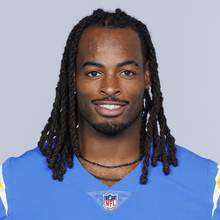 Najee Harris70Grade
Najee Harris' season was cut short shortly after it began. He appeared in three games before suffering a season-ending Torn Achilles. Going back to 2024, when he was healthy, Harris was an established, solid starting running back. He played with the right amount of patience to set up blocks and the vision to find open lanes. Harris is more fleet-footed than what meets the eye. As a big back, he displayed enough lateral agility to exchange gaps and force alley defenders to miss. With a head of steam, he was a battering ram downhill for closing defenders. Time will tell if he'll be 100% healthy to start training camp and the 2026 season.
473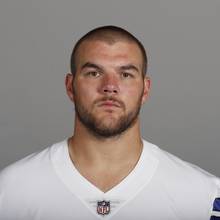 Hunter Luepke70Grade
Hunter Luepke is an unsung hero for the Dallas Cowboys offense. He does multiple things to push them forward. Luepke catches and runs the football effectively to be more than a blocking fullback. As a blocker, he is super reliable in pass protection and creating lanes for the ball carrier. His lead blocking can improve by hitting his target more going forward. Luepke is a good starting fullback and overall football player.
472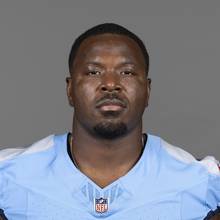 Xavier Woods70Grade
Woods brings an experienced presence to a safety room, and while he didn't play the full season in 2025, he still made a positive impact in the back end for the Titans. A better top-down, two-high presence, Woods can still float around the roof on defense and use his play recognition skills and instincts to get to the football. He's a willing, but not always capable, run defender who will struggle to recover downfield when he gets beaten in the run or against the pass. Woods is a good zone presence and can be an excellent third/rotational safety at this point in his career.
471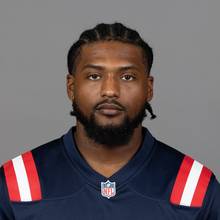 Reggie Gilliam70Grade
Reggie Gilliam is a quality starting fullback. He is alignment-flexible and blocks adequately in space as a lead blocker and/or downhill between the tackles. The Bills deploy him as a decoy lined up as an outside receiver. Overall, he is a solid football player and a positive asset who will benefit the New England Patriots' offense.
470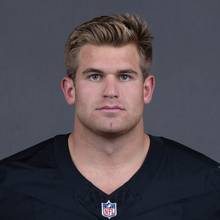 Michael Mayer70Grade
Having multiple starting-caliber tight ends on an NFL roster is becoming a necessity, and Michael Mayer makes that possible in Las Vegas. Filling the role of the "Y" tight end, he's grown as a functional blocker as an NFL player, but still needs to work on lowering his head and scooping. When Brock Bowers missed time last season, Mayer was able to handle more routes, and while he isn't the route-runner Bowers is, he uses some route nuance (head intention and hands at the top of routes) to create separation and is a tough runner after the catch. New head coach Klint Kubiak will want to utilize 12 personnel, and with Mayer entering a contract year, he could be in for a nice season.
469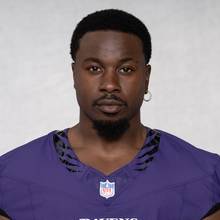 Chidobe Awuzie70Grade
One of the bigger surprises for the Ravens' defense last season was how stable Chidobe Awuzie was for the secondary. Signed before the season as a depth piece, he was forced into heavy rotational usage with Jaire Alexander's retirement. While only starting five games, he played in 15 and saw his second-highest snap count in the last four years. Awuzie is a solid zone corner who drives down on throws and routes well, is a solid run defender, and broke up seven passes last season while allowing just 385 yards on 58 targets. A stabilizing factor even while dealing with some of his own injuries, Awuzie now slots in as a starter in Baltimore for the 2026 season.
468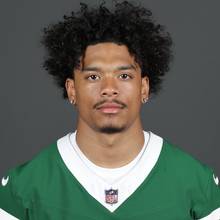 Malachi Moore70Grade
Watching players get hurt around him all season, Malachi Moore was a steady presence from Week 6 forward for the Jets' defense. He's a willing and capable lane-filler in the run game, a versatile player in the secondary, and his football IQ grew with the season. He did a nice job picking up crossers over the middle of the field, and his instincts were on display. He'll need to continue to grow as a coverage player in year two to maximize his potential, and there will be a starting battle with Dane Belton now in the mix.
467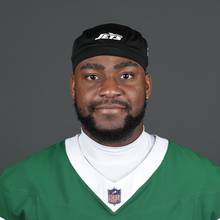 Joseph Ossai70Grade
Ossai has always been a good pass-rusher, where his combination and hand usage help him get consistent pressure off the edge. While the four-year veteran showed growth as a run defender last year, he still needs to get stronger at the point of attack to be more consistent setting the edge and become a bona fide starter/every down player in New York.
466 Gervon Dexter Sr.70Grade
Dexter's run defense can get him in trouble because he struggles to hold his gap, especially against combo blocks or double teams. But the three-year veteran is a quality interior pass-rusher who has gotten better and more productive every season. Dexter has solid power to push the pocket when bull rushing and can work the edges to keep guards and centers honest in the passing game.
465 Dallas Turner70Grade
Turner had a significant increase in playing time and production from his rookie to sophomore seasons, most notably going from three to eight sacks. His athleticism and movement skills are evident on tape, and the Alabama product's ability to turn speed to power as a pass-rusher really stood out last season. But the hand usage is still a work in progress to add a curveball and make the production sustainable. Turner also showed improvement as a run defender. He made a handful of quality tackles by defeating blocks against tight ends, spilling pullers and closing when unblocked on the back side of zone runs. If the 2024 first-round pick can add some mass and strength to take on offensive linemen more consistently, he'll start to really turn the corner.
464 Frankie Luvu70Grade
As an off-ball linebacker/edge defender hybrid, Luvu is at his best when attacking downhill. He can shoot gaps in the running game and brings some force to defeat blocks, and he's one of the best blitzers in the league when it comes to getting pressure on the quarterback. Just don't ask or expect the 2024 second-team All-Pro to move backward or laterally.
463 Elic Ayomanor70Grade
Elic Ayomanor took over the X-receiver role for the Titans offense as a rookie. He finished the season ranking 5th on the team in receptions, first in targets, second in receiving yards, and tied for first in receiving touchdowns. Ayomanor is a big, strong receiver with enough speed to win vertically. He gained the trust of fellow rookie quarterback Cam Ward, especially to move the chains. Thirty of his 41 receptions went for first downs. His size, strength, and catch radius made him a friendly target for Ward. Ayomanor dealt with drops in concentration and struggled to beat press coverage as a rookie, and he must clean that up to take the next step in his NFL career. He's a solid starting receiver who can become a consistent contributor.
462 Cole Bishop70Grade
While the first half of the season wasn't kind to Cole Bishop, he turned it around in the second half and started showing the talent that has always been there. He's still developing his route feel and ability to read them out as a two-high safety, but he played faster, missed fewer tackles, and brought better ball production down the stretch for the Bills. He had four passes broken up against the Chiefs, which set the stage for improved play. His coverage instincts are better buzzing down in the intermediate parts of the game, but Bishop set himself up to have a breakout year three in Buffalo.
461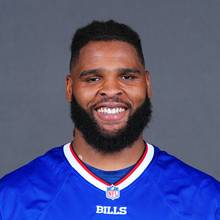 O'Cyrus Torrence70Grade
Torrence is a durable and massive right guard with huge hands, good play-strength and a firm anchor. His width and stiff punch make him difficult for power-rushers to work through, and his snatch-trap technique gives him a reliable answer to steal leverage in pass protection. As a run-blocker, Torrence is a sturdy presence that bumps down linemen on double-team feeds, collects movement across his face and uses a nifty jump-hook technique to reach frontside shades. Buffalo's progressively run-heavier structure has helped maximize his strengths while masking middling movement skills and below-average recovery when pulled out of position. Torrence is not a dynamic mover, but his size, anchor, strength and improving craft have settled him into solid starter territory.
460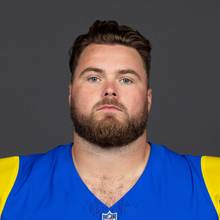 Coleman Shelton70Grade
Shelton returned to the Rams in 2025 after one season with the Chicago Bears and immediately stabilized the pivot, starting 20 games including the playoffs. His year proved to be a useful reminder of how much the environment can shape perception, because he worked through a difficult '24 situation with a rookie quarterback, fired staff and unstable guard play. Shelton returned to an elite offensive structure with better surrounding pieces and a quarterback who consistently keeps the offense on schedule, and the blocker's play reflected that setup. Shelton is extremely undersized in terms of wingspan, arm length and hand size, but he extracts nearly everything from his frame with clean footwork, precise hand-placement, processing speed and elite strain. In the run game, he is a sticky, well-rounded blocker who wins with leverage, effort and body positioning more than mass or raw displacement. In pass protection, Shelton is a clear-eyed presence with the awareness to sort line games, pass off stunts and use active hands to play longer than his measurements suggest. His lack of size still shows up against high-end power and length, but his technique, toughness and fit inside the Rams' system make him a rock-solid starting center.
459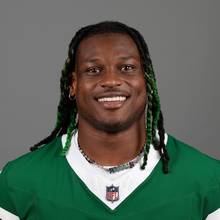 Quincy Williams70Grade
Speed is the root of Williams' game. Against the run, he has impressive sideline-to-sideline range and can close on ball carriers in a hurry when shooting gaps. That shows up in coverage too, on top of his overall athleticism to make plays on the ball in the air to account for 21 passes defended over the last three seasons. However, the 5'11", 225-pound linebacker's lack of size shows up and limits him in both phases of the game. Also, on several occasions last season, he got caught overplaying his leverage and gave up a good amount of yards in coverage.
458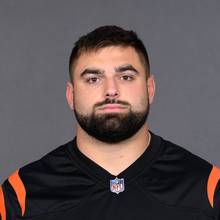 Dylan Fairchild70Grade
Fairchild started 15 games as a rookie and steadily settled in, while flashing high-end power, athletic ability and recovery skill as the season progressed. His tape was expectedly unrefined, with uneven footwork in pass protection that left him flat-footed or out of position against counters from multiple alignments. But a rare trait emerged with how efficiently he could absorb and deliver force, then regain leverage from compromised positions. In the run game, Fairchild's play-strength and movement skills gave him clear impact flashes, even while his hands and aiming points still needed refinement. His down-to-down polish must catch up, but the upward trajectory and physical tools give him one of the higher ceilings among the league's young guards.
457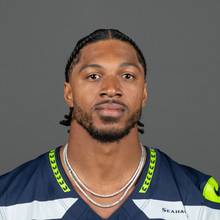 Josh Jobe70Grade
The rise of Josh Jobe allowed the reigning champion Seahawks to not only feel comfortable letting Tariq Woolen walk in free agency but also to sign Jobe to a three-year deal. His improved play throughout the season earned him more playing time and trust to be a key cog in a championship defense. A tough press-man corner, he is a tough customer for all the receivers he lines up against. Jobe allowed a 46.1% completion percentage in the 2025 regular season and playoffs, the fifth-lowest by any defender to face at least 50 targets. While his ball skills and tackling need work, Jobe made himself a good chunk of change in coverage this past season.
456 Jake Tonges70Grade
With George Kittle missing a good chunk of the regular season due to injury, Jake Tonges had to step up. He handled that task with maturity, went on to have his best NFL season, and showed the 49ers he was worth keeping around. Tonges gets the job done as a blocker, but wasn't asked to carry the bulk of the blocking work. He's a receiving option with the tools to catch the ball and get upfield quickly and efficiently to maximize space. He flashed some impressive ball skills with highlight grabs throughout the season, but he isn't a matchup problem at the position. Tonges is a capable receiver and proved to be a reliable target when called upon.
455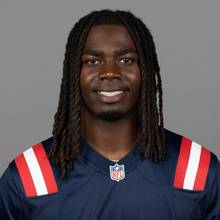 Rhamondre Stevenson70Grade
Rhamondre Stevenson has been a much-maligned NFL running back and rightfully so, due to his issues with fumblitis over the years. He missed multiple games this year after suffering a toe injury in Week 8. When he protects the football, he is one of the most underrated runners in the league. Stevenson runs with great patience and vision, allowing blocks to form and find an alleyway to daylight. He is densely built with great run strength and contact balance. Stevenson is a big boy with nimble feet. If offensive linemen are dancing bears, he'll settle for a dancing cub.
454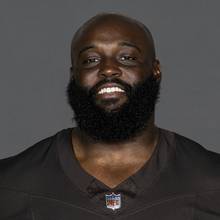 Maliek Collins70Grade
The 31-year-old Collins has made a career out of being a quality interior pass-rusher, and he's coming off a career-high 6.5-sack performance despite playing in a career-low 12 games. He can still win in a variety of ways, with the strength to go through an interior offensive lineman's chest and the quickness and hand use to win around them. The 10-year pro isn't and hasn't been a big factor against the run, but he did make a handful of impressive plays on a small sample size last season despite getting up there in age.
453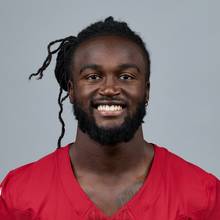 Denzel Burke70Grade
The Cardinals needed key contributions from both rookie members of their cornerback room, and Denzel Burke was a nice surprise in 2025. He took three interceptions and 11 pass breakups to the bank as a rookie who started eight games and played 651 snaps in the desert. While he was a surprise from the ball production aspect, he maintained his play in zone coverage and emerged as a legitimate option to start opposite Will Johnson going forward. The Cards could have a steal on their hands in the former Day Three draft pick.
452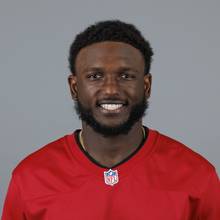 Chris Godwin Jr.70Grade
Last season, Chris Godwin Jr did not look like the wide receiver we're used to seeing take the field for the Tampa Bay Buccaneers. Athletically, he wasn't the same after battling back from an ankle injury suffered in 2024, and he suffered a fibula injury in week five on the road at Seattle. He missed a total of five games in 2025, resulting in only 33 receptions for 360 yards and two touchdowns. There were flashes of his physical route-running and yards-after-catch creativity when he was on the field. Godwin is an adequate starting-slot receiver who serves as an extra safety valve for Baker Mayfield. Health is the key; if Godwin Jr. returns to full health for 2026, he should be a more productive target for the Buccaneers.
451 Jackson Hawes70Grade
The Bills abandoned the sixth offensive lineman usage that they led the league in from 2023 to 2024 because of one man. Jackson Hawes. They ran the ball 80% of the time when Hawes was on the field, and he proved to be a dominant blocker in a multitude of run concepts. He showed power, footwork, and great hand usage to displace defenders and create rushing lanes throughout the season. He even proved to be an effective pass protector when called upon. Hawes was a surprisingly good part of the passing attack as well, while attacking the seams and showing excellent feel post-route. There's a bit of a logjam for snaps at tight end in Buffalo, but Hawes earned a bigger part of the offense with his rookie showcase.
450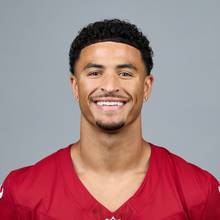 Michael Wilson70Grade
Michael Wilson's route-running development has been the most encouraging aspect of his NFL transition. While he lacks true vertical explosiveness and top-tier athleticism, he consistently creates separation through pacing, leveraging, and spatial feel. Wilson shows the short-area quickness and functional strength to withstand physical press coverage and stay on track through his stems. He is an adequate yards-after-catch threat and run blocker.
449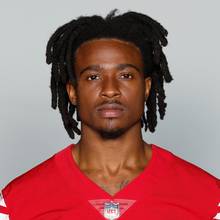 Renardo Green70Grade
Playing a physical brand of press-man coverage, Renardo Green has been a consistent force for the 49ers' defense. He rarely missed tackles last season, was sticky in man coverage (outside of some double moves), and made it difficult for opposing quarterbacks to complete passes downfield. He had some coverage busts and confusion in zone reps, but identified routes unfolding well and broke up 10 passes last season. He'll need to clean up his holding in man coverage going forward, but Green is on the path to becoming a good starting player in the NFL.
448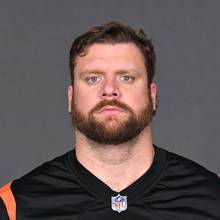 Ted Karras70Grade
Karras has missed just one game since joining the Bengals in 2022 and remained quietly rock solid this past season while working inside the league's pass-heaviest, least play-action-oriented offense. The Bengals' quick-release QB environment helped, but Karras held up because of clear eyes, quick processing and light feet to shore up the A-gaps at a high level. He can still be pried open by bigger interior rushers when isolated, but he resets well enough to die slowly with his anchor. In the run game, Karras is an efficient combination blocker with the quickness to reach landmarks and work through contact, though he loses steam when forced to sustain solo blocks. He is not physically imposing, but his pass-protection efficiency, durability and veteran processing make him a solid starting center.
447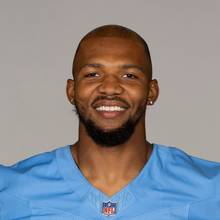 Tony Pollard70Grade
Tony Pollard was one of the few bright spots offensively for the Tennessee Titans last season. Rushing for a little over 1,000 yards and adding 300 more through the air, Pollard made his share of plays. He ran hard and was most successful on zone concepts. At 29 years old, he is a solid starting running back who can be the lead guy in a committee.
446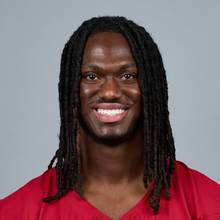 Marvin Harrison Jr.70Grade
Once viewed as a "Generational" prospect, Marvin Harrison Jr. has not lived up to the billing. The Cardinals' 4th-overall pick in 2024 has struggled with consistency and staying healthy. There are clear flashes of high-impact receiving ability with Harrison Jr, as everyone identified as a prospect. He added muscle and, when used properly, achieved positive results. Harrison Jr. had a more effective stiff arm and high-pointed passes over high-caliber corners. He had a few concentration/confidence drops last season. His yards after the catch were pedestrian.
445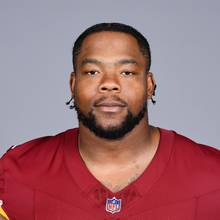 Daron Payne70Grade
Payne can be a pest for opposing offenses in the run game, as he has several ways to defeat blocks and make tackles near the line of scrimmage. He can also be effective against a variety of offensive linemen to contribute from several alignments. The eight-year veteran just isn't a consistent tackler against the run. As a pass-rusher, the 2022 Pro Bowler isn't nearly as effective as he used to be. Payne can beat lesser competition to get pressure, but he struggles and often blends in against better guards and centers, though.
444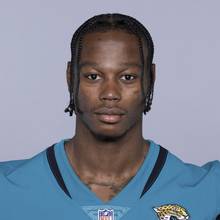 Montaric Brown70Grade
Brown was asked to play more than the Jaguars expected last season due to several factors, and he answered the bell. Starting 12 games for the Jags, he broke out as a playmaker and earned a nice payday after being a seventh-round pick in 2022. While he's a bit stiff as a man coverage defender with a lighter frame to play against the run, he's a physical defender with length to impact the catch point. He set a career high with 12 passes defensed and sees routes well in zone coverage. He'll start opposite Travis Hunter in 2026.
443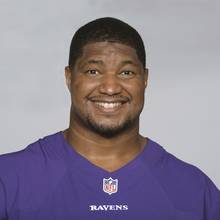 Calais Campbell70Grade
Campbell will turn 40 years old before the regular season starts, but he's still playing at a high level. The 18-year pro is a solid run defender who showed a few veteran tricks of the trade to get off blocks and make quality tackles in 2025. He is also an effective pass-rusher via stunts and a decent hump move. The six-time Pro Bowler just isn't nearly as dominant as he used to be.
442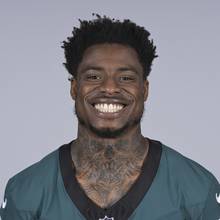 CJ Gardner-Johnson70Grade
One of the best agitators in the NFL, CJ Gardner-Johnson, brings nothing if not a tough presence to the secondary that won't be intimidated. After starting his 2025 season with the Houston Texans, he was released after Week 3 and signed with the Bears before Week 9, where he became their nickel and rotational starter. Gardner-Johnson's physicality in man coverage helps him stay connected, but without it, he's often broken off by receivers and needs to be moving downhill in zone; he loses track of receivers and routes behind him. His talents are best suited to play safety, where he can flow downhill and use his aggression in the run game, filling lanes. After Gardner-Johnson signed with the Bills in free agency, he'll be competing for a starting role alongside Cole Bishop.
441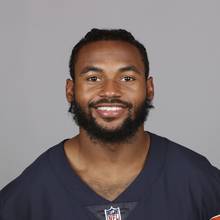 D'Andre Swift70Grade
D'Andre Swift is coming off a nice season as the Chicago Bears' starter. 2025 was a career year for Swift, rushing for 1,087 yards and nine touchdowns. He ran decisively with his one-cut play style. Swift ran the hardest in recent years, embracing contact in the alley and driving his legs to fight for extra yards. He made an impact out of the backfield in the passing game. Swift proved to be capable of handling a starter's workload.
440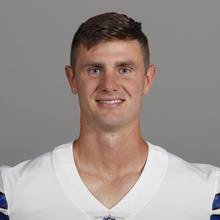 Brandon Aubrey70Grade
Aubrey's ascension as the NFL's top specialist is nothing short of spectacular. The former MLS first-round pick-turned-USFL hopeful worked his way into a three-time All-Pro honoree (two second-team nods). While known for his big leg, Aubrey didn't miss a field-goal attempt from inside 50 yards during the 2025 campaign, with only one missed extra point. He continues to be one of the game's best weapons, while complementing one of the league's best offenses.
439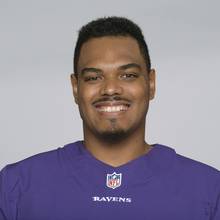 Ronnie Stanley70Grade
Stanley has stabilized his career after the severe ankle injury that once threatened to push him out of the league's dependable starter tier. After rebuilding his mobility, strength and availability over multiple seasons, he started 16 games in 2025 and again looked like a functional, above-average left tackle rather than the compromised version he battled through earlier in his comeback. Stanley's value remains anchored in pass protection, where his elite length, calm footwork and positional awareness allow him to cover rushers without overextending. He is primarily a two-hand striker, which gives him a clean way to establish early control but also introduces variance when rushers beat his timing or capture the edge before he resets. His play-strength and anchor are no longer at his pre-injury peak, and his run-game impact is more positional than forceful. Still, Stanley's length, experience and set mechanics give Baltimore a steady blindside presence who can function in true pass sets, even if the margin for error is thinner than it was during his All-Pro peak.
438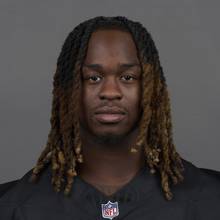 Ashton Jeanty70Grade
Jeanty's rookie campaign epitomized the phrase "Hard Knocks." Behind a subpar offensive line, he had to display toughness and grit to earn hard-fought yards. Jeanty's game is built around elite contact balance, physicality, vision, and patience. When the offensive line opened running lanes, his powerful/slashing running style was on display. Jeanty is a finisher who welcomes contact and will dish out everything he receives. He showcased his receiving skill set out of the backfield, increasing his value going forward. Jeanty's pass protection graded out negatively. Meanwhile, his vision on runs between the tackles was inconsistent. He ran into the back of his blockers; he processes information more quickly with zone-running concepts.
437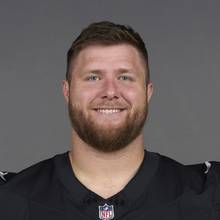 Kolton Miller70Grade
Miller started only four games in 2025 before a Week 4 high-ankle sprain and hairline fracture in his right ankle ended his season. The limited sample size makes this more of a health-discounted evaluation than a clean full-year reset, especially given Miller's prior track record as a quality left tackle. When right, Miller wins with size, length, functional athletic ability and a more refined pass-protection approach than his 6'8" frame suggests. His best reps come when he can use his hands to disrupt pass-rush timing, protect his frame and force defenders to work through his length rather than win quickly around the edges. The 2025 injury context clouds how much of his movement and anchor can be cleanly projected, but his history points to a solid starter when healthy. In the run game, Miller can still cover up, create angles and generate functional movement, though he is not a consistently dominant displacement blocker. His current grade reflects a proven tackle whose recent availability and lower-body recovery create uncertainty. However, his baseline traits and body of work still support a solid starting profile if his ankle fully rebounds.
436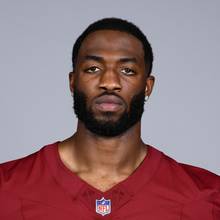 Odafe Oweh70Grade
Last season, Oweh was a much more polished pass-rusher in Los Angeles than he was in Baltimore. Adding strength and becoming more consistent with his hands will help take his game to the next level in Washington moving forward. Similarly, the former Charger/Raven still isn't much of a factor as a run defender because he struggles to take on and disengage from blocks.
435 Kelvin Banks Jr.70Grade
Banks started all 17 games as a rookie and pieced together a promising first season, especially considering the shaky left guard play and a passing environment with high true-dropback exposure due to New Orleans' low play-action rate. A quick-pass element helped offset some of that stress, but Banks still showed a starter-level foundation. He wins with a wide frame, big hands and good athletic ability, giving him enough range and surface area to match up against a diverse collection of rushers. His high outside-low inside hand carriage and willingness to double-under against power helped him create early contact, and his inside hand became more reliable against inside moves as the year progressed. Anchor consistency and counter discipline proved to be limiting factors. Banks can be compressed by speed-to-power, and he will take the bait against inside-out counters, stopping his feet, dropping his outside foot and striking down the middle of rushers. In the run game, he showed useful movement ability to intersect targets in space, though his play-strength is still more functional than forceful. Banks is not a finished product. However, his durability, physical tools and in-season growth point toward a solid young starter with room to climb.
434 Travon Walker70Grade
After back-to-back seasons with double-digit sacks, Walker's production took a significant dip last season, getting to the quarterback just three and a half times. He has the strength to push the pocket, but is still ironing out how to be effective, or at least more consistent, with his hands to add another move to his arsenal. Similarly, the 2022 No. 1 overall pick has plenty of strength and length to be an impactful run defender; however, he often gets caught with his hands down and can't maximize his traits.
433 Derrick Barnes71Grade
Barnes is another hybrid edge defender/off-ball linebacker, which shows in his ability to defend the run. He's strong and physical at the point of attack to defeat blocks at the point of attack, a fading art on the second level in many modern defenses. But the five-year veteran isn't a good space player to be effective in coverage and is more of a solid than good pass-rusher, limiting his ability to impact the passing game.
432 Troy Franklin71Grade
In year two, Troy Franklin took steps forward as an NFL wide receiver. He played with more confidence and functional strength last season. He was a versatile piece of the Broncos' passing offense. He won reps with his own skills and benefited from the offensive scheme, creating easier pathways to targets in the open field. Franklin finished the season as the Broncos' second-leading receiver in targets, receptions, yards, and touchdowns behind Courtland Sutton. Expect Franklin to be pushed down the depth chart to WR3 because of newly acquired wideout Jaylen Waddle. This would be great for Franklin to match up with defenses' third- and/or fourth-best cornerbacks.
431 Mack Wilson Sr.71Grade
Wilson has had an up-and-down career to this point, bouncing back and forth between being a starter and more of a rotational player. But he seems to have found a home and a place where he can be a first-stringer in Arizona. By no means is the Cardinal a game-changer, but he's at least a functional starter in both phases of the game. Also, Wilson may have some untapped potential as a blitzer. He only rushed the passer 25 times last season, but managed to record seven pressures, according to Next Gen Stats, and the majority of them were quality wins.
430 Avonte Maddox71Grade
Even though he didn't play much of a role early on, in the last month of the season, Avonte Maddox's number was called, and he showed up. With the injuries to Kerby Joseph and then Brian Branch, Maddox brought communication, experience, and play-making ability to the secondary. He registered an interception and four passes defensed over the last four games of the season and looked instinctive as a robber, with a quick trigger downhill in his play recognition. The former Philadelphia Eagle will take risks that open him up to getting beaten over the top, but he showed more than enough for the Lions to bring him back to compete for a role.
429 Dorance Armstrong Jr.71Grade
After spending six years as a rotational contributor/spot-starter in Dallas, Armstrong became a solid full-time starter for the Commanders during the 2024 campaign. His game is based on his strength and length, showing the ability to get extension against offensive tackles, manufacture stops against the run and generate pressure as a pass-rusher. The eight-year veteran played arguably the best football of his career before suffering a torn ACL in Week 7 of last season. How the 29-year-old veteran bounces back this fall will be interesting to monitor.
428 Jalen McMillan71Grade
Jalen McMillan's 2025 season was cut short after suffering a severe neck injury during the preseason; he had three fractured vertebrae and two herniated discs. He eventually returned for the four games of the regular season. McMillan is a crafty route-runner who does not provide many signals to the defensive back regarding when he's going to break off his route. He is a smooth mover and showed when healthy, he improves the Buccaneers passing offense. He tracks the ball well and creates separation from man coverage. He's healthy at this moment, signaling hopefully he plays a full season in 2026 and confirms that he is one of their top young pass catchers.
427 Grover Stewart71Grade
Stewart is on the wrong side of 30 and is likely nearing the end of his career, but he's still a solid run defender who can be a boulder in the A-gap and occasionally split combo blocks to make tackles near the line of scrimmage. The nine-year pro doesn't have nearly the same impact he used to, but he can still fill the gap-filling role on any defensive line.
426 Theo Johnson71Grade
After the Giants brought Jaxson Dart into the fold, we started to see Theo Johnson break out and become a field-stretching tight end. His large frame and ability to catch through contact while running downfield fit perfectly with how Dart wants to play. Johnson can adjust to the ball in the air, and made some great plays last season, but still has a lot of room to grow as a functional blocker. He lunges, puts his head down when engaged, and whiffs on far too many blocks. While his receiving ability makes him a good contributor, making strides as a blocker will go a long way to seeing Johnson make a real step as an impact tight end.
425 Donovan Ezeiruaku71Grade
While Ezeiruaku only had two sacks as a rookie, he showed more promise in year one than the box score says. The Boston College product's quickness and athleticism stood out, and his hand usage was impressive to record a few wins with a handful of moves. He just needs to be more consistent and finish to boost the sack number moving forward. Ezeiruaku will probably never become a major factor as a run defender, but he used his skill set well to make a handful of plays last year and build more momentum heading into 2026.
424 A'Shawn Robinson71Grade
Robinson doesn't provide much as a pass-rusher, but he is a versatile run defender in the trenches. The 10-year can line up anywhere from a shade nose tackle spot to a 4i-technique defensive end and bring down running backs for short gains. He isn't much of a penetrator anymore, hurting his disruptiveness, but the 31-year-old has little to no problems holding up at the point of attack and maintaining gap control.
423 Drake Thomas71Grade
Thomas burst onto the scene around the midway point of last season, showcasing impressive instincts and movement skills to shoot gaps and slip blocks in the running game. He's also decent at click and closing and recorded eight passes defended in coverage, on top of being an effective blitzer with 3.5 sacks. The 6'0", 223-pound former undrafted free agent lacks size and notoriety, but Thomas will really start making a name for himself with another strong campaign in 2026.
422 Matthew Golden71Grade
Matthew Golden's rookie season highlighted the talent that ultimately led to his first-round draft selection. He finished the season sixth on the Packers in targets and receptions. Golden showcased flashes of his explosiveness, YAC creation, and playmaking versatility. He was sure-handed with one drop during his rookie campaign. Golden wasn't high on the pecking order of targets, but when given the chance to make plays, he did. He is an exciting name to watch going forward.
421 Jadeveon Clowney71Grade
Clowney is a lot closer to retirement than his prime, but he can still contribute to the Texans' defense as a rotational pass-rusher behind Danielle Hunter and Will Anderson Jr. on the depth chart or alongside them in certain sub-packages. The 2014 No. 1 overall pick remains a very good athlete to work the edges, and he has a good pass-rush motor to get coverage or clean-up sacks. He's more of a finesse run-defender at this stage, though.
420 Jihaad Campbell71Grade
It will be interesting to see how Campbell builds on a solid rookie season. He played well enough that the Eagles felt comfortable letting Nakobe Dean walk in free agency, likely elevating the second-year pro into a full-time starting role moving forward. Athletically, there's a lot to like about Campbell's game, both as a run defender and in coverage. But while he showed flashes of good instincts against the run last year, he still has room for improvement in that area, and his route recognition and awareness in coverage must improve.
419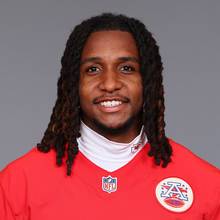 Nohl Williams71Grade
The Chiefs let Jaylen Watson walk in free agency and traded Trent McDuffie to the Rams, in part to get cheaper, but because they believe they have something in Nohl Williams. Getting a hold of Spags' defense is a tough ask for rookies, and Williams had his share of struggles, but there's a lot to like about the former third-round pick. He's tenacious, physical in every aspect, flashes high-level ball skills and instincts, and is a good and willing run defender. If he can clean up some of his penalties and be more comfortable in year two of the system, the Chiefs' bet could pay off.
418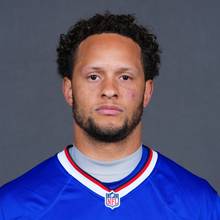 Terrel Bernard71Grade
Bernard suffered a handful of injuries in 2025, and it clearly affected his performance on the field. Movement skills have always been at the root of his game, but the 2022 third-round pick's short-area quickness and change of direction weren't the same last year. He can be a quality coverage linebacker when healthy, but now it's a question of whether Bernard can return to form this season and beyond.
417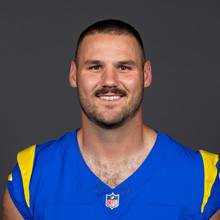 Colby Parkinson71Grade
When Tyler Higbee went down with an injury, the Rams turned to Colby Parkinson as their "go-to" player in that room, and he was rewarded with a career year. He's always been a reliable blocker, and he helped the Rams' run game as an in-line player capable of executing a number of blocking responsibilities. He's not an overly dynamic playmaker, but he has excellent hands, adjusts to the ball in the air, and can find soft spots to exploit. Parkinson had only 408 yards but a staggering eight touchdowns in the regular season, and was a huge player for them in the postseason, with eight catches for 152 yards and a score. The Rams want to play with a ton of tight ends, and Parkinson earned his place in that room.
416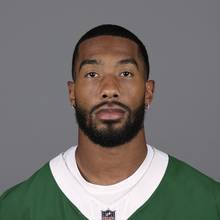 Andre Cisco71Grade
Andre Cisco made his money as a top-down, bone-crunching safety who could break on throws and create turnovers and break up passes. In a season with the Jets, where he suffered a season-ending oblique injury in Week 8, Cisco wasn't the same player. He missed more tackles (percentage-wise), gave up 12 receptions on 19 targets, and looked more hesitant than in years past. He still brought some big hits to the defense and read the quarterback well in zone, but Cisco has an uphill battle coming off the injury to return to making plays the way he used to.
415 Alex Singleton71Grade
Singleton has become a polarizing player in Denver, and it's because of his skill set. The Broncos use the 32-year-old as an every-down linebacker, and he is a good run defender with the instincts to be in the correct spot consistently, and he has some thud when coming downhill. However, Singleton is a liability in coverage, lacking the athleticism and short-area quickness to make plays on the ball or stay in phase in man coverage, and the awareness to be trusted to fulfill his assignment.
414 Kyler Murray71Grade
The former first overall pick's career has been known for early-season flashes but a lack of stability through a full campaign. Murray played in five games in 2025 and finished with his third-highest career completion percentage. He has a good arm and has shown the ability to layer passes in the middle of the field. If protection breaks down, he can make plays with his mobility/athleticism. Murray's accuracy, decision-making and health are inconsistent. This issue limits his impact as a pocket passer, ultimately holding back the offense at times.
413 Isaac Seumalo71Grade
Seumalo remained his usual steady self in 2025, providing veteran reliability through play speed, balance and a refined understanding of space. He is not an overwhelming guard in terms of size, length, raw power or explosiveness, but he consistently operates on time and in the proper position. Seumalo wins with quick diagnosis, efficient footwork and well-timed hands, allowing him to sort line games, pass off movement and use positional leverage to stay between rushers and the quarterback. His anchor is more survival-based than forceful against bigger power players, but he dies slowly, keeps his frame square and rarely turns manageable losses into immediate failures. In the run game, he is a sound positional blocker who can fit, steer and work combinations with timing, even if he no longer creates much displacement on his own. Entering his first season in Arizona, Seumalo should bring reliable starter-level play and legitimate stabilizing value to a young offensive line, with his intelligence and consistency carrying more weight than the raw traits profile.
412 Marvin Mims Jr.71Grade
Marvin Mims Jr is an underrated wide receiver for the Denver Broncos. He is a field-flipping playmaker on offense and special teams. Mims Jr. is an explosive punt and kick return specialist. His speed makes him a threat with the football from anywhere on the field. Mims Jr. serves as a "playmaker" in Coach Payton's offense, handling manufactured touches and deep shots down the field. He tracks the football well and displays good hands to make firm and confident catches. He does not receive a bulk of the offensive touches and owns his role on special teams, but Mims Jr's playmaking ability can open up a game. Makes you wonder, what would he look like with a full-starters workload and target share?
411 Ben Powers71Grade
Powers missed nine games in 2025 after suffering a torn biceps in Week 5. When available he played near his established baseline as a skilled, steady starting guard. Powers wins with very good hand usage, timing and strain, creating quick leverage before staying attached and steering defenders away from the ball. His hands and discipline also keep him from losing cleanly often in pass protection. The limitations are more physical than mental or technical. Powers is not an explosive mover, and his good-not-great play-strength can lead to getting jolted back at the point of attack before re-leveraging to recover balance. He will also strike with two hands against tighter alignments, opening him up to quick losses across his face. Powers remains a reliable, craft-driven starter when healthy, though the injury and average physical tools cap the ceiling.
410 Cooper Beebe71Grade
Beebe started 11 games in 2025 while working around an ankle injury. When available, he remained a rock-solid presence along the interior. Beebe's game is driven by a stout build and very good play-strength, allowing him to absorb and generate force at a high level. He roots his feet quickly to anchor on command, has the power to uproot down linemen and processes well enough to sort movement and pass off games. He is closer to an average athlete, but efficient angles help him stay on schedule in the run game. However, his sawed-off build can create short corners when isolated in protection and separation issues against hulking nose tackles. Flanked by two of the league's more powerful guards with schematic and QB continuity in place, Beebe is in an ideal spot to maintain a high floor and maximize his full potential in Dallas.
409 Travis Hunter71Grade
Travis Hunter's rookie season was limited to seven games after he tore his LCL during practice in late October. Hunter was coming off his best game as an NFL receiver against the Los Angeles Rams in Week 7. Hunter caught eight of his 14 targets for 101 yards and one touchdown. He wins with athleticism, twitch, and the ability to make plays after the catch. Hunter is an exciting playmaker in the open field with outstanding spatial awareness. Hunter's explosive leaping ability translated to the NFL. Due to playing both CB and WR, Hunter's route running was not the most crisp, and rounding out his approach will elevate him as a long-term receiver, if given the chance.
Being one of the most unique prospects to enter the league in some time, Hunter was always going to have a tough time meeting expectations. An injury-shortened rookie season made that close to impossible. The football IQ, natural route feel and ball skills carried over to the NFL, but guarding more talented players will take some getting used to, and his man-coverage technique shows that. He's a slight corner, making run support and physical play tougher to deal with, but his zone acumen and ability to impact the football in the air give Hunter a path forward when he's healthy.
408 Harold Fannin Jr.71Grade
Some players have an innate sense of what to do on a football field, particularly with the ball in their hands. Harold Fannin Jr. is one of them. He's a bit of a tweener when it comes to body type, but the effort to block and play physically is there, and he does his best blocking work on the move, where angles are better for him. The Browns schemed him into space many times last season, but he was impactful after the catch, creating something out of nothing numerous times. Fannin Jr. has been moved all around the formation, and after the Browns moved on from David Njoku this offseason, he's in line for even more work in his sophomore campaign.
407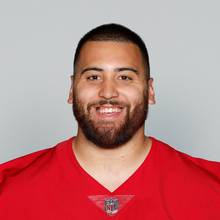 Dominick Puni71Grade
Puni pieced together another quality season in 2025, playing every snap for the second straight year and rebounding after a slower start that was partly tied to a preseason knee injury. Initially, the injury appeared to sap some of his ability to brace, absorb force and generate his usual power, but his play stabilized as the season progressed. Puni has a square, sturdy build with good linear explosiveness, foot quickness and enough play-strength to match up physically with most competition. His best reps show the size, balance and power that made him such an encouraging rookie starter, with the ability to create movement in the run game and hold his ground in protection when his posture and timing were right. Inconsistency remains on the technical side. Tardy strike-timing and a wide base can cause his feet to stall, leaving him vulnerable to compression or late losses against longer, powerful rushers. Those lapses are balanced by commanding wins when his leverage and hand-timing are clean. Puni is still refining his positional leverage, weight distribution and strike consistency. However, his durability, traits and early-career play indicate a solid young starter with further growth potential.
406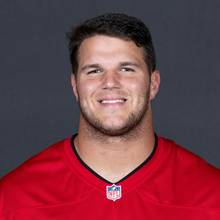 Graham Barton71Grade
Barton started 17 games during his second season, including three early starts at left tackle while Tristan Wirfs worked his way back from a knee surgery. His tackle snaps were predictably uneven in pass protection, but Barton remained an impact run blocker because of his rare blend of burst, body control and play-strength for a center. He is a weapon on the move, using angles, acceleration and thump to line up second-level targets, displace linebackers and create jarring movement when he lands square. He also flashes the power to uproot bigger down linemen when his leverage is right. Tampa Bay also lost both starting guards for extended stretches, which stressed the communication and feel for the interior trio. Barton's pass-protection side remains the developmental piece. The 2024 first-round pick is sturdy once latched, but his timing, spacing and recognition against line games and stunts still need to quicken, creating A-gap leakage and delayed responses when defenses force him to sort post-snap movement. His physical tools remain among the league's better center profiles. At the same time, he needs cleaner processing and pass-off timing to convert those traits into a more stable all-around starting profile.
405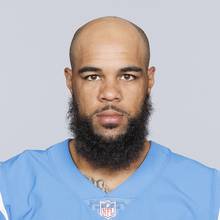 Keenan Allen71Grade
Keenan Allen is a well-established route-running specialist. In year eight, he continued to create separation with nuanced, savvy route-running. He remains a steady and consistent veteran who can raise the floor of the passing offense. On third downs, he is a security blanket for the quarterback. He accounted for 34% of the Chargers' third-down targets. Allen lacks high-end athletic traits at this stage of his career, but he makes up for it with a high level of football IQ. He struggles to disengage from bump-and-run coverage, compounded by a lack of creativity after the catch.
404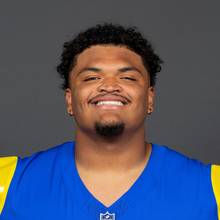 Steve Avila71Grade
Avila started 13 games in 2025 after missing two early-season games with an ankle sprain, following a 2024 season that was also interrupted by an MCL injury. When available, Avila remained a powerful, physically imposing left guard with the size and play-strength to generate movement in the run game and anchor against power in pass protection. At 6'4" and 340 pounds, he can cover up defenders, displace at the point of attack and create force through contact when his pads and hands arrive on time. His pass protection is more strength-based than refined, relying on mass, anchor and body positioning to absorb rushers rather than high-end hand usage or recovery skill. The limitations show up when quicker defenders force him to redirect, mirror late movement or win the hand fight before he can establish control. Avila's movement skills are adequate for his size, but not a consistent plus, which caps his range and second-effort recovery. His best football still gives the Rams a sturdy, physical interior presence, but the injuries and middling agility keep him in the solid-starter tier rather than the high-end guard group.
403 BJ Hill72Grade
Hill has quietly carved out an eight-year career as a solid all-around starting defensive tackle. He has the strength to gain control of blocks at the point of attack or push the pocket, and he's decently quick to work around blocks as a change of pace and is solid at playing the hands as a pass-rusher. The 31-year-old just doesn't have a dominant trait to be in the upper echelon of interior defenders in the league.
402 Tre'Davious White72Grade
Finally looking healthy last season, Tre'Davious White turned the clock back for the Bills. He compiled more pass breakups in 2025 (10) than in any season since 2020 and helped the Bills' secondary hold it together while Maxwell Hairston dealt with injuries throughout his rookie season. White needed to be more physical in man coverage to limit separation to more athletic receivers, and penalties were a big part of that. He reminded everyone of his All-Pro seasons when he helped the Bills defeat the Jags on Wild Card weekend.
401 Micah McFadden72Grade
McFadden is a difficult player to project for the 2026 season since a Lisfranc injury cost him almost the entire 2025 campaign. Also, New York spent a top-five pick on linebacker Arvell Reese, presumptively, to play alongside free-agent signing Termaine Edmunds, clouding the four-year Giant's role on the defense this season. At his best, McFadden is a good tackler in both phases of the game and a reliable defender in the middle of the field. On a one-year contract, the 26-year-old could be a good trade candidate if he proves to be healthy early on this summer and fall.
400 George Karlaftis72Grade
Karlaftis is a solid power-rusher with 30.5 career sacks, but the majority of his pass-rush production comes against backups/lower competition or via coverage sacks. The 2022 first-round pick is a good run defender, though, showing the strength to set the edge, as well as the ability to get underneath pullers and make tackles for losses or short gains.
399 Alim McNeill72Grade
A few years ago, McNeill looked like an up-and-coming defensive tackle in the NFL. Then, he was bitten by the injury bug with a torn ACL suffered late in the 2024 campaign being the most significant. That forced the five-year veteran to miss the first six games of this past season, and it appeared to impact his explosiveness in both phases of the game. When healthy, McNeill can be a very impactful interior defender who makes his presence felt against the run and as a pass-rusher from multiple alignments. However, missing 14 contests over the last three seasons makes it difficult to put the NC State product in a higher category heading into the 2026 campaign.
398 Derick Hall72Grade
Hall is a bit of a one-trick pony as a pass-rusher, almost exclusively winning by going through the offensive tackle's chest, but it's a pretty good trick. However, the 2023 second-round pick struggled to defend the run to begin his career, as that strength and physicality didn't quite translate. The Seahawks used Hall primarily as a rusher last season, limiting his impact against the run, but he did show growth on a small sample size.
397 Hollywood Brown72Grade
Marquise Brown is known as a deep-threat receiver who takes the top off defenses. He's matured into a more well-rounded receiver. In 2025, he showcased his ability in the quick passing game. Brown's speed still keeps cornerbacks on alert, which opens the door for him to run quick underneath routes and exploit off-coverage. He won't blow the doors off from an impact standpoint, but Brown is a solid contributor to an NFL passing offense when healthy.
396 Daniel Bellinger72Grade
Consistency will take you far in the NFL, and Daniel Bellinger proves that each and every snap. He's asked to do a lot as a blocker, from being in motion, to being in line, and as an H-back, while taking it all in stride and playing with good leverage, hand usage, and footwork. Bellinger is a smart player who has a wider route tree than you'd expect, gets proper depth, and comes back to the football. Typically sure-handed, he's a reliable target who maximizes his length, but it does inhibit his ball skills away from his body. Providing an offense with a consistent, versatile skill set at the tight end position makes Bellinger a fun addition for the Tennessee Titans' offense.
395 Kyren Williams72Grade
The Rams' leading rusher eclipsed 1,100 yards for the third consecutive season. Williams is a steady ball carrier with good vision and patience to set up blocks and hit the open lanes. He's an above-average receiving option out of the backfield as well. Williams is one of the best pound-for-pound pass protectors at the running back position. Williams lacks high-end athleticism and has struggled with fumbles over his career.
394 Alex Wright72Grade
Wright is a tone-setting edge-defender, who plays with a level of physicality and is strong enough to set the edge against the run. He can make stops by winning and defeating blocks at the point of attack, while also having the speed and athleticism to make tackles when unblocked on the backside. The 2023 third-round pick has flashed a few promising traits as a pass-rusher, but he isn't a consistent winner to generate constant pressure.
393 Tommy Togiai72Grade
After a slow start to his career, Togiai is coming off his best season yet. The 2021 fourth-round pick really stood out as a run defender, splitting combo blocks to make tackles and showing impressive strength at the point of attack to beat base blocks and two-gap. He still has room for growth as a pass-rusher, but Togiai has a great opportunity to prove himself with another strong campaign during a contract year.
392 Dante Trader Jr.72Grade
Dante Trader Jr. was a bright spot for the Dolphins defense last season, who deserved more playing time than he got. He looked comfortable in every role that was asked of him nearing the end of the season, was a very good run defender, and showed his football IQ and play recognition consistently. His feel for the game is smooth, but he will need to clean up his tackling technique going forward to be that trusted player as a safety valve. As the former fifth-round pick's knowledge of the game continues to grow, he could start to see the ball production impact keep growing as well. The future is bright for Trader Jr. in Jeff Hafley's defense.
391 Cobie Durant72Grade
After a very successful playoff run with the Rams in 2025, Durant is looking to take that momentum with him to Dallas. His zone ability and technique are where he makes his money, tied with his instincts and ability as a smaller corner to high-point the football and make plays at the catch point. Durant tackles well for his size and plays with a chip on his shoulder at all times; that mentality has served him well and keeps him in physical encounters with bigger receivers. He'll be competing for a starting role in the Dallas defense, but brings a great floor as a rotational starter in nickel packages.
390 Teair Tart72Grade
Tart has become an impressive run defender over the last two years in Los Angeles. He has the strength to win at the point of attack, decent quickness to work the edges, and can get penetration with his get-off. That gives the six-year pro a variety of ways to beat blocks and make tackles in the run game. As a pass-rusher, Tart is still growing. He had a few quality wins with finesse moves last year, but he struggles with pad level and that makes it difficult for him to be an effective bull-rusher and push the pocket on the interior.
389 Jacob Parrish72Grade
A hard-nosed, high-effort player in the slot, Parrish came into Tampa Bay and was a playmaker from day one. He played all over the defense, but his willingness against the run, natural play recognition, and developing route recognition in zone helped him earn early and often playing time for the Bucs' defense. He missed a number of tackles, and his change of direction skills were taken advantage of by better route-runners, but the play speed and havoc creation are easy to see on the field.
388 Tre Tucker72Grade
Tre Tucker is one of the more underrated receivers in the league. Don't let the shorter stature of Tucker fool you; he plays bigger and tougher than his 5'9 frame. He is a willing participant in the run game as an insert-blocker seeking out linebackers and safeties to create creases for the running back at the second level. In the passing game, Tucker aligns all over the formation, beating man and zone coverages. His 4.4 speed is effective in attacking the vertical plane and keeping corners on their toes. Tucker is effective working underneath as a quick passing target. He showcases good post-snap coverage recognition and weaves through zone defenses into the void. A revolving door at the quarterback position has limited Tucker.
387 Jalen Redmond72Grade
Over the past three years, Redmond has gone from being an undrafted free agent and getting cut by the Carolina Panthers to signing an XFL contract before becoming an up-and-coming run defender in the NFL with the Vikings. He's strong at the point of attack to lock out offensive linemen and made a good amount of tackles against quality competition last season. The Oklahoma product is also versatile enough to play anywhere from a 5- to a 3-technique and has shown some ability to push the pocket. He does need to add to his pass-rush arsenal to become a more complete player and take the next step in his career.
386 Kool-Aid McKinstry72Grade
After giving up six touchdowns over the first nine weeks of the season, Kool-Aid McKinstry surrendered only two over the back half of the 2025 season. The Saints' defense turned things around down the stretch, and part of that improvement was McKinstry playing and improving as a zone defender. He saw routes better, broke on throws quicker, and had 10 of his 17 passes defensed over the latter half of the season. He needs to clean up his tackling and his ability to locate the football downfield in man coverage, but there's a foundation to build on going forward.
385 Nick Scott72Grade
There's a ton of value in having a steady-eddy veteran on the back end, particularly one who can execute several roles and always be in the right position. Nick Scott might not be a remarkable athlete or coverage defender, but he's a sound tackler who consistently fills lanes the right way and takes good angles to the football. He racked up 111 tackles for the Panthers last season and became a leader in the secondary for their march to the postseason. Whether he's a starter for the Panthers or a rotational vet who the coaching staff can rely upon, Nick Scott is a great presence to have in a defense.
384 Sheldon Rankins72Grade
Rankins has been up and down throughout his career and was on during his return to Houston last season. The 2016 first-round pick has the size, strength, athleticism and quickness to be a solid, well-rounded defensive tackle in both phases of the game. It's just a matter of which player the Texans are getting moving forward, especially against the run.
383 Isaiah Rodgers72Grade
One of the best offseason moves of 2024, Isaiah Rodgers helped solidify the Vikings' secondary across from Byron Murphy. He is a calculated, technically sound player who does a nice job of feeling route formations and where he needs to be in space. A willing downhill tackler, which is needed in this defense, Rodgers triggers from depth and limits yards after catch. He only allowed two touchdowns last season, but was susceptible to double moves in space due to the natural ask of Flores' defense. He's a talented player and is in a great situation to showcase his abilities.
382 Jermaine Johnson II72Grade
Unfortunately, injuries have been the story of Johnson's last two seasons, missing all but two games with a torn Achilles in 2024 and then sitting out of three more after returning to action this past season. It seems like the injury impacted his explosiveness off the line of scrimmage, as that was missing on a consistent basis last year. But there were flashes and Johnson had a handful of wins by working the offensive tackle's hands. He also wasn't as impactful against the run a year ago, so it will be interesting to see how that all comes together after reuniting with Robert Saleh in Tennessee this offseason.
381 Cole Van Lanen72Grade
Van Lanen started 10 games in 2025 across right guard, right tackle and left tackle, largely due to injuries among Jacksonville's front five. He opened Week 13 at right guard before Walker Little exited with a concussion, then held down the left tackle job for the rest of the season. Van Lanen is a crafty, efficient blocker with a firm understanding of play's intent, spacing, timing and positional leverage. His quick processing and refined hand usage allow him to create early leverage, stay square and avoid being caught out of position. That helps mitigate a sawed-off, undersized frame that can get knocked back by high-end power and leave him stranded against counters. He is not a physically imposing blocker, but his technique, awareness and four-position flexibility give him a relatively high floor as a solid starter at four of the five positions.
380 Henry To'oTo'o72Grade
After struggling a bit as a rookie, To'oTo'o has done a lot of growing over the last two years. He's become a good downhill linebacker who can shoot gaps when the lane opens in front of him or be effective at clicking and closing in coverage. The 2023 fifth-round pick was also an impressive pass-rusher last season. However, it's bad news when To'oTo'o has to move laterally or turn and run, as he's still working on his movement skills in space.
379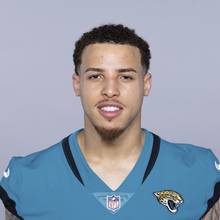 Parker Washington72Grade
Parker Washington was one of the best revelations in the NFL last season. The Jaguars' wideout caught 58 of his 95 targets for 847 yards and five touchdowns. Washington helped elevate Trevor Lawrence and the Jaguars' passing offense. He was a consistent separator in the first and second levels of the defense. He operated as a safety valve, converting 37 of his 58 receptions into first downs. Washington's route-running, processing, and awareness consistently placed him where Lawrence needed him to be.
378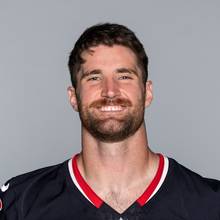 Dalton Schultz72Grade
While not the best athlete at the position, Dalton Schultz will be in the right spot, present to the quarterback, and catch the football. With only one drop on 102 targets a season ago, he's as safe a target as there is and does a great job exploiting zone coverage with high-level eyes. Beating man coverage isn't a strong suit, but he reads leverage well and knows exactly when to get his head around and present. The former fourth-round pick is coming off his second-highest receiving-yard total, 777 yards on 82 catches. While he isn't anything special as a run blocker, Schultz tries to use body positioning to create angles due to a lack of point-of-attack strength. He's proven himself to CJ Stroud time and again and earned the trust of the offense.
377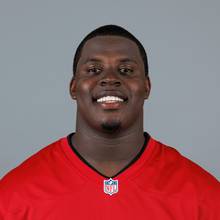 Calijah Kancey72Grade
As a quick-twitched and high-level athlete for an interior defender, Kancey is good at working the edges as a pass-rusher and can be a weapon on stunts. However, the 6'0", 280-pound lineman's lack of size and strength impacts his ability to anchor as a run defender. It also doesn't help that the three-year pro has struggled to stay healthy, missing 22 games in his career, including 14 with a torn pec last year.
376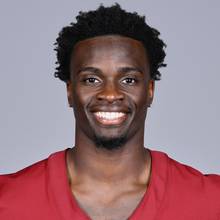 Mike Sainristil72Grade
With the constant injuries to the Commanders' secondary, Mike Sainristil had to play on the boundary for the majority of his snaps once again in 2025. He plays an aggressive style of man coverage and takes chances on releases, letting quicker receivers create instant separation he can't recover from. As a zone corner, he calls out routes, passes them off, and can drop underneath to impact plays with turnovers or broken-up passes, but his eye discipline can be hit or miss. Sainristil's motor runs hot, and while he isn't the most impactful run defender, he gives his all in every facet of the game. Hopefully, the defense around him stays healthy, and he can have a better 2026.
375 Chig Okonkwo72Grade
Chig Okonkwo is an iron man at the tight end position, battling through minor injuries throughout his career to bring speed and toughness to the field. However, this is not the blocking tight end you're looking for. He's out there only because he has to be, but when the script turns to throwing the ball, Okonkwo's your guy. He has lapses in concentration that lead to drops, but he's tough through contact, able to make defenders miss in space, and can stretch the field. More nuanced in his route running than expected, he brings a more rounded receiving profile to the table. Okonkwo is going to fit extremely well with the tight ends in Washington's blocking scheme.
374 Tyson Campbell72Grade
After a rough start to his 2025 season with the Jaguars, Campbell was traded to the Browns and found his footing. He tied for the league lead in passes defensed with 18 last year, while challenging receivers in man coverage, clicking and closing downhill, and playing fast. A big corner on the boundary with great length, Campbell is active in run support and quick to diagnose plays underneath. While there will be a new defensive coordinator in 2026, Campbell earned a starting role with excellent play from Weeks 13-18, allowing only 10 receptions for 112 yards and two touchdowns with five passes defended over 22 targets.
373 Kenneth Gainwell72Grade
Kenneth Gainwell is a vastly underrated running back due to a lack of touches throughout his career. Last season was his first with over 100 rush attempts, and he averaged 4.7 yards per carry. Gainwell has always been a versatile pass catcher out of the backfield, but he displayed his rushing ability in Pittsburgh last season. He ran with good patience and vision, allowing his offensive line to engage and seal blocks. He accounted for over 1,000 yards and eight touchdowns from scrimmage. Heading into 2026, he joins Bucky Irving in the Buccaneers backfield; do not be shocked if it results in a near 50/50 split in playing time.
372 Wan'Dale Robinson72Grade
Wan'Dale Robinson established himself as a good starting receiver in 2025. With the loss of Malik Nabers to an ACL, Robinson stepped into the WR1 role and thrived for the Giants. He handled the volume and produced in their offense. Robinson operated as a three-level receiver and threat after the catch. He rarely dropped passes and separated well. He displayed strong football IQ as a route-runner against zone defenses, clearing spot droppers and sitting in open space. He is a smaller receiver, and it shows up when trying to make plays through contact.
371 Cade Otton72Grade
With the amount of moving around the formation as Cade Otton does, you'd think he was a pure "F" tight end, but the Bucs just like weaponizing him. He executes a huge amount of blocks from every alignment, even as an H-back, and while he isn't a people-moving tight end, he gets the job done. Otton is an excellent pass protector, with his run blocking rounding out his blocking profile. The former fourth-round pick is a solid receiver who identifies open space in zone coverage and gets upfield quickly. Otton isn't a consistent man-beating presence and is solid, but not great after the catch. He's been a very reliable and smart player for Tampa Bay, and they rewarded that with a nice contract.
370 Chase Young72Grade
Young has always been a good pass-rusher. He wins with speed around the edge, turning speed-to-power, working his hands and shows a nice inside swim move as a change-up. As a result, the six-year veteran notched the first career double-digit sack season in 2025. However, the 2020 No. 2 overall pick doesn't make much of an impact against the run. He can beat tight ends at the point of attack occasionally and make tackles when unblocked on the backside of zone runs. Otherwise, Young is often neutralized at the point of attack when he has to take on blocks from offensive linemen.
369 Tanor Bortolini72Grade
Bortolini filled in for five starts as a rookie two seasons ago before becoming Indianapolis' full-time center last year, starting 16 games while battling through a Week 16 concussion to return in Week 18. Bortolini is a sawed-off, lean center with very good movement skills and high-end zone run-blocking utility inside a run-first, play-action-heavy structure that maximizes his range and minimizes his lack of size and raw power. He is a weapon on combo blocks, with the quickness, angles and body control to track and intersect linebackers, while his refined hand-placement helps him establish leverage early in both the run game and pass protection. His low pads, core strength and active hands help him die slowly against power. His narrow build and middling strength still get exposed on pick stunts, back blocks and movement across his face, but the skill set fits the scheme well enough to produce quality starter value.
368 Cesar Ruiz72Grade
Ruiz missed three games last season with ankle issues. When available, he put together the most consistent season of his career. Ruiz showed real growth in pass protection, settling at his spot, playing inside-out on rushers and using improved strike-timing and placement to frame targets and stay in phase during isolated matchups. He was also cleaner sorting stunts, limiting the glaring breakdowns that showed up earlier in his career. In the run game, Ruiz used efficient aiming points, landmarks and footwork to latch, steer and stay attached rather than chasing displacement. That technical step forward allowed his stout frame, heavy hands and power to become more reliable assets. He's still not an elite mover or hand technician, but the steadier down-to-down execution pushed him into solid starter territory.
367 Demario Davis72Grade
Davis is getting up there, but is still playing at a fairly high level. The 37-year-old is more of a downhill linebacker at this stage, but his veteran instincts allow him to be a factor against the run, and he still has some pop behind his pads. The passing game is where Davis' age starts to show, as he's pretty average in that department.
366 Tyler Booker72Grade
Booker put together a solid rookie campaign, starting 14 games at right guard after exclusively playing left guard at the collegiate level and missing three games with a high-ankle sprain. Booker is a massive interior blocker with very good width, length and heavy hands. He already understands how to maximize his frame in pass protection. He plays inside-out on rushers, funnels them into his body and uses his stout anchor to engulf most competition once contact is established. His size, strength and physicality allowed him to hold up against premier competition such as Jalen Carter. However, clean losses still showed up when his hands were late, causing him to get stood up and compressed into the pocket. His average redirect ability also shows up against loopers and movement on stunts. Booker is not a high-end mover, but he mitigates that inadequacy by running his feet, closing space and preventing defenders from stretching him into recovery mode. He already brings a nasty, tone-setting presence with the size, anchor and sustain skills to become a long-term quality starter if his hand-timing and processing skills continue to sharpen.
365 Trent Brown73Grade
Brown completed his 11th NFL season at his fifth stop, while again providing a stabilizing presence once he entered the Texans' lineup in Week 10. Across seven regular-season starts and another in the Wild Card round, Brown showed he still has high-end pass-protection value. His game is built upon gargantuan size, premier length, heavy hands and a veteran understanding of how to cover rushers without wasting movement. Brown can still blot out defenders when working on an island, establish first meaningful contact with jarring power and protect his frame by forcing rushers to work around his mass rather than through clean angles. The limitations are now mostly tied to age, wear and role. His burst, range and finishing skills in the run game have diminished, leaving him more positional than forceful outside of short-area power exchanges. Availability also prevents him from being viewed as a reliable full-season answer. Brown is now more late-season stabilizer than foundational starter, but his ability to survive on an island in true dropback concepts without regular chip help still carries real value.
364 Josh Oliver73Grade
Watching Josh Oliver look to punish people in the run game is a joy to witness. He can get top-heavy and fall off blocks or be thrown off by some of the top EDGE defenders, but the determination is there. There's untapped potential as a receiver with good athleticism, smart plays in zone coverage, and good hands. Oliver shows off speed after the catch and down the seams, but his biggest impact is felt in-line. He gets on double teams, times his blocks well to the second level, and is a blocker that an offense can feel confident running behind.
363 Jeremy Chinn73Grade
Jeremy Chinn wears so many different hats for the Raiders defense that he should be called the Mad Hatter. That kind of usage makes it difficult to hang his hat on any one thing, but he racks up a ton of tackles with his effort and willingness to play against the run. He's better at sorting through the trash than stacking and shedding blocks, but he gets involved. In coverage, his eyes can wander and concentration lapse, leading to coverage busts, but his athletic ability, big nickel tools, and versatility keep him on the field.
362 Tommy Tremble73Grade
This guy is one of the most competitive blockers in the NFL, and while he's a touch undersized at the tight end position, Tommy Tremble brings it every game. Tremble blocks like Sauron poured his will to dominate all life straight into his hands to cause devastation. He punishes secondary members on the edge, blocks to the whistle, and consistently shows good timing on cut blocks from split-zone looks. There's untapped potential in his receiving game as his speed and yards after catch ability are underutilized, but he's made some impressive plays throughout his career. While the ceiling is capped on what Tremble can ultimately be, he's incredibly fun to watch.
361 JuJu Smith-Schuster73Grade
Juju Smith-Schuster has proven to be a dependable power slot receiver at this stage of his career. His game has matured well since he was a budding star early in his career with the Pittsburgh Steelers. Smith-Schuster serves well as an underneath route-runner with great instincts and coverage recognition to fill those voids left by the defense. He's on the same page with the quarterback on option routes and will move with the quarterback on scramble drills. He is not an athletic phenom, and his upside is limited, but Smith-Schuster is a consistent pass catcher who helps move the ball downfield.
360 Drue Tranquill73Grade
Tranquill is a true downhill linebacker in both phases of the game. Against the run, when the gap opens in front of him, he's quick to attack it and can make tackles at or behind the line of scrimmage. In coverage, he has the speed and acceleration to be effective at clicking and closing. However, the seven-year veteran is tight-hipped and struggles to move laterally or change directions, impacting his ability to mirror running backs and make plays on the ball in coverage.
359 Dawson Knox73Grade
Dawson Knox is a chameleon for the Bills' offense with the variety of skills he brings to the field. He can do the job of Dalton Kincaid, being the big slot, and execute a number of jobs/assignments as an in-line blocker. The former third-rounder is an efficient receiver who wants to get into his route quickly and gets his head around when he's clear with purpose. With Kincaid missing time last season, Knox had more opportunities in the passing game, and he showed the connection he has with Josh Allen. He'll never be an extra tackle as a blocker, but he's crafty with his hands and does a great job thinking through the concept. When a team has a role player like Knox, they love keeping him around, and the Bills showed that with a new three-year contract earlier this offseason.
358 Marlon Humphrey73Grade
Marlon Humphrey surrendered the most yards receiving of his career last season, with 734 yards given up across 89 targets and 55 receptions allowed. While his football IQ and instincts still took him to the football for four interceptions and seven passes defensed, he looked behind in coverage too often. Better athletes were running away from him, and his man coverage/mirroring ability took a hit. He was asked to play more on the outside in 2025, which helped him get against more vertical routes, and his experience on the boundary helped the Ravens navigate a pile of injuries. Humphrey still has the football IQ to contribute as a nickel on both pass and run, but athletically, there are concerns about whether he can keep up.
357 David Montgomery73Grade
David Montgomery is an established quality starting running back who has rushed over 1,000 yards twice in his career. Last season, Jahmyr Gibbs took over the starting role, but Montgomery accounted for 716 yards and eight rushing touchdowns. He runs with great patience, pressing the line of scrimmage before making quick decisions about which lane to hit. Montgomery runs behind his pads and finishes runs with power. He's a functional receiving option out of the backfield. He is a starting running back who happened to be a backup behind a top-tier back last season.
356 Luther Burden III73Grade
Luther Burden III is an electric wide receiver. His rookie season was a success and gave us a glimpse of his playmaking ability. Burden is a threat to manufactured touches and traditional receiver route concepts. He is an explosive run-after-catch threat and makes defenders miss in the open field. He wasn't heavily relied upon early in the season, but down the stretch, the Bears made Burden a mainstay in their offensive game plan. The future is bright for the young Bears' wideout.
355 Will Johnson73Grade
The draft-day fall of Will Johnson was injury-related, and those injury issues carried over into his rookie season, where he missed five games due to injury—but the play on the field was another story entirely. He had his ups and downs across both man and zone coverages, but showcased impressive catch-point prowess and instinctive play. He got outworked by bigger receivers for touchdowns throughout the season, but they were learning moments for the young man. Johnson, entering his second season, has a solid foundation to work from.
354 Divine Deablo73Grade
After flaming out in Las Vegas, Deablo signed with Atlanta last offseason and had a career year. One discernible difference in his play was his instincts against the run, as the former Raider was constantly in the right spot to make tackles for short gains with the Falcons. Also, the college safety finally put it together in coverage on the second level, posting a career high seven passes defended after registering just six in the first four years of his career combined. However, he is still susceptible to the occasional coverage lapse. It will be interesting to see if Deablo can build on a strong campaign and continue to grow in Atlanta.
353 Jalen Nailor73Grade
Jalen Nailor served as the WR3 for the Minnesota Vikings offense. He is a smart route-runner, finding ways to get open against various defensive looks. Nailor's hands are reliable for securing passes on and off his frame. He does a good job working back to the quarterback and settling into the holes inside the coverage shell as an open target. Nailor's ball skills and tracking should come in handy with the Las Vegas Raiders this season.
352 Jon Runyan Jr.73Grade
Runyan pieced together arguably the best season of his career in 2025, starting 16 games and playing like a solid, craft-driven veteran. Runyan wins with good play-speed, excellent hands and leverage skills that help offset mediocre mass and sand. His anchor can still crack against sudden spikes, picks and stutter-bulls that catch him flat-footed, but his hand usage, light feet and recovery ability allow him to stay in phase and die slowly when initially stressed. In the run game, Runyan works underneath and inside of targets to create quick leverage, steer on the first level and take precise angles on climbs to intersect linebackers. The six-year veteran is not an imposing finisher, but his timing, technique and recovery skills make him a dependable net positive.
351 Nolan Smith73Grade
It's a shame Smith suffered a significant injury at the beginning of 2025, because he was playing very well in the first three games and looked like he was on the verge of a breakout season. Still, the 2023 first-round pick has a well-rounded skill set, where he uses his length and strength well to keep offensive tackles away from his body in both phases of the game. It's just a matter of when or if he's going to take that next step to go from a solid to a good edge defender.
350 Paulson Adebo73Grade
While adjusting to a new defense in New York last season, Paulson Adebo also suffered a knee injury that sidelined him for five games. His ball production dipped as a result, but he still attacks the catch point with good timing and drives on underneath routes with quickness. Adebo is a physical player who wants to impose his will on receivers downfield, but struggles to decelerate at the top of routes. It wasn't the smoothest transition to New York, but he started to show more comfort and movement during the last three games of 2025, and has a new head coach and defensive coordinator to work with in 2026.
349 Jayden Higgins73Grade
Rookie wide receiver Jayden Higgins finished 2025 third in targets, receptions, and receiving yards for the Houston Texans. He was tied for first in receiving touchdowns with star receiver Nico Collins. Higgins did not have an outstanding season production-wise, but he made his presence felt. He gained the trust of quarterback C.J. Stroud and became a weapon in the red zone with his route running and 6'4" frame. He gave the Texans another big receiver with inside-outside versatility to create mismatches on defense. Higgins made a nice first impression on the league, giving Houston fans excitement for his encore in 2026.
348 David Onyemata73Grade
Onyemata is an underrated run defender. He can defeat blocks with strength and power and has shown the ability to use his athleticism to make offensive linemen miss as a change-up. Also, the 10-year veteran has the versatility to play several alignments on early downs. He just isn't as disruptive and productive of a pass-rusher as he used to be.
347 Leo Chenal73Grade
Chenal makes his impact as an off-ball linebacker against the run and as a pass-rusher off the edge, fitting the description of a modern hybrid linebacker. However, when asked to drop in coverage, he often looks uncomfortable, struggling to recognize route concepts and with his angles in space.
346 Hjalte Froholdt73Grade
Froholdt remained a solid starting center in 2025, extending his streak to three straight seasons without a missed start while also operating inside the league's most pass-heavy offense. That environment muted some of his best traits, because Froholdt's value is still most evident as a physical, tone-setting run blocker with enough movement ability to pull, climb and create force on the move. Arizona's low rushing volume limited the frequency of those impact opportunities, though the gap and pull concepts they did feature still allowed his power and underrated range to show. The tradeoff was more exposure in true pass protection. Froholdt has a stout anchor and can absorb power when square, but his sawed-off frame, shorter strike radius and average recovery skills leave him vulnerable against high-end interior quickness and length. Dynamic fronts, particularly within the NFC West, were able to slip and access his edges more often than during prior seasons. Froholdt's durability, physicality and run-game value keep him among the solid-starter tier, but his pass-protection ceiling is capped when the offensive structure forces him into a heavy diet of isolated dropback reps.
345 Donte Jackson73Grade
Switching from the Steelers' man-coverage-heavy defense to a zone-based scheme in Los Angeles paid dividends for Jackson and the Chargers. Always looking to jump routes, to a fault at times, he broke up 12 passes and recorded four interceptions on the season with a true bounce-back performance. He struggled to sift traffic in bunches, mirror in man coverage, and tackle, but his presence was felt in defensive coordinator Jessie Minter's scheme. The film study and instincts were rewarded last season, and he'll be looking to continue that trend in 2026.
344 Wyatt Teller73Grade
Teller enters 2026 as a solid starting guard whose recent dip was real but somewhat overstated by a difficult offensive environment. Cleveland's heavier pass volume, unstable quarterback play and predictable structure over the last two seasons put more true dropback stress on Teller than earlier in his career, while knee and calf issues slightly reduced his recovery quickness. Teller remains a physically imposing interior presence, with the strength and movement ability to create displacement in the run game, particularly on pulls, angle-drive blocks and double-teams. In pass protection, his play tends to be more volatile. His hand placement can be late or erratic, which creates quick access when rushers beat him to first meaningful contact. However, his length, anchor and play-strength still allow him to match up with most interior defenders when he stays square. Teller is no longer the automatic top-tier guard he was at his peak. Even so, his power profile, functional movement and prior high-end play leave room for a rebound if the Texans' staff places him in a more balanced structure.
343 Jauan Jennings73Grade
Jauan Jennings is an established power-slot receiver who excels working in the middle of the field. He is a reliable target on in-breaking routes working in between the hashes. Jennings is one of the league's best blocking receivers. He's a sure-handed receiver who plays with the requisite strength, toughness, and catch radius to work in high traffic areas. He's a limited athlete without the explosiveness or top-end speed to be a high-impact receiver.
342 Alohi Gilman73Grade
Alohi Gilman is a valuable utility man and a highly instinctual player who can help unlock a defense when utilized correctly. Flowing downhill is where he does his best work, but he can play from a single-high alignment and help patrol the back end of the defense. He doesn't have the best range, but his instincts take him to the football, and he brings a big stick with him; however, that leads to more missed tackles. Gilman is a willing lane-filler, but does get in trouble with pursuit angles and length concerns as a tackler. His versatility is his superpower, and he's just landed in the hands of Steve Spagnuolo, who is one of the most creative and havoc-creating defensive coordinators in the NFL.
341 Tyler Biadasz73Grade
Biadasz remained a clear starting-caliber center during the 2025 campaign, even if his second season in Washington did not quite match his career-best from a season earlier. Offensive regression and interior turnover are necessary context, but his core skill set remained intact, with excellent timing, leverage, angles and reliability. Biadasz is one of the league's better movement centers, using precise footwork and body positioning to intersect targets on climbs, wall off linebackers and create access in the run game despite ordinary size and power. In pass protection, he provides a scrappy, technically sound presence by protecting his frame, establishing quick leverage and getting into his anchor efficiently enough to hold up against most competition. His ceiling is capped by modest physical traits, and he can be stressed by high-end power when isolated. Still, his processing, balance and improved hand usage give him a high floor. Biadasz is not elite, but his polish, durability and run-game value make him a dependable plug-and-play starter.
340 Laiatu Latu73Grade
Latu is a rising pass-rusher, showing the ability to push the pocket and work his hands, while displaying a good motor to generate pressure. He just isn't a quick-winner, making him more reliant on good coverage to convert pressures into sacks, hence why he has yet to register a double-digit campaign. The 2024 first-round pick is still growing as a run-defender and does struggle to anchor against a downhill rushing attack. However, he did make a handful of quality tackles against outside or stretch runs last season.
339 Javon Bullard73Grade
Javon Bullard is still getting comfortable with the speed of the game in coverage, but when he's triggering downhill, he goes with everything he's got. With the mentality of a honey badger, he splits doubles in the screen game, shoots gaps against the run, and fits properly whether from depth or the second level. Physical receivers and tight ends create space in man coverage at the top of the route and at the catch point, but he's developing his zone feel and football IQ as well as a zone nickel. The Packers will use him all over the field, but Bullard has the mindset needed to succeed as an NFL nickel.
338 Osa Odighizuwa73Grade
Odighizuwa makes his money as a pass-rusher, where he has several ways he can win. The five-year veteran can push the pocket with a bull rush, has active hands and is a solid athlete beat interior offensive linemen with finesse moves. Against the run, he can be a decent penetrator but is more of a boom-or-bust type of player.
337 Harold Landry III73Grade
Landry is still pretty quick and athletic to be an effective pass-rusher on line games, recording 8.5 sacks during his first season with the Patriots last year. However, he didn't win one-on-one matchups very frequently and primarily made an impact when unblocked against the run. The latter led to a dip in production, and it's fair to question whether the 30-year-old's numbers will continue to decline.
336 Michael Pittman Jr.73Grade
Michael Pittman is a dependable, high-volume possession wide receiver. He is an instinctive player who diagnoses coverages quickly post-snap. Pittman excels working in the middle of the field on in-breakers, where his big frame is an advantage. He welcomes being the glue guy and working in higher-traffic areas and on quick-passing/underneath concepts. Pittman is a willing and effective run blocker at the point of attack, but also looks to block defenders on long breakaway runs. He's a consistent player with a safe floor and expectations.
335 Nick Herbig73Grade
Bookmark the following statement: Barring injury, Nick Herbig will be a better pass-rusher than TJ Watt for the Pittsburgh Steelers this fall. Herbig came into his own last season, showing the ability to win with speed around the edge, working the hands and enough quickness to win across an offensive lineman's face. He can also get pressure from multiple alignments, with good bend to corner at the top of the rush and convert pressures into sacks. The up-and-coming pass-rusher doesn't make much of an impact against the run, though.
334 Josh Simmons73Grade
Simmons started eight games as a rookie in 2025, missing Weeks 6-9 for personal reasons and Weeks 14-18 with a dislocated elbow, but his limited sample showed real left tackle promise. Simmons was tested by high-end rushers such as Nik Bonitto and Josh Hines-Allen and flashed the premium movement profile that made him a first-round prospect, though his pass-protection consistency remained a work in progress. He's still raw with only the details of footwork, hand placement and strike-timing, which puts him in too many compromised positions. Those moments also highlight his rare ability to recover, mirror and protect space on an island. Simmons has top-tier athletic ability, fluidity and range in pass protection, with the movement skills to become a weapon on climbs, screens and space blocks in the run game. He also has enough raw strength to command the point of attack when his upper and lower halves are synced. The gap between his traits and skill set remains clear, especially with his hands, but his rookie tape showed enough high-end flashes to project an ascending starter whose athletic ceiling is among the league's best.
333 Jaylen Warren73Grade
Jaylen Warren is a productive and versatile running back. His compact build, combined with foot quickness, helps force missed tackles in space as both a runner and a receiver. Warren nearly rushed for 1,000 yards last season, something he's never accomplished. He isn't a game-changing player, but he's a very effective and capable one. He looks for work and makes due as a pass protector, chipping and releasing into his route and staying in the pocket to pick up blitzers. Warren is a solid starting running back with three-down value.
332 Rashan Gary73Grade
Gary developed into a quality, well-rounded edge defender over the last few years, primarily leaning on his unique athletic ability at 6'5" and 275 pounds. The 2024 Pro Bowler turns speed-to-power as a pass-rusher, then combines that trait with a good long-arm move and motor to apply pressure. In the running game, Gary doesn't make a ton of plays against offensive linemen, but he can beat tight ends and use his speed and movement skills to make tackles from the backside of zone runs.
331 Taylor Moton73Grade
Moton remained Carolina's steadiest offensive lineman in 2025, starting 15 games and continuing to win with the well-rounded, low-volatility skill set that has defined his career. Moton's value is rooted in timing, technique and reliability more than overwhelming physical traits. In pass protection, he gets out of his stance efficiently, reaches his landmarks on time and uses active, precise hands to establish early leverage and disrupt the timing of rushers. In the run game, he is more positional than forceful, but he understands angles, fits blocks on schedule and can seal or wall off defenders when his footwork stays tied to his hands. Moton does not consistently overwhelm opponents with power, movement or finishing ability, but his technique, availability and down-to-down consistency still make him a dependable starting right tackle. He is a classic greater-than-the-sum-of-his-parts veteran whose value is often easier to appreciate inside the building than from the outside.
330 Jordan Addison73Grade
Jordan Addison is a talented number two wide receiver behind Justin Jefferson. He is an advanced and detailed route-runner. Addison gets in and out of his breaks quickly; he attacks the cornerback's leverage to create space. He missed three games last season because of a suspension for violating the NFL's Substances of Abuse Policy. Addison battled drops last season and struggles to fend off physical/handsy cornerbacks. His production doesn't match his talent, but he needs to be consistent on and off the field.
329 Chase Brown73Grade
Chase Brown is among the most underrated offensive players in the league. Being overshadowed by Joe Burrow, Ja'Marr Chase, and Tee Higgins isn't difficult. Brown is a dynamic runner with elusiveness and quick stop/start ability to evade defenders in the alley. He is a playmaker in space as a receiver on screens, delayed check/releases, and flexed into the slot as a route-runner. Brown's acceleration and top-end speed create big plays for the offense. He runs hard, but his lack of weight creates inconsistencies in pass protection. Regardless, Brown deserves more recognition for his overall playmaking abilities.
328 Daniel Jones73Grade
Daniel Jones' season came to an unfortunate end after suffering a torn Achilles tendon in Week 14 against division rival Jacksonville Jaguars. Before the injury, he led the Colts to an 8-4 record with the best play of his career. Jones is at his best when hitting his first read and working off play action or RPOs. He is an above-average athlete with pocket mobility to extend plays and convert big third downs with his legs. He struggles with his progressions and decision-making under pressure. Jones is a solid starter, but we have to see how he rebounds from the Achilles recovery.
327 Tyreek Hill74Grade
A gruesome lower leg injury disrupted Tyreek Hill's 2025 season. He was limited to four games. During that stretch, he was efficient, converting 21 of his 29 targets into receptions. Before the injury, he was a trusted weapon for Tua Tagovailoa, averaging 7.2 targets and 66 yards per game. Hill's route-running, short-area quickness, and top-end speed have carried over from years past. He used the threat of his long speed and salesmanship to manipulate defenders downfield. Hill is an established big-explosive play generator, but he's over 30 and coming off a difficult injury. No one knows if he will be the same caliber of athlete when he's fully cleared for action.
326 Isaiah McDuffie74Grade
McDuffie is a key special teamer for the Packers, and that shows up in his linebacker play. Against the run, he flows to the perimeter well and has the bend and athleticism to work around blocks and get back in a position to make a tackle when shooting downhill. In coverage, the five-year veteran operates well in space to click and close, and he's a sure tackler overall. McDuffie just isn't great at stacking and shedding, and doesn't make many plays on the ball.
325 Moro Ojomo74Grade
Over the last couple of seasons, Ojomo has proven to be an ascending defensive tackle in the league. He has the strength to lock out and defeat blocks from interior offensive linemen, and he's coming off a strong performance as a pass-rusher with six sacks last season. The 2023 seventh-round pick's combination of power and athleticism gives him the ability to push the pocket when bull rushing, win with a club move and be effective on stunts. Ojomo just needs to get better at working the hands to add to his arsenal.
324 Quay Walker74Grade
Walker might be the most frustrating linebacker in the NFL. At 6'4" and 241 pounds with a 9.63 Relative Athletic Score coming out of Georgia, the former Bulldog has the size, strength and athleticism to be a well-rounded backer. Those traits show up in spurts to at least show that he's a starting-caliber player, but the consistency isn't there yet, and it's because he's still figuring out the mental aspect of the position, especially in coverage.
323 Patrick Paul74Grade
Paul completed his second season and first as a full-time starter in 2025, showing promising results inside the Dolphins' tackle-friendly passing environment. Miami's quick-game structure, Tua Tagovailoa's league-fastest time to throw and a top-five play-action rate helped reduce Paul's exposure. Still, his physical tools translated. Paul's exceptional length gives him a trump-card trait in pass protection, allowing him to widen rush paths, expand his edges and cover up some of the issues created by his high-cut frame. He can step underneath himself on redirects and lose balance against late movement, but his reach and grip strength allow him to latch, clamp and survive many reps. In the run game, Paul showed enough burst and range to intersect targets on climbs and lead blocks, with the play-strength and demeanor to overrun defenders once attached. He can still dip his head or get crossed up by movement across his face, but those issues became less frequent as the season progressed. With a new coaching staff and quarterback situation, Paul's 2026 projection carries some volatility. Even so, his length, play-strength and growing confidence provide a reasonable starter floor.
322 Jamien Sherwood74Grade
Sherwood is a really good athlete who uses his movement skills to make working around blocks work, and he's quick to read screens or throws to the flat to post back-to-back seasons with more than 150 tackles. However, the five-year pro's instincts and awareness in coverage overall is subpar, negating a good portion of his athletic skills in coverage.
321 Travis Jones74Grade
Jones is a boulder in the run game who can plug up inside rushing lanes against double teams and beat one-on-one blocks to make quality tackles near the line of scrimmage. He does have some limitations with his lateral movement skills, which can show up against outside zone schemes and as a pass-rusher. However, the 26-year-old is beginning to make a name for himself as a run defender and has a bright future. Plus, Jones can occasionally push the pocket and notched five sacks last year to start becoming more productive on third downs.
320 Cooper Kupp74Grade
Cooper Kupp has established himself as a reliable and crafty wide receiver for years. He is past his athletic prime but has a high football IQ. Kupp is a good slot receiver who runs routes with the timing and tempo to be on the same page as his quarterback for maximum success. He is known as a separator in the first and second levels of the defense. At this stage, Kupp is a complementary piece alongside a star or top receiver. He is the old reliable vehicle that will get you through a trip or two without a hiccup.
319 Upton Stout74Grade
Upton Stout plays nickel at 100 mph and shows you that you don't have to be a big guy to succeed in the NFL. Even though he's 5'9", he sorts through the trash in the run game, mixes it up at the line of scrimmage, and takes down tight ends well. He missed some tackles and had eight penalties last season (but wasn't flagged once in the last five weeks of the season, including the playoffs), but offers a good menu of coverage skills with excellent depth and closing speed. Rookies make mistakes, but as long as they play fast, they usually come out in the wash. Stout is very talented and is right at home in San Francisco's defense.
318 TJ Edwards74Grade
At this point, Edwards will likely never become a Pro Bowl-caliber player. But he is a solid all-around linebacker that just about every NFL defense could use. The former undrafted free agent has established himself as a starter in the league with his combination of instincts, athleticism and toughness in both phases of the game.
317 Kamren Kinchens74Grade
Top-down safeties are what today's NFL is made of, with as many two-high shells as we're seeing, but Kamren Kinchens has the instincts to play from a single-high alignment as well as a robber. He gives the defense a ton of versatility in where he can line up and isn't afraid to play down close to the box and support the run. He drives on routes over the middle of the field, tackles well in space, and can be a dangerous player to test when he gets a read on what's happening. The Rams don't want him playing too much in the box or in man coverage, but he's exactly the type of player this secondary values.
316 Deebo Samuel74Grade
Deebo Samuel is one of the more versatile receivers in the league. He impacts the offense's productivity in numerous ways. It's easy to get the football into his hands. He played well for the Commanders last season as the WR2 behind Terry McLaurin. Samuel caught 72 passes for 727 yards and 5 receiving touchdowns. He is back in San Francisco on a one-year deal, returning to the offense that drafted him and best maximized his skill set. He is capable of creating missed tackles either with power or elusiveness in space. Samuel's playmaking ability raises the floor of a passing offense, and with his versatility, it's easy for him to become the quarterback's best friend on third downs.
315 Cody Barton74Grade
Barton is one of the most consistent tacklers among NFL linebackers, as he rarely misses. Against the run, he has the instincts to sift through the trash and make plays near the line of scrimmage, but struggles to take on and disengage from blocks. In coverage, the seven-year veteran has good ball skills with eight interceptions and 23 passes defended over the last three seasons. But he isn't comfortable operating in space to be used outside of being a low-hole defender.
314 Braden Smith74Grade
Smith rebounded in 2025 and remained a solid starting right tackle after a challenging stretch that included multiple injuries and health-related setbacks over the previous three seasons. Smith is no longer quite the same physically dominant player he was in his peak, but his experience, play-strength and pass-protection craft still give him reliable ways to win. In the run game, he remains a sturdy, efficient blocker with the power to create movement on angle-drive blocks and the control to fit, steer and sustain. In pass protection, Smith wins more with timing, hand-placement and positioning than high-end range, using his veteran feel to stay square and force rushers through his frame. His movement skills and durability are no longer clear strengths. Even so, he still profiles as a dependable starting tackle with enough baseline quality to stabilize a unit.
313 Mac Jones74Grade
Mac Jones will miss the mark and won't check most of the physical boxes, like arm strength/talent, size, and athleticism. If given a quality offensive line, an offensive scheme, and a reliable supporting cast, Jones can make things work and win football games. He displayed that last season in relief for injured Brock Purdy in San Fran. Jones started eight games and played well enough to keep the 49ers' playoff hopes afloat. His processing quickness and accuracy mesh well with Kyle Shanahan's offensive scheme, which highlights the mental superpowers of his quarterbacks. Jones will not raise the ceiling of the team's offense, but he can lift the floor a bit higher.
312 Carlton Davis III74Grade
Length is a great asset for corners, and Carlton Davis has used his to frustrate receivers for eight seasons. He's a physical and aggressive player on the outside, loves to hit people, and leaves an impression on the guys he faces off against. While he isn't known for having the best hands, he picked off a pair of passes in the playoffs to go with four passes defensed and 10 defensed during the regular season. He helped solidify the Patriots' secondary across from Gonzalez and slid into a more natural CB2 spot to help them make their run to the Super Bowl.
311 Kayvon Thibodeaux74Grade
Thibodeaux is a strong and powerful defensive end who can set the edge against the run and push the pocket as a pass-rusher. He also showed some ability to penetrate and work the hands last season. The 25-year-old's biggest issue remains staying healthy, playing in all 17 games just once during his first four seasons.
310 Patrick Queen74Grade
Queen is still a highly athletic linebacker, but he regressed significantly in coverage last season, getting caught with bad eyes in zone coverage and being manipulated by quarterbacks to be out-leveraged. He also had a big spike in missed tackles to cap off a down year. The two-time Pro Bowler still gets the benefit of the doubt, but make no mistake about it, he needs to have a bounce-back performance in 2026.
309 Andrew Van Ginkel74Grade
Van Ginkel is a traditional 3-4 outside linebacker who lines up at the line of scrimmage more often than not. Though he will drop into coverage frequently. The latter has become less common in today's NFL, making him a bit of a unique player. The 2024 second-team All-Pro can contribute in a varied role, because he has a Swiss-Army knife-like skill set. He works the edges as a pass-rusher, makes offensive linemen miss against the run and has the movement skills to either close or make plays on the ball in coverage.
308 Cam Jordan74Grade
After a couple of down years in 2023 and 2024, Jordan put together an impressive bounce-back campaign last season. The 37-year-old isn't the eight-time Pro Bowler he used to be, but he can still turn speed to power and has a couple of good moves as a pass-rusher to be productive, posting 10.5 sacks in 2025. Also, he can still set the edge and beat tight ends in the running game.
307 Romeo Doubs74Grade
Romeo Doubs has been a model of consistency during his tenure with the Green Bay Packers. He has more than 600 yards receiving in each of the last three seasons. Doubs has never crossed the 1,000-yard mark in a single season, but he is more than capable of doing so if given the targets. He is an athletic receiver with good size to play on the outside and in the slot. Doubs is known for his speed, which stresses defenses vertically and allows him to win on every other route. He is a solid receiver who, if paired with a true WR1, can have a larger impact on offense.
306 Abraham Lucas74Grade
Lucas returned to form in 2025 after back-to-back injury-plagued seasons, giving Seattle high-quality right tackle play inside Klint Kubiak's offensive line-friendly structure. Lucas regained the play-strength that stood out as a rookie, while showing a more refined pass-protection plan, setting square to his spot and using varied, well-timed hands and changeup sets to disrupt rushers' timing. Average range against wide speed alignments is his main limitation. He tends to open early and becomes vulnerable to counters attacking his inside shoulder. In the run game, Lucas is a stout, agile blocker with enough strength, balance and movement skill to execute across concepts. Last year's film showed a quality starter, with the remaining caveat being whether his health and pass-set range can hold up during consecutive seasons and within a new scheme.
305 Cor'Dale Flott74Grade
Flott plays from a consistent power stance, which makes him ready to trigger downhill or turn and run at a moment's notice. He uses the catch technique very well and quickly reads the receiver's body language to determine where the play is headed and how to get there. When he's stacked vertically, he struggles to locate the football and impact the catch point, but typically stays on top of deep routes well. He won't be an overly active player against the run, but he's a consistent boundary corner who knows how to use his skill set, which will be on display in Tennessee instead of New York in 2026.
304 Tremaine Edmunds74Grade
It feels like Edmunds has fallen short of the expectations surrounding him as a draft prospect, but he's still a decent starting linebacker. The Virginia Tech product has always been an exceptional athlete, which helps him in both phases of the game but especially in coverage. His ball skills stand out with nine interceptions and 24 passes defended over three seasons with the Bears.
303 Charvarius Ward74Grade
While he flirted with retirement after sustaining multiple concussions last season, Charvarius Ward continued to be a stabilizing player in the secondary when on the field. A sure-tackling corner, his experience, man coverage acumen, and length allow him to impact the catch point with consistency. The Colts played a ton of man coverage last year with Ward and Gardner on the field with their size and length, and that's how you're going to get the best out of Ward.
302 Roger Rosengarten74Grade
Rosengarten started all 17 games during his second season and settled in as a valuable fit inside Baltimore's run-heavy, play-action-oriented offense. His game is built on alertness, quickness and craft more than overwhelming physical traits. Rosengarten is a highly skilled run-blocker with the burst to hit landmarks, the body control to re-leverage on the move and the feel to wall off targets without needing clean displacement. His backside cutoffs are among the best from a right tackle, and his ability to reach, seal and stay attached gives Baltimore consistent value on its core run concepts. In pass protection, Rosengarten is functional but more margin-dependent. His lean, sawed-off build provides a below-average anchor and a narrower strike-timing window, allowing skilled rushers to access his edges when they beat him to first meaningful contact. He offsets some of those issues with set variation, active hands and an effective snatch-technique against heavy-handed rushers who lean into him. Rosengarten is not a power-based right tackle, but his run-game feel, movement skill and technical adaptability make him an underrated starter.
301 Boye Mafe74Grade
While Mafe only had two sacks for the Seattle Seahawks last season, he was still a productive pass-rusher in terms of pressures, collecting 43 at a 13.2 percent rate, per Next Gen Stats. He uses his hands well and has the quickness to win around the edges; the Minnesota product just lacks bend, which makes it difficult to finish or convert pressures into sacks. However, the Seahawks used Mafe less against the run over the last two years and for good reason, as he struggles to defeat blocks from offensive linemen.
300 Josh Downs74Grade
Josh Downs is a quick-moving slot receiver. His skill set is underappreciated at times because he isn't deployed to generate vertical explosive plays; instead, he's the underneath and chain-moving receiver. Downs' usage declined last season with the emergence of tight end Tyler Warren. Downs is a security blanket receiver with a capped physical ceiling.
299 Brian O'Neill74Grade
O'Neill started 14 games in 2025 while managing a nagging MCL sprain he suffered in Week 4, but his overall profile remained familiar. He's a loose, fluid, athletic right tackle whose movement skills and run-game value outweigh a persistent anchor limitation. O'Neill is at his best using range, set variation and quickness to disrupt rush timing before defenders can attack his frame. His three-step short set remains an effective changeup, altering the timing and spacing of the rush while forcing defenders to adjust their approach. His two-hand strike can create immediate control when it lands cleanly, but the boom-or-bust nature of that approach leaves him vulnerable when his hands miss or arrive late, creating a soft inside shoulder for counters. Minnesota's protection structure helped manage some of that exposure with chips and built-in help, though more erratic quarterback play also led to fewer clean pocket-management answers than he has had in prior seasons. In the run game, O'Neill remains a valuable zone and space blocker, with the burst, fluidity and body control to reach landmarks, stay attached, steer defenders and lead on climbs, screens and perimeter concepts. He was not at his best in 2025, but his movement skill, run-game utility and functional pass protection still keep him among the top half of starting right tackles.
298 Jayden Reed74Grade
Jayden Reed missed significant time with a broken clavicle and a Jones fracture in his left foot, which he had surgery on after the Packers' Week 2 win against the Washington Commanders. When healthy, Reed brings a versatile and dynamic run-after-catch weapon. He is used in pre-snap motions and lining up in the backfield for easy access to space. Reed is an easy receiver to get the ball to and helps create matchups for Jordan Love to exploit. Injuries stole the majority of his 2025 season, but when healthy, he's a consistent 700-plus-yard receiver and playmaker.
297 Paris Johnson Jr.74Grade
Johnson started 12 games in 2025 before a Week 14 MCL sprain ended his season, operating in a difficult environment that included backup quarterback play for much of the year, below-average offensive line play around him and one of the league's more pass-heavy structures. Since moving from right tackle as a rookie to the left side in 2024, Johnson has settled in as a solid, ascending starter, even if the larger leap expected from his traits became harder to fully realize in that context. His game is built on movement skills, elite length and the ability to cast a wide net in pass protection, allowing him to establish first meaningful contact and stay centered against speed-oriented rushers. Johnson has the range to protect on an island and the recovery athleticism to survive when rushers force him off his initial track. His play-strength and anchor are solid enough to function, but they are not yet imposing traits. He can be compressed by quality speed-to-power, and his run-game impact is more effective on the move than in tight quarters, where angle-drive and base blocks can stall out quickly. Johnson is at his best in space and zone concepts, where he can intersect, latch and overrun smaller targets on the front and backside. He is not a fully hardened left tackle yet, but the length, movement skill and two-year progression on the blindside still point toward a useful starter with more growth potential.
296 DeMarcus Lawrence74Grade
A change of scenery worked wonders for Lawrence. He revived his career in Seattle last season. The 34-year-old is more of a run-defender who can occasionally win as a pass-rusher at this stage of his career. But he did post six sacks during the 2025 regular campaign and grabbed two more during the postseason. Plus, the 12-year veteran can play the run from multiple alignments.
295 TJ Hockenson74Grade
The injuries have piled up for TJ Hockenson throughout his career and taken some of his natural fluidity, but the offensive change last season hurt his production the most. His average depth of target dropped from nine yards in 2024 to the lowest of his career at 5.2 yards, and his average air yards per target was even lower at 4.8. Hockenson knows how to get open, is a physical route-runner who often creates contact to free up space, and has legit ball skills to catch the football wherever it is around him. He doesn't seem as fluid after the catch; he's more of a decent blocker at this point in his career, and he'll be coming off a shoulder injury for next season. Another year older, but with a possible quarterback upgrade and the hope of full health, there could be a return to form for Hockenson.
294 Brandon Jones74Grade
This is the man who allows Talanoa Hufanga to play to his instinctual fancy while remaining on the roof of the Denver defense. Brandon Jones didn't give up a touchdown last season for the Broncos and continued to get his hand on the football with seven passes defensed in his injury-shortened season. He's better at covering tight ends in man coverage than receivers, but he closes quickly on the ball carrier, reads out route concepts well, and is a willing run supporter. Missed tackles have been an issue for him, and he tends to out-leverage himself in coverage, but he recovers well and provides roaming value for the Denver defense.
293 Jaylen Watson74Grade
Watson put together stretches of fantastic play in Kansas City and helped solidify a corner room with questions outside of Trent McDuffie in recent years. His ball skills and inability to get his head around in coverage have held Watson back in turnover creation. Still, he's developed into a solid, physical man-coverage player on the outside. Watson brings a sure-tackling, run-defense mentality without being an overly dynamic playmaker. He'll pair up with McDuffie yet again, but in the uniform of the Los Angeles Rams instead of the Chiefs.
292 DK Metcalf74Grade
DK Metcalf is a part of an NFL passing offense that averages under 200 yards per game. He is one of the most physically imposing receivers in the league. He is an established big-body pass catcher with explosiveness. Metcalf's productivity has tapered off over the last two seasons. Regardless, he poses a dangerous threat to defenses. His speed, acceleration, and strength put defenders in conflict after the catch. He can either run past defenders or run through them for extra yards. Metcalf is still capable of taking over games with above-average quarterback play. He remains a good and quality starting receiver and playmaker.