291 Dre Greenlaw75Grade
With his last two seasons being defined by injuries, Greenlaw is a tough player to project for 2026 and beyond. He did stand out as a run defender on a small sample size in Denver last season, but he was prone to a few lapses in coverage. It will be interesting to see how the 29-year-old bounces back during his return to San Francisco, as Greenlaw's evaluation is very fluid.
290 Ricky Pearsall75Grade
If not for injuries, the San Francisco 49ers might have found their No. 1 wide receiver in Ricky Pearsall. He missed seven games last season because of a PCL injury, which will need surgery and likely keep him from playing in 2026. That dampens his grade. Otherwise, Pearsall is a great fit for their scheme and quarterback room. He's a technical, detailed route-runner who separates from multiple alignments. He's also great at attacking the corner's leverage and breaking away at the top of his routes. His football IQ is evident in his ability to diagnose post-snap coverages quickly and stay on the same page with the quarterback. His hands are strong and reliable, tracking the football and snatching it out of the air.
289 Tyrique Stevenson75Grade
Tyrique Stevenson would have cemented himself as one of the better young corners in the NFL had it not been for a combination of shoulder, hip, and calf injuries. He was on his way through seven weeks last season, according to NFLPro, allowing a sharply negative completion percentage over expected and forcing a tight window on roughly a third of his targets, the second-highest rate by any Bears cornerback since 2018. The injuries took their toll and changed how he performed through the rest of the season. 2026 is a big season for him, but Stevenson has the ball skills, instincts, and playmaking ability to be a high-level starter for the Bears.
288 Gunnar Helm75Grade
The Titans didn't bring back Okonkwo because Gunnar Helm showed them that he could handle being an every-down player. Over the last month of the season, he was on the field on more blocking downs, took on the "Y" role for their offense, and improved as a blocker. The former fourth-round pick quickly developed a connection with Cam Ward, and they were meant to play together. Helm catches everything around him, and Ward knows how to get it there, but he's also a savvy route-runner with manipulation tactics to get open. The growth he showed as a rookie was impressive, and he's poised to break out as a second-year player.
287 Riley Moss75Grade
Lining up across from the best corner in the NFL is a tough ask for any player, but Riley Moss took an excellent step forward in 2025. He's already a strong run defender, but made real strides in his coverage ability, facing 116 targets in coverage, the most in the NFL, despite spending over seven minutes in tight coverage. He also set a career high in passes defensed with 19. Even though the interception numbers aren't where you'd like them to be, Moss showed that he can handle being the guy across from Patrick Surtain II.
286 Malik Mustapha75Grade
The term "shot out of a cannon" was created for guys like Malik Mustapha. When he makes up his mind to trigger, he's going as fast as he can in that direction and looking to lay a hit on someone. He's a rangy post safety and played in a Cover Three and Cover One look often for the 49ers defense as the lead communicator. His aggression will take him away from his responsibilities and lead to missed tackles, but they've collected this type of player in San Francisco for a reason. He can blitz, create tackles for loss, and jar the ball loose with collisions. A truly fun player to watch move on a football field.
285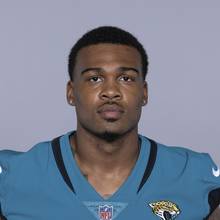 Jarrian Jones75Grade
Willing to play anywhere in the Jaguars' secondary, Jarrian Jones is the perfect, versatile nickel corner. He possesses starter upside, and due to Jourdan Lewis' injury last season, was called into action as the primary nickel. He's a good tackler and solid all-around player, but does great work in zone where he can read route concepts, see the quarterback's eyes, and trigger on throws to limit yards after the catch. Consistently in the right position, he found himself with three interceptions and eight passes defensed for the Jaguars defense in more of a rotational role while still contributing nearly 490 snaps.
284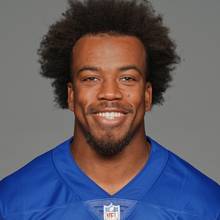 Jevón Holland75Grade
After an impressive career trajectory in Miami, Jevon Holland's transition to the Giants' defense last season was rougher. He was thinking too much, playing in more static coverage looks, and didn't look as comfortable as a weapon. His man coverage tools, instincts, and versatility are all still there, but it didn't look like his skills were utilized in his best interests. Holland was a step late to trigger from deeper zones, and the ball production dipped on top of it. There will be a new culture and defense in New York this season, and hopefully, we'll see the return of the instinctual playmaker Holland can be.
283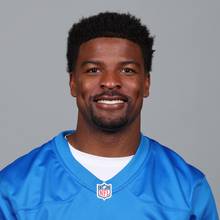 DJ Reed75Grade
DJ Reed suffered a rough hamstring injury in Week 4 of last season and fought through rehab to come back in Week 12. The injury clearly impacted his movement on the field. His mirroring skills, particularly during releases, took a step back, but his awareness and route instincts still put him in position to make plays. He's a sure tackler and a smart run defender on the boundary, which adds to his overall impact. The grit to come back after the injury proved that he's exactly the kind of player Dan Campbell wants in his building. Reed attacks the catch point well and wants to face the offense's best receiver as much as possible. Being fully healthy next season, Reed should be back to the player he was.
282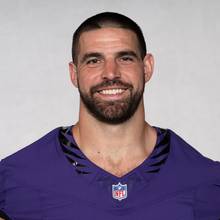 Mark Andrews75Grade
It was a tumultuous season for Mark Andrews, who, among other problems with the 2025 Ravens, didn't perform up to standards. An injury to Lamar Jackson hurt the offense in more ways than one, but the passing attack wasn't the same. On top of that, Andrews had more trouble capitalizing on his targets than in the past. He had a lower yards per reception than at any point in his career last year, according to NFLPro, and his receiving EPA was -9.7, also the lowest of his career. He's still an excellent space finder and one of the best at exploiting zone coverages, but his usage varied with three different quarterbacks at the helm, and his impact as a receiver showed that.
281 Jonathon Cooper75Grade
Cooper is solid at turning speed-to-power as a pass-rusher and shows some burst off the line to win around the edge. Against the run, his physical playing style serves him well against tight ends, and he'll occasionally make tackles after engaging offensive linemen. Overall, the 2021 seventh-round pick is a solid all-around player, who contributed to one of the NFL's best defensive lines over the last two seasons.
280 Blake Cashman75Grade
Cashman is a good run defender who is quick to key and diagnose plays, has the athleticism to get to the right spot, and can take on blocks to consistently make tackles for short gains. However, his football IQ doesn't translate to the passing game, as he's slow to recognize route concepts and has subpar ball skills, resulting in a lot of completions when quarterbacks target him.
279 Craig Woodson75Grade
One of the Patriots' emerging young talents last season, Craig Woodson, was an excellent run-support and tackling defender in their secondary. His downhill trigger and underneath zone feel contributed to three passes defensed and four tackles for loss while limiting yards after the catch with stopping power. Still developing his route recognition and man coverage tools, Woodson looked hesitant in coverage at times last year, but he continued to get better as the season went on and played his best football in the postseason. He racked up six passes defensed, an interception, and another four tackles for loss on their way to a Super Bowl appearance.
278 Nate Landman75Grade
Landman has an impressive combination of athleticism and instincts against the run to sift through the trash and make stops near the line of scrimmage. That's a big part of how he set career highs in total tackles (132) and tackles for loss (eight) last season. The 2022 undrafted free agent is susceptible to getting beaten in coverage and will get caught taking the cheese in zone, but he managed to record an interception and six passes defended last year to show off some ball skills. That's on top of recording four forced fumbles, with at least two of those coming in coverage. The question is, was the 2025 campaign a sign that the four-year pro is turning a corner and becoming a quality starting linebacker in the NFL? Or is Landman just going to be a one-year wonder?
277 YaYa Diaby75Grade
Diaby is an underrated pass-rusher in the league. He's quick and athletic to win around the edge, he can turn speed to power or push the pocket with a long-arm move, and has the lateral movement skills to be effective as the looper on stunts. That's how the three-year pro has logged 19 career sacks so far. Diaby isn't as impactful against the run because he struggles to take on blocks from offensive linemen. But he can set the edge and win at the point of attack against tight ends and use his athleticism to make stops when unblocked on the backside of zone runs.
276 Amik Robertson75Grade
Amik Robertson is one of the toughest competitors in the NFL, and he shows up week in and week out ready to play wherever he's needed. While he's listed as a nickel, he played predominantly as a boundary corner for the Lions last season due to injury. He was taken advantage of more than once, but his zone prowess and route recognition saw him break on throws and pile up a career-high 12 passes defensed. The competitive toughness is infectious, and he's willing to do whatever it takes to get the job done. He'll bring that mentality to Washington this season.
275 James Pierre75Grade
Taking over as the starting corner opposite Joey Porter Jr in Week 10, James Pierre was a consistent and impressive presence in the Steelers' secondary. There was a clear shift in the use of Cover Two, with multiple moving pieces, and Pierre fit right in with his top-down ability. He stabilized his side of the field with quick route break recognition from depth, limiting yards after the catch, and piling up nine passes defensed over the final nine games. He allowed a 46.4% completion percentage while making a play on the ball on 25% of his targets. Now he finds himself in Minnesota, where he should see much the same usage, and if the trend continues into 2026, the returns could be just as valuable.
274 Cody Mauch75Grade
Mauch had his 2025 season cut short by a Week 2 knee injury. Even so, the sizable jump he made from 2023 to '24 appeared to carry over before his campaign ended. Mauch is a taller, sawed-off guard who can still get stunned and compressed by power down the middle of his frame. However, added weight and improved technique have helped him refit, re-leverage and survive those moments more effectively. His best traits are agility, strain and competitiveness. Mauch is a loose, twitched-up mover with excellent range, making him a weapon as a puller, climber and space blocker, while his balance and grip-strength have noticeably improved. He will not overwhelm down linemen with raw power, but his athleticism, strain and recovery ability point toward a good-starter profile when healthy.
273 Abdul Carter75Grade
Carter impressed as a rookie pass-rusher. While he only registered four sacks, he consistently applied pressure by using his quickness, athleticism and a couple more moves than what the former Nittany Lion showed at Penn State. He's still growing and didn't make much of an impact against the run, but he also didn't get many opportunities on early downs, playing behind Brian Burns and Kayvon Thibodeaux with just six starts in his first season.
272 Nakobe Dean75Grade
Injuries have been the biggest factor holding back Dean's career. On the field, he's a highly instinctual run defender who is constantly making stops, and he has the acceleration to be effective at closing in coverage. Also, the former Georgia Bulldog is an excellent blitzer, destroying running backs in pass protection to rack up seven sacks over the last two seasons. The 5'11" linebacker's lack of length limits him in coverage, especially in man coverage, as he doesn't have good ball skills and is susceptible to giving up yards through the air, though. Also, as alluded to above, he's struggled to stay healthy and has missed 25 regular-season games in just four years.
271 Rashid Shaheed75Grade
Rashid Shaheed is well known as a game-changing return specialist. His open-field speed will flip field positions on offense and special teams. Shaheed spent part of the season with the New Orleans Saints before being traded to the Seahawks. He is an electric playmaker with versatility in usage, from jet sweeps and reverses to lining up as the running back in the formation. Shaheed sets up his routes with the threat of his game-breaking speed. He is a multi-tooled weapon and impact player for the Seahawks offense and special teams.
270 Cedric Gray75Grade
Hindered by a nerve injury in his shoulder, Gray is an up-and-coming linebacker who racked up an impressive 164 tackles last season. He's a pretty good run defender, showing the instincts and speed to shoot gaps and beat blockers to the spot, as well as the ability to take on and defeat blocks. That combination led to the production above and a lot of tackles near the line of scrimmage. In coverage, the second-year pro can rally and tackle, but doesn't offer much more than that. However, Gray does show some potential to contribute on line games when blitzing, as he can find pass-rush lanes and has good closing speed to at least get the ball out of the quarterback's hand.
269 Keisean Nixon75Grade
While he takes some chances when he shouldn't and needs to clean up the penalties, Keisean Nixon is a sound, well-rounded coverage corner with an aptitude for zone. He's consistently getting proper depth, reading out routes, and matching trigger with the quarterback's throwing motion. Even in man coverage, Nixon is around the football, putting up 17 passes defensed and forcing 24 tight-window throws, according to NFLPro. However, his length limits the upside of his turnover potential, and bigger receivers will box him out, particularly in the red zone. Still, he's a good tackler and a disruptive player; his care factor against the run could improve, but it's clear to see why he's become a valuable member of the Packers' secondary.
268 David Edwards75Grade
David Edwards continued his career rebound last season, giving the Buffalo Bills a sturdy, reliable presence before signing with the Saints. His game is built on functional power, balance and anchor strength. Edwards creates force through the ground, plays with a square base and uses a firm punch to strike, re-leverage and halt power-rushes before they collapse the pocket. In pass protection, he is not overly dynamic, but his timing, body control and play-strength allow him to stay composed against most interior rushers. The risk comes when he overcommits with heavy strikes against high-end quickness, leaving him vulnerable to being slipped before he can reset. In the run game, Edwards is more steady than explosive, with enough strength to cover up, fit and generate movement on angle-drive blocks and combinations. He does not have the twitch or recovery range of higher-ceiling guards, but his anchor, consistency and veteran reliability make him a dependable starter.
267 John Franklin-Myers75Grade
Franklin-Myers doesn't make much of an impact as a run defender, making him more of an interior pass-rush specialist. He's pretty good in that role, showing the strength and power to be an effective bull rusher and a solid arm-over move as a counter. That, combined with a good motor, allowed the former Bronco to rack up 14.5 sacks during his two years in Denver.
266 Taron Johnson75Grade
Quietly giving up the fewest yards in coverage since his rookie season, Taron Johnson was an excellent zone defender for the Bills' defense this past year. While the ball production regressed, he was in better positions to make tackles and limit yards after the catch. His man coverage skills are hit and miss, and he will bite hard on play action fakes from time to time, but watching him drop into zone, pick up routes with his eyes, and trigger underneath is enjoyable to watch. He should be a steadying presence in Buffalo's secondary in 2026.
265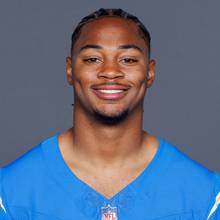 Tarheeb Still75Grade
In a defense that has a ton of moving parts, simulated pressures, and communication, Jesse Minter needs intelligent, sound players who don't panic. Tarheeb Still brings that in spades. While it was a bit of an adventure in the tackling department last season, he is responsibility-sound, a versatile defender, and handles both man and zone coverage well. He never panics down the field and knows how to recover, even if his athletic tools can't always keep up. So far, he's been a steal for the Chargers as a former fifth-round pick.
264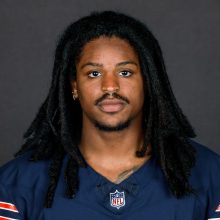 Devin Bush Jr.75Grade
After a slow start with the Pittsburgh Steelers, Bush revived his career with the Cleveland Browns. The 2019 No. 10 overall pick has been very productive against the run over the last two seasons, using his athleticism and quickness to slip blocks on the second level and make plays near the line of scrimmage. In coverage, Bush can rally and tackle and made a good amount of stops for short gains last year. But he's still growing in this area and is prone to have a coverage lapse or getting beaten due to the 5'11" linebacker's lack of length. He is an ascending player who could shoot up the linebacker rankings with another strong campaign, especially if he develops in coverage.
263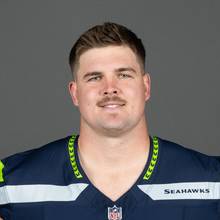 Grey Zabel75Grade
Zabel started all 17 regular-season games and three playoff matchups as a rookie on the Seahawks' Super Bowl-winning offensive line, immediately translating from the FCS level into a quality starter inside Klint Kubiak's run-heavy, play-action-oriented system. Zabel benefited from a friendly environment, but his own physical traits and impact blocks were obvious. He brings very good play-strength, athletic ability and a hard-nosed, attacking demeanor, with the power to displace at the point of attack and body control to deliver knockdowns at the first and second levels. In pass protection, he plays with an ultra-aggressive mindset, using flat and shoe sets with an active, stiff outside strike to bring the fight close to the line of scrimmage. The approach allows him to close space and end reps quickly. It also narrows his margin for error against skilled interior rushers who can manipulate his leverage or evade his initial clamp. When Zabel did lose reps, those losses tended to occur quickly because of the air left behind him and the limited variety in his pass-set menu. His rookie season showed high-end starter flashes but diversifying his approach and refining the aggressive tools are the next steps to elevating his game.
262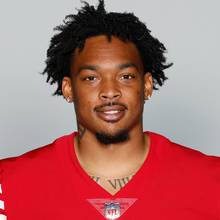 Deommodore Lenoir75Grade
One of the hotter heads at the position, and it can get him into trouble, Deommodore Lenoir became a full-time outside presence for the 49ers' defense last season. His willingness to tackle helps him in run support and in single coverage on bigger-bodied players, and he brings a well-rounded game to the boundary. Consistently getting good depth and recognizing routes in zone, and creating tough catches for receivers, Lenoir was targeted at the lowest rate of any outside corner in 2025, according to NFLPro. He must clean up the holding/physicality penalties if he's going to take another step next season, though.
261 Byron Young75Grade
Young is best known for his pass-rush skills, collecting 27.5 sacks during his first three seasons. The 2025 Pro Bowler posted a career-high 12 sacks last year. He wins in a handful of ways, with speed and a cross-chop around the edge, turning speed-to-power and with excellent agility and closing speed on the quarterback. This past season, Young showed significant growth against the run. He can beat up tight ends and started making more plays against offensive linemen to secure tackles near the line of scrimmage.
260 Brian Thomas Jr.75Grade
2025 was a down season after a breakout rookie campaign for Brian Thomas Jr. The Jaguars' explosive wide receiver battled ankle and wrist injuries, forcing his numbers to decline. Along with the emergence of Parker Washington and the trade for Jakobi Meyers. Thomas Jr. had success creating separation last season, but the confidence in catching the football was clearly lacking, leading to easy drops. Thomas Jr. is a great physical talent who has reached over 1,000 yards in a season in his short career. Heading into this season healthy, he must bounce back and take the role of WR1 for the Jaguars.
259 Malik Hooker76Grade
Aside from a toe injury that forced Hooker to miss six games last season, he was a steady presence in a not-so-steady defense in Dallas. Hooker is one of the best run-supporting safeties in the NFL with great play recognition, and he sorts through trash at a high level. There were times during coverage when he second-guessed himself and fell off the intended route, but his variety of coverage remains high, and he does a good job handling rotations and disguises. The secondary in Dallas will be revamped going forward, which should help Hooker return to his disruptive ways if healthy.
258 Alex Anzalone76Grade
Anzalone is a solid all-around player who can wear multiple hats on the defense. His game is rooted in athleticism, as he has good lateral movement skills to make blockers miss on the second level and is one of the few remaining linebackers who can hold his own against tight ends and running backs man-to-man. The nine-year veteran can also click and close in coverage and is a decent pass-rusher, either off the edge or when blitzing.
257 Nick Cross76Grade
Cross is one of the best box safeties in the league with quick, downhill movements and block recognition to be a real playmaker against the run. He fights through blocks on the move and can cause havoc in the backfield with his click-and-close ability, which also makes him an adept blitzer. He racked up 15 pressures and two and a half tackles to go with 46 stops and five tackles for loss last season. While he still provides decent coverage tools and instincts to a defense, his best attributes show up closer to the action.
256 Tyler Higbee76Grade
Being a part of the Rams' tight end room has to be a ton of fun, and Tyler Higbee has been there for a while, just doing his thing. While he's spent time each of the last two seasons nursing injuries, he's an effective part of the league-leading users of the 13-personnel game plan when he's on the field. A multi-faceted blocker who does his best work getting to the second level to open lanes, Higbee moves from receiver to in-line presence throughout a game. He's a smart receiver who identifies space to work with and knows how to get there with savvy routes and good hands. They brought him back into the fold for 2026 for good reason; he's still got it.
255 Kyle Juszczyk76Grade
Kyle Juszczyk is the best fullback in the NFL. He is a versatile offensive Swiss Army knife. Juszczyk lines up all over the 49ers' formation, as an H-back, move tight end, and even in the slot. He is one of the best lead blockers and consistently seals lanes for his running backs. His usage wasn't the same in 2025, but his importance and value don't change.
254 Tre'von Moehrig76Grade
While he's listed as a safety, you wouldn't know that just by watching his film. Tre'von Moehrig lines up everywhere on defense, and according to NFLPro, "is one of just 11 defenders this season to log at least 50 defensive snaps when aligned on the line of scrimmage (73 snaps), off-ball linebacker (275), slot cornerback (242), and safety (344)." In coverage, he's used more in the intermediate area, which limits the big plays given up and maximizes his trigger quickness to create tackles for loss (14 on the season). He struggled to guard tight ends and receivers in man coverage and missed tackles, but he was impactful in every game for the Panthers last season.
253 Dee Winters76Grade
The Cowboys might be the biggest benefactor of the San Francisco 49ers having too many linebackers on the roster, because getting Winters for just a fifth-round pick looks like a steal. He has the makings of someone who is about to burst onto the scene as a well-rounded, starting-caliber linebacker. The 2023 sixth-round pick is a good athlete and accelerates well, which helps him make tackles with his instincts against the run and close to collect stops in coverage. He's also decent at taking on blocks and has recorded nine passes defended over the last two seasons. Winters' awareness in coverage still needs improvement, but look for him to make a name for himself in Dallas this season.
252 Luke Wattenberg76Grade
Wattenberg started 15 regular-season games before a shoulder injury cost him Weeks 17, 18 and the Divisional Round. He then returned for the AFC Championship Game. Since winning the job in 2024, he has developed into an above-average starter inside Denver's offensive line-friendly structure, which leans heavily on play-action, screens, roll-outs and a well-schemed run game. Wattenberg wins with solid athletic ability, good arm length, strong hands and precise strike-timing, allowing him to offset below-average mass and play bigger than his frame indicates. His hand-placement and grip-strength show up in the run game, where he can clamp, drive and stay leveraged, while his awareness in protection limits free runners and late surprises when uncovered. His mediocre sand still shows up when defenders access his frame and pry him open on base/back blocks. Even so, his length, timing and ability to establish first meaningful contact keep him in control often enough to sustain a good starter profile.
251 Damien Lewis76Grade
Lewis put together another solid season in 2025, continuing to provide Carolina with a stout, power-oriented presence at left guard. Lewis is a massive, heavy-handed blocker with the play-strength to create jolt on contact, generate movement in the run game and provide a firm anchor against power in pass protection. His best reps come when he can cover up defenders, sit down on the bull-rush or work square through contact in downhill and gap-adjacent concepts. He is not a high-end mover, and his range, redirect ability and late-rep recovery can be stressed when asked to operate in extended space or mirror quick lateral movement. Still, Lewis' size, anchor, contact power and down-by-down physicality give him clear, reliable ways to win. He is a sturdy starting guard whose value is rooted more in force, stability and protection against power than in athletic range or high-end technical versatility.
250 Milton Williams76Grade
Williams is the most polarizing defensive tackle in the NFL because he's a pretty good interior pass-rusher but a bad run defender. The 2021 third-round pick is quick and athletic to work the edges of an offensive lineman and has enough power to occasionally push the pocket as a bull rusher. However, he lacks the lower-body strength and pad level to consistently anchor and hold his gap against the run. Williams is a penetrator who is very reliant on his get-off to make an impact on early downs.
249 Ar'Darius Washington76Grade
Ar'Darius Washington is a polarizing figure due to his limited reps before 2024, his breakout season, and an injury last year. What do we do with him? Well, it's simple. The tape is littered with fantastic reps, explosive plays, and an instinctual player who flies around the field. He's listed as a safety, but his best role is playing over the middle of the field as a robber or at the nickel spot. He played 61 snaps over the last month of the season and now lands with the Giants, whose secondary needs help. If Washington is fully healthy, he could help turn around that defense in a hurry.
248 Greg Rousseau76Grade
Rousseau uses his length and strength as a pass-rusher well, giving offensive tackles fits thanks to his 34⅜-inch arms. He's also coming off an impressive season as a run-defender, where those traits translate into making tackles near the line of scrimmage. The 26-year-old could afford to be more disruptive. Even so, he's certainly counted among the league's up-and-coming edge defenders.
247 Brenton Strange76Grade
Adding explosiveness to an offense at the tight end position isn't an easy thing to find, but that's just what Brenton Strange brings to the field. He's a high-effort player in all areas and runs his routes with quick acceleration and an attacking mentality. The former second-round pick for the Jags is a smart player after the catch who can make players miss with underrated athleticism. His speed allows him to stretch the field and be a serious threat to Trevor Lawrence, where most tight ends can't. Strange brings it as a blocker, and while he can be hit-or-miss due to his aggression, he's a functional addition to the run game. He came back from injury and looked like his old self, and the Jaguars will be counting on him taking another step this season.
246 Brian Burns76Grade
Burns is an impressive pass-rusher who can win in a handful of ways, thanks to his deep bag of pass-rush moves and athleticism to be an effective looper during line games. However, the seven-year veteran has been a subpar run-defender throughout his career, preventing Burns from being a complete player and one of the NFL's better all-around edges-defenders.
245 Kamren Curl76Grade
Not known for his rangy playmaking, Kamren Curl played over 700 reps at free safety for the Rams and is a top-down enforcer. He can play like a linebacker when the Rams go to their Dime package and defends the run with physicality and sure tackling. More of a reactionary defender against the pass, Curl takes excellent angles downhill and closes on the ball carrier to limit yards after the catch. He brings havoc-creating talent to the line of scrimmage as well, recording two tackles for loss, six pressures, and two sacks in 2025. Curl earned the extension he got from the Rams with some spectacular plays in the postseason to close out last season.
244 Alex Highsmith76Grade
While Highsmith can be tight ends at the point of attack, he remains more of a finesse player overall. Even so, he's found ways to show a complete game with his skill set. The Charlotte product's pass-rush skills have never been in question, and he uses his speed, athleticism and bend to make plays from the backside of zone runs or work around blocks to rack up tackles for short gains.
243 Kenny Clark76Grade
Clark is the most versatile interior defensive lineman in the NFL, as he could be seen anywhere from a 0-technique nose tackle to a 5-tech defensive end on the Cowboys' defensive line last year. The three-time Pro Bowler may not be as impactful as he used to be, but Clark can still make plays from multiple alignments and in both phases of the game.
242 Olu Fashanu76Grade
Fashanu completed his second season and first as a full-time starter in 2025, settling in as an above-average left tackle with clear pass-protection value. His best work comes from urgency, length and hand-timing. Fashanu reaches his landmarks on schedule, uses a high-low hand carriage and double-under technique to establish quick leverage. He can also drop a firm anchor once he connects through the rusher's frame. Early in the season, wide alignments and speed threats could manipulate him, exposing some lower-body stiffness and causing him to drift or open his hips too soon. Those areas improved as the year progressed, with Fashanu playing with better set discipline, narrowing the runway for rushers and reducing the amount of recovery required. His run-blocking is solid but not a major separator. He is effective on backside cutoffs and overtakes, but late redirect demands across his face can expose some rigidity on base blocks and second-level fits. Fashanu's profile is not high-end yet, but the combination of pass-protection tools, anchor and second-year growth give him a stable starter foundation with room to climb.
241 Foyesade Oluokun76Grade
All Oluokun has done over the last six seasons is post triple-digit tackle campaigns. He's a good run defender with the instincts and ability to navigate through the trash as well as the strength to take on blocks, allowing him to rack up the stops in multiple ways. In coverage, the eight-year pro has good ball skills to rack up 40 career passes defended, but he struggles to operate in space, leading to missed tackles and surrendering a good amount of yards.
240 Christian Darrisaw76Grade
Darrisaw started 10 games in 2025 and exited four of them early, while continuing to work through lingering effects from the torn ACL/MCL he suffered in October of 2024. On the field, he still showed much of the profile that made him one of the league's better young left tackles: a sturdy frame, heavy hands, firm anchor and the power to create movement in the run game. Darrisaw remains physically difficult for rushers to play through, and his size, explosiveness and contact strength give him a high floor when healthy. The concern is what showed up late in reps, where his redirect and recovery skills looked slightly diminished against rushers who could string moves together or force him to change direction after the initial phase. His hand-timing and corner protection still need to be cleaner, especially given the thinner movement margin post-injury. Darrisaw will only be 27 during the 2026 season and still has one of the league's better physical profiles at left tackle, but his durability and movement rebound have become the variables that separate him from the higher tier he was tracking toward before the knee injury.
239 Kobie Turner76Grade
Turner makes his money as a pass-rusher, where his athleticism, quickness, active hands and relentless motor have helped him collect 24 sacks during his three seasons. Those traits pop up in the 2023 third-round draft pick's run defense to make him an effective penetrator, but he's more average in that phase of the game and can struggle to hold ground and/or shed blocks consistently due to a smaller frame and lack of length.
238 Antonio Johnson76Grade
One of the surprises of last season is Antonio Johnson and his nine passes defensed and five interceptions for a Jaguars defense that found itself down the stretch. He's an excellent tackler and a safety valve for a defense with good traffic navigation skills to close on routes underneath. Johnson reads route concepts well but tends to hesitate when he sees a route break over the middle of the field; the instincts are there, which lead to the aforementioned ball production. With another year in Anthony Campanile's defense, the path forward to develop even further is in front of Johnson.
237 Chris Lindstrom76Grade
Lindstrom remained one of the league's most durable and dangerous run-blocking guards in 2025, but Atlanta's schematic shift over the last two seasons made his pass-protection limitations more visible. With the Falcons using far less play-action and exposing the line to more true dropback reps, Lindstrom's lighter frame and tardier anchor were stressed more often against high-end power. He remains an elite zone run-blocker, winning with rare quickness, leverage, leg drive and strain to reach landmarks, steer defenders and finish at angles most guards cannot access. The contrast is in pass protection, where his profile carries more variance. Lindstrom relies heavily on jump-sets and first meaningful contact to erase rushers' runway before they can build force, a strategy that is more forgiving off play-action than in static dropback situations. When he lands first, he can still close space and end reps quickly. When he misses or is forced to absorb power late, the losses can be immediate. In the right structure, Lindstrom's pass protection can play a tier higher, but his current profile is driven by elite run-game value and capped by the volatility of his true pass sets.
236 Cole Kmet76Grade
The willingness to step aside and become a "lesser" part of the Bears' passing attack shows you part of what makes Cole Kmet. He's willing to do whatever is asked of him, including whatever crazy blocking assignment Ben Johnson has concocted for him. While there's some inconsistency with his ball skills away from the body and through contact, Kmet remains a good receiving option with the physical yards-after-catch aspect he's always brought to the field. He gives the offense blocking flexibility and real viability as a pass protector, allowing him to be used in a variety of ways. On top of it all, he's the Bears' emergency quarterback. Even after drafting yet another tight end, Kmet remains a steady part of the Bears' offense going forward.
235 Daiyan Henley76Grade
Henley's instincts are still a work in progress, but his movement skills are top-notch for a linebacker. The former college wide receiver has the change of direction and acceleration to navigate the trash and crash downhill against the run. In coverage, those traits help him be effective at clicking and closing, and Henley has had good ball production with 13 passes defended over the last two seasons combined.
234 Jordan Davis76Grade
Davis is an up-and-coming interior defensive lineman. He's coming off a significant jump in production with career highs in tackles (72) and tackles for loss (nine). Part of that was an increase in playing time, but the 2022 first-round pick also improved his ability to get off blocks. While Davis also had a personal-best 4.5 sacks in 2025, a lot of those were clean-up sacks, and his tackling in the backfield can improve when he does get clean wins. The Georgia product does excel at batting passes at the line of scrimmage, though, coming up with six a year ago.
233 Charles Cross76Grade
Cross put together the cleanest season of his four-year career in 2025, benefiting from a strong schematic fit inside Klint Kubiak's run-first, zone- and play-action-oriented system. Cross has always been more athletic than a size-and-strength tackle, and Seattle's structure aligned well with that profile by reducing true dropback exposure and giving him cleaner angles in the run game. In pass protection, Cross is a loose, fluid mover with the length and foot quickness to stay square and protect width. However, his lighter frame can still be compressed by high-end power-rushers. That vulnerability was better managed in 2025 through a lower pass-block volume, heavy play-action usage and more proactive strike-timing that helped him protect his frame, play long and shorten the runway for rushers. In the run game, Cross brings more grit and finish than his build suggests, with the movement skills to stay attached, strain and cover space in zone concepts. His career-best season was real, but it was also aided by a system that emphasized his athleticism while reducing exposure to his anchor limitations.
232 Bryan Cook76Grade
Cook leveraged a breakout season in 2025 to a nice contract from the Bengals, who need steady play from the position. He was an excellent run defender and tackler, showcasing top-tier box ability even from a single high alignment, but also showed improved coverage ability on the back end. Cook drove down on in-breakers, carried deep receivers well, and handled tight ends in man coverage at a high level. He's not the most instinctual player at safety, but he's a reliable all-around defender who brings a physicality and workman's attitude to the room.
231 AJ Barner76Grade
A breakout second-year performance from AJ Barner helped cement him as the Seahawks' primary tight end and one of the rising talents at the position in the NFL. He isn't the most dynamic route-runner, but he plays with good timing and spacing, selling routes in sync with the scheme. He's comfortable catching the ball away from his body and flashes utility after the catch. But Barner is a complete tight end. He's a good multiple-blocker in the run and passing game, which helped spring Seattle's run game into action with multiple big runs on their way to a Super Bowl. They felt comfortable running to Barner's side time and time again, and he earned their trust. Barner is one of the best young tight ends in the NFL and could be on his way even higher this coming season.
230 Christian Watson76Grade
Christian Watson began the season recovering from a Torn ACL. He made his season debut in week eight against the Pittsburgh Steelers, and his impact was instant for the Packers' offense. Watson has established himself as one of the league's best deep threat receivers. He possesses a prototypical X-receiver frame with breakaway top-end speed. Injuries have been a consistent part of Watson's story. If he can overcome the injury history, the Packers' offense will have its WR1.
229 Montez Sweat76Grade
Sweat's combination of strength and rare length are the foundation of who he is as a defensive end. He can set the edge and has 35¾-inch arms (97th percentile, per MockDraftable) to lock out offensive tackles, escape blocks and make tackles for short gains. As a pass-rusher, the 2023 Pro Bowler can push the pocket by turning speed to power and has a good long arm move. Sweat is just a bit of a one-trick pony in that he doesn't have the athleticism to win with finesse.
228 Pat Freiermuth76Grade
The Steelers offense was a tough watch last season, and several players weren't put in the best positions to succeed. Pat Freiermuth was seriously underutilized on a team lacking legit pass-catching talent. He's a good route-runner who can attack the middle of the field and adjusts to the football well in the air. A savvy runner after the catch, Freiermuth sees space pre- and post-snap to take advantage of regularly. He was +100 yards after the catch over expected in 2025, according to NFLPro, and has been positive in that category throughout his career. Finding ways to get the ball in Freiermuth's hands is usually a good thing, and after some changes to the staff going into 2026, there's room for him to have a bounce-back season.
227 Jaelan Phillips76Grade
Phillips does his best work as a pass-rusher when he can win around the edge with speed, using a cross-chop move or a ghost rush. He also has the quickness to win across the offensive lineman's face. Furthermore, he generates pressure from several alignments. However, the 2021 first-round pick has never posted a double-digit sack season, because he struggles to finish, missing several tackles against quarterbacks. Against the run, Phillips has enough strength to beat tight ends at the point of attack and set the edge. Also, his speed and athleticism allow him to make tackles for short gains when unblocked on the backside of zone runs. But the Miami product lacks the strength to consistently defeat and get off blocks from offensive linemen. His tackling issues show up on early downs, too.
226 CJ Stroud76Grade
C.J. Stroud has not lived up to the hype after a stellar rookie season a few years ago. The Texans' offensive line woes are a big part of that, but he has to make better decisions consistently. Stroud's strengths as a passer are precision, accuracy, touch, timing, and anticipation. If protected, he can be a surgical passer who can take advantage of matchups all over the field. Stroud has struggled to deal with and counter defensive pressure packages. The pressure appears to speed up his process and force bad decisions, leading to turnover-worthy plays. Stroud possesses the talent to be a top-12 quarterback and a franchise quarterback, but he must return to his efficient style of play.
225 Mike Evans76Grade
Mike Evans is an established, consistent playmaker who brings reliability to the offensive passing game. Due to a hamstring, concussion, and a fractured collarbone, he played in eight of 17 games. When healthy, Evans wins one-on-one matches with veteran-level savvy and route-running. He lost a step athletically, but his football IQ and nuance at the position overcome those shortcomings. Evans remains a big target who can "moss" defenders at the catch point. He doesn't offer much in the yards after catch department. In the red zone, he continues to be a reliable offense-friendly target.
224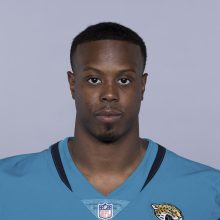 Travis Etienne Jr.76Grade
Travis Etienne is a consistently productive running back. In three of his four seasons, he's rushed for over 1,000 yards, including last season. The former Jaguar starter looked dynamic and energized after battling shoulder and hamstring injuries in 2024. Etienne is a patient runner with quick footwork that takes his body wherever his eyes land. He is a dual threat out of the backfield as both a runner and a receiver. He's a dangerous player in space because of his top-end speed, making him a home run threat at any time from anywhere by turning plays into a footrace.
223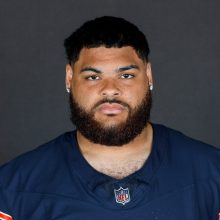 Darnell Wright76Grade
Wright completed his third season and first inside Ben Johnson's dynamic, offensive line-friendly system, a tailored fit for his power-oriented game. Chicago's use of motion, condensed formations, play-action and run-game window dressing helped create cleaner angles while limiting some of Wright's exposure in space and true dropback pass protection. That structure allowed him to dictate terms more often and weaponize his best traits: elite play-strength, heavy contact power and the ability to uproot defenders once he gets his frame aligned. Wright performs at his best in the run game, where he can displace at the point of attack, cave down edges and finish through contact. In pass protection, his anchor and clamp strength are high-end once latched, but his average movement and recovery skills still show up when rushers isolate him in space, force him to redirect or catch him overextended. Wright is not the cleanest or most fluid tackle. At the same time, his power, anchor and run-blocking impact in Chicago's scheme make him a valuable right-side presence.
222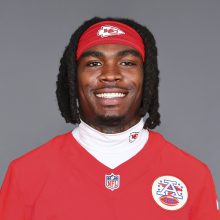 Rashee Rice77Grade
When healthy and on the field, Rashee Rice is an impactful receiver for the Kansas Chiefs' offense. He operates as the power slot. The strengths of his game are football IQ post-snap to find open voids in the coverage and creating after the catch. Rice plays with good patience as a runner and body control through contact. He's displayed dependable strong hands throughout his career to pluck the ball out of the air. Rice is a YAC-dependent pass catcher. Being schemed open into space to mitigate his route running concerns. His routes lack explosiveness or sharpness. Also, he's not an explosive vertical threat, which places more onus on play calling and usage. He's a good starter at receiver but not a needle-moving WR1.
221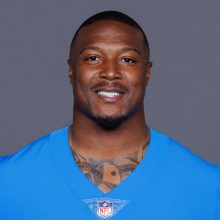 Tony Jefferson II77Grade
The ageless wonder that is Tony Jefferson had a great season for the Chargers at age 33. He played roughly 63% of the defensive snaps and still produced seven passes defensed and four interceptions while playing predominantly as the free safety for Jesse Minter's defense. His football IQ, instincts, and ball skills were routinely on display, and he made some incredible plays. He only allowed 205 yards on 25 targets with zero touchdowns scored. He's not someone a defense wants in man coverage at this stage and is more of a coverage-only rotational safety, but the willingness to be a physical presence is still all there for Jefferson.
220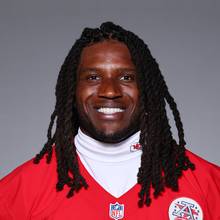 Nick Bolton77Grade
Bolton makes his money as a run defender. He has good instincts to recognize when he can shoot gaps and knows how to control his body to knife through the offensive line and into the backfield. The five-year veteran doesn't impact the passing game much, as he does give up a lot of separation and is scheme-dependent when rushing the passer. But Bolton does have decent ball production with 21 career passes defended, including six in back-to-back seasons.
219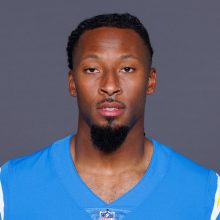 Quentin Johnston77Grade
Quentin Johnston deserves more credit for the growth since his rookie season. He led the Chargers in yards per reception and receiving touchdowns this past season. Johnston is a big, fast wide receiver with a route tree that has numerous branches. He gets open in the short, intermediate, and deep areas of the field. Johnston uses the threat of his speed to force them into off-coverage pre-snap. He earned Justin Herbert's trust last season, especially when they wanted an explosive play. There are a few concentration drops, but he's improved yearly.
218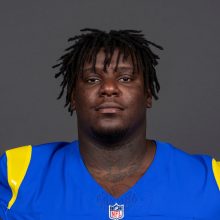 Poona Ford77Grade
Ford is a natural nose tackle whose versatility has expanded over the last couple of years. He's still a stout run defender who can hold his gap against combo blocks and make tackles for short gains. But the 5'11", 314-pound defensive lineman has grown as a pass-rusher, occasionally pushing the pocket when bull rushing or winning with an arm-over move, while also setting up teammates as the penetrator on line games.
217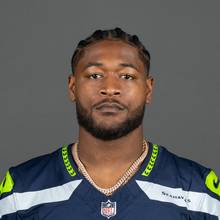 Ernest Jones IV77Grade
Last season, Jones established himself as a rising linebacker in the NFL. The 2025 second-team All-Pro has always been a good run defender, showing the instincts and movement skills to mirror running backs and constantly be in the right spot to make stops. But he added a career-high five interceptions to bolster his resume. Jones is still susceptible to giving up a lot of yards in coverage, often being late to recognize threats coming into his area when playing zone. But he will continue to climb up the ranks by building on the ball skills he showed last fall.
216 Alijah Vera-Tucker77Grade
Vera-Tucker missed the entire 2025 season after suffering a torn triceps in practice a week before the opener, adding another major injury to a career that has already included a torn triceps, an Achilles tear and repeated position changes. This evaluation is more projection-based than most guards, but AVT's healthy tape still points to a quality starter with high-end traits. He is an efficient, technically proficient blocker with the movement skills to reach landmarks, recover from compromised positions and stay connected through late movement. In pass protection, his balance, hand timing and ability to reset leverage give him answers against quickness and power, even if the missed season creates uncertainty about how fully those traits return. In the run game, he is more skilled and athletic than overpowering, winning with angles, timing and sustain rather than raw displacement. Vera-Tucker now moves to left guard in New England, his first extended work there since his rookie campaign, making health, positional stability and reacclimation the central variables. If his movement profile returns close to the previously established baseline, he still has top-10 guard ability. However, the injury history keeps his current grade in the good-starter tier rather than the high-end range that his talent suggests.
215 Robert Spillane77Grade
Over the past three years, Spillane has quietly crept up linebacker rankings across the league. He's a good run defender who operates well in the box, showing the instincts and lateral movement skills to make tackles for short gains consistently. The former undrafted free agent is limited against the passing game, but he can be a solid middle hole defender with his ability to read the quarterback's eyes and make plays on the ball or close in coverage.
214 Andrew Mukuba77Grade
With as much talent as there is on the Eagles defense, it's hard to say Andrew Mukuba didn't fall into a great situation, but he also elevated their floor and ceiling. Unfortunately, he fractured an ankle in Week 12, missing the rest of the season, but the impact he left on the defense was felt. A better run support player than most would have guessed with his slighter frame, Mukuba diagnosed plays quickly and got downhill for defensive stops. His feel for zone and instincts helped take away multiple routes, but he needs to improve his angles in pursuit to miss fewer tackles. He'll be a welcome sight in Eagles camp this summer.
213 Ronnie Hickman Jr.77Grade
The leading communicator in the Browns' backfield is Ronnie Hickman, and he lives on top of the defense. He shows excellent range and recovery skills, along with instincts that keep him around the football at every stop. Hickman has a great feel for zone spacing and depth and can buzz down underneath to take away routes or the football. Despite reading out plays and being around the football, he does struggle to tackle in space and isn't someone you want manning up most of the time, but he fits right at home in his role in Cleveland's secondary.
212 Kyler Gordon77Grade
Kyler Gordon missed most of the 2025 season, playing in only three games due to injury, but returned for the postseason. Gordon is an excellent nickel corner who can execute several coverages, handle rotations with ease, and play outside if the occasion calls for it. Had he been healthy enough to play most of last season, he'd be higher in our rankings due to the way he feels routes and matches quarterback movements with his body. Hopefully, Gordon can stay on the field in 2026 and help the Bears' defense take a step forward.
211 Juwan Johnson77Grade
After handling the most targets in his career, Juwan Johnson found that playing in Kellen Moore's offense is going to be great for his production. The sixth-year tight end hit career highs in receiving yards (889) and receptions (77) and showed why he's one of the most nuanced receivers at the position. Johnson is an excellent route-runner who plays with great timing, nuance, and acceleration to maximize yards after the catch. He's a frustrating player due to his blocking care factor and drops for a player with his ball skills, but when he's firing on all cylinders, Johnson is incredibly tough to stop.
210 Rasul Douglas77Grade
Talk about bounce-back seasons: Rasul Douglas, coming off a poor showing for the Bills in 2024, was a vision of consistency and playmaking for the Miami Dolphins. He consistently showed off his zone prowess, ability to read plays, and trigger on routes before they were completed, breaking up 13 passes and recording two interceptions. Receivers can take advantage of him in man coverage, and he wasn't as good with his back to the quarterback, but his football IQ and instincts helped Douglas have a productive season.
209 Jonas Sanker77Grade
Getting on the field as a third-round rookie is one thing, but starting 16 games in the process is impressive. Jonas Sanker lived on top of the Saints' defense last season and showed legit range, play recognition, and run support that earned the staff's trust quickly. It allowed veteran S Justin Reid to float around the defense and play more in the box while Sanker took away deep opportunities from the offense. He made some plays on the ball and showed off man coverage skills that could see him take over for Alontae Taylor, who left in free agency. The arrow is pointing up for this young man, and he has the physicality, football IQ, and play speed to maximize it.
208 Ja'Quan McMillian77Grade
Ja'Quan McMillian had one of the most controversial/impactful plays of the postseason for the Broncos, and he was setting the stage for that moment all season. He's a very reliable coverage player with excellent closing speed and man/zone flexibility, and he understands his responsibilities at a high level. He recognizes screens and quick throws as they happen, but isn't out there to throw his body around in the run game. He had four sacks last year as a nickel, which shows how well he disguises his positioning and his click-and-close ability. McMillian was a key player for the Broncos on their run to an AFC Championship appearance.
207 Amarius Mims77Grade
Mims took a clear step forward in 2025, moving from 13 starts as a rookie to a full 17-game slate, while showing visible growth as the campaign progressed. His profile is built on rare size, length, density and natural power, giving him the ability to command the point of attack and generate initial displacement in ways few tackles can. Mims improved most in pass protection, where better spatial awareness, set-point variation and timing allowed him to protect his inside shoulder, harden his edges and force rushers through the middle of his frame more consistently. His pass-protection leap was also aided by regular chip/protection help and a quick-game structure that kept the quarterback shallow and mitigated some high-side stress. Mims can play with high pads and inconsistent hand-placement in the run game, limiting his sustain and finish, and he can still step underneath himself when rushers sell inside before redirecting high side. Even with those issues, his mass, length and improving awareness portend an ascending starter whose best football remains ahead of him.
206 Dalton Kincaid77Grade
Even though he battled injuries throughout last season, when Dalton Kincaid was on the field, he was a difference-maker. Being a chain mover as a tight end with his route-running ability is a huge plus, and he accessed open areas of the field with his eyes and football IQ as much as his raw talent. Kincaid was stronger through contact at the catch point, though physicality through the route impacts him, and he is still a three-level threat in the passing game. According to NFLPro, "Dalton Kincaid led all tight ends in yards per target (11.7) this season (min. 20 targets), racking up 15 receptions, 320 yards, and three touchdowns on downfield targets." With the addition of DJ Moore occupying defenders, a healthy Dalton Kincaid could be in for an even better 2026.
205 Aaron Rodgers77Grade
Aaron Rodgers is well past his prime, but he is still a good starting quarterback at his age. He threw for 3,322 yards, 24 touchdowns, and seven interceptions. Rodgers is more than capable of delivering accurate downfield passes. He has flashes of the "wow" prime Rodgers throws with his snappy release and quick trigger. Rodgers is entering his final year before retirement. With the right weapons and protection, the Steelers' starter can help them win the division again and become a postseason threat.
204 DJ Turner II77Grade
Leading the NFL in passes defensed last season with 18, DJ Turner broke out for the Bengals' defense in a big way. He settled in and showcased his natural feel for identifying route breaks, getting excellent depth in zone coverage, and closing to the catch point in man or zone. The speedy former first-rounder had the game slow down for him, and he was among the league leaders in matchups against a team's number-one receiver. He's quickly turned into a player to watch for 2026.
203 Jaquan Brisker77Grade
Brisker ended the season with a bang in the playoffs, having a fantastic game that would be his last in a Bears uniform. He was all over the field defending passes and making an impact closer to the line of scrimmage, which speaks to his usage last year. Brisker played with more lineup versatility and down in the box in Dennis Allen's defense and was used as a havoc-generating agent. He has more range and recovery than you'd think, but he's still best utilized from a two-high or box alignment. He fits well against the run and can play as a dime-backer in sub defensive sets to add an edge to more secondary members on the field.
202 Rome Odunze77Grade
Rome Odunze's sophomore regular season was cut short due to a stress fracture in his right foot. He missed the final five games of the season before returning in the postseason. In his 12 starts, he was a consistent target for Caleb Williams. Odunze runs an efficient and well-rounded route tree. He separates well for a receiver of his height and weight. He displays a good level of football IQ, settling into the voids against zone coverages and playing every receiver position for the Bears' offense. His foot injury from last season appears to be a lingering issue that Odunze described as his "New Normal". It's a waiting game to see which version of Odunze we will see going forward.
201 Mike Jackson77Grade
After leading the NFL in passes defensed and setting a career high with five interceptions, Mike Jackson has established himself and helped create one of the league's best cornerback tandems. He's a solid all-around cover corner with the size, length, and ball skills to truly impact the catch point (40 passes broken up over the last two seasons, including playoffs). He's a willing player against the run and a solid tackler, and had an incredible performance in the Wild Card game against the Rams with four passes defensed and an interception. Last year was not only his best season, but it was one of the best across the NFL.
200 Isaiah Likely77Grade
While many know Isaiah Likely for pass-catching ability, he's one of the better blockers on the move at the tight end position. He's looking to punish defenders as a lead blocker in space, times up his power well, and extends to create lanes. He won't cave in the sides of the defense as an in-line blocker, but the tenacity is fun to watch. Likely is a complete receiver who sells routes with speed, doesn't drop the ball, and brings tons of added value when the play breaks down. If he had better awareness after the catch with the football, there wouldn't be as many fumbles or a called-back touchdown from last season. There's still more potential for Likely as a pass catcher, and hopefully that will be unlocked in New York.
199 Khalil Mack77Grade
Mack sits at the tail end of his career and isn't the same impactful performer he used to be. Make no mistake about it, he can still turn speed-to-power as a pass-rusher and remains a plus-run defender. The nine-time Pro Bowler appears destined for the Pro Football Hall of Fame. Mack can cement his status with one or two more strong seasons.
198 Riq Woolen77Grade
The ups and downs of an NFL season can be perfectly described while watching Woolen. He has moments of excellent, lockdown coverage and turnover creation, followed by mental lapses, emotional decisions, and back-breaking penalties. His antics hurt the Seahawks during their Super Bowl run, but he came back from them to make crucial plays and keep the Seahawks' defense on top of their game. He improved as a zone defender throughout the season, but is physical in man coverage, attacks the ball in the air, and can flip the field with his turnover potential.
197 Jakobi Meyers77Grade
Jakobi Meyers is an example that the 40-yard dash is not an indicator of creating separation in the NFL. He is a natural separator and route-runner with a high football IQ. Meyers' short area quickness at the line of scrimmage manipulates corners who want to be handsy and physical. He is fantastic at using his savvy and craftiness to quickly create space in the short and intermediate areas of the field. Meyers is not an elite wide receiver, but he showed his worth as a needle mover for the Jaguars offense.
196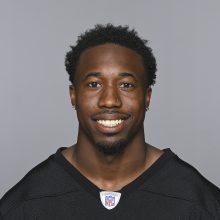 Joey Porter Jr.77Grade
Joey Porter Jr. might be the most physical corner in the NFL, and that's exactly the way he likes it. He is extremely handsy in press-man to the point that he gets flagged often. His length is an asset in breaking up passes, and he's best in zone coverage when he can read and react, breaking on throws and receiver breaks. He had a bounce-back season after a slump in 2024, but has issues with consistency in transitions and run support. Porter Jr. plays the game with an edge and confidence that every defender should have while still possessing room to grow.
195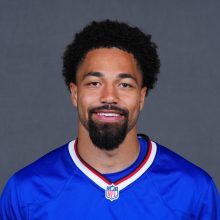 Khalil Shakir77Grade
Khalil Shakir was the security blanket and safety valve for the Buffalo Bills' passing offense. Whenever Josh Allen faced the blitz, he targeted Shakir the most on the team. He's a quick-footed route-runner and excels on short underneath route designs. Shakir is a fun playmaker in space, with his lateral agility and elusiveness, forcing missed tackles on the perimeter. He is not a traditional number-one wide receiver who plays and dominates in every alignment. Shakir is a valuable receiver with a high football IQ who keeps the chains moving.
194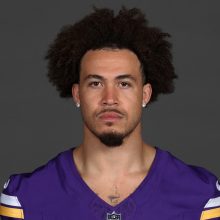 Byron Murphy Jr.77Grade
Coming off a career year in 2024, the table was set for Byron Murphy to ascend as one of the best corners in the NFL. While it didn't go the way he or many in Minnesota wanted, he's still a corner that quarterbacks didn't want to throw at. He saw his fewest targets since 2022 and gave up the lowest passer rating of his career when targeted (73.0). Murphy is a great athlete, and he matches instincts and excellent depth in zone coverage with the ability to jump routes with twitchy movements. He has a tougher time with more physical route-runners in man coverage and saw his penalties spike last season (nine). He moves all around Brian Flores' defense and is a player the defense weaponizes in unique, effective ways.
193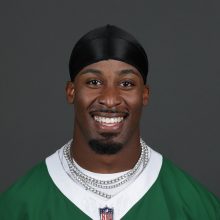 Breece Hall77Grade
2025 was Breece Hall's first 1,000 rushing season of his career. After tearing his ACL in 2022, he's bounced back and looks like his best football is ahead. Hall is great at patiently setting up his blocks and using that explosive burst through the lane to slash through the teeth of the defense. He's a difference-maker as a receiver out of the backfield in the passing game. The Jets aren't known as a diamond mine of offensive talent, but Hall is clearly a diamond in the rough.
192 Josh Hines-Allen77Grade
Hines-Allen is a versatile pass-rusher who has the speed to win around the edge and the power to run through an offensive tackle's chest. He also has good hand-usage to win with a cross-chop and shows impressive athleticism to be an effective looper among line games. Against the run, Hines-Allen has the strength to beat tight ends at the point of attack and the athleticism to make impact tackles when unblocked from the backside. When taking on blocks from offensive linemen, he's often reliant on working around them and often disappears in that phase of the game.
191 Tetairoa McMillan77Grade
The Carolina Panthers selected Tetairoa McMillan with the eighth pick in the draft, and he proved their decision to be correct. He caught 70 passes for 1,014 yards and seven touchdowns. His route-running carried over from college, as he was successful at separating against man and zone coverage. McMillan consistently creates space with his route IQ and stems to manipulate defenders. The drops were frustrating. Passes ricocheted off his hands, which created potential turnovers. McMillan had a good start to a career, but plenty of room to improve with a top-10 ceiling.
190 Alec Pierce77Grade
Alec Pierce is an ascending wide receiver who eclipsed 1,000 yards for the first time last season. Over the last two years, his yards have increased each season. Pierce has stamped himself as one of the league's best deep threat receivers, averaging over 21 yards per reception with 19 air yards per target. The Colts' big-play receiver has grown as a route-runner and separator since entering the draft in 2022. The arrow is pointing upward for Pierce, as long as his quarterback can maximize his explosive ability down the field.
189 Jayden Daniels77Grade
Jayden Daniels' sophomore season was more of a struggle than his rookie year. The former Offensive Rookie of the Year for the Commanders battled injuries last season and was limited to seven games. Daniels dislocated his elbow and dealt with a knee sprain. When he was on the field, he had flashes of the star rookie from a year before. Daniels still throws an accurate ball with anticipation. His athleticism and pocket navigation haven't declined; he can still create something out of nothing under pressure. He needs to get back to being consistent with his reads from the pocket and not locking into a pre-snap decision. Daniels' return to full health will be pivotal to playing at a Pro Bowl level.
188 Connor McGovern78Grade
McGovern reestablished himself as a starting center in 2025, building on the transition back to his natural position after spending his first season in Buffalo as a guard. Since becoming a full-time starter in 2022, his durability and steadiness have provided significant value. McGovern wins with processing, alertness and positional leverage more than high-end physical traits. In pass protection, he plays with an aggressive mindset, and uses his length and hand-timing to establish first meaningful contact. He does a good job sorting games, blitzes and late movement from the pivot. He can play upright and lacks top-end power, but he consistently re-leverages, finds his anchor and dies slowly enough to keep the depth of the pocket intact. In the run game, McGovern is most effective using timing, angles and movement skills to intersect targets at the second level rather than creating consistent displacement. He is not an elite-trait snapper, but his processing, hand usage, durability and technical reliability give Buffalo a dependable, high-floor starter in the middle.
187 Reed Blankenship78Grade
Having a safety on your roster that just "gets it" is a huge bonus to the defense. Reed Blankenship isn't the best athlete on the field, but his football IQ makes up for a lot of that. He plays fast with play recognition, takes away routes over the middle of the field, and can handle whatever type of rotation the DC hands him. A hard worker and leader both on and off the field, Blankenship is a consistent player who wants to tackle and can be relied upon. He's the adult in the room at all times.
186 Kenny Moore78Grade
With an early-season calf injury that turned out to be Achilles-related, Kenny Moore came back in Week 7 and played the rest of the season as the Colts' nickel corner. His instincts, tenacity, and play recognition helped him remain a playmaker on defense, but his man-coverage skills suffered, and he was targeted more often as a result. His closing speed still helped limit overall production, and his willingness to support the run from the nickel spot helped. Moore's zone eyes and route recognition keep him among the better coverage nickels in the league, and with an offseason to heal up, he should be back to his usual self in 2026.
185 Darnell Washington78Grade
Darnell Washington is a unique athlete and player, even in the NFL, where they are everywhere. A self-proclaimed 311-pound tight end, and he definitely looks it (in a good way), who moves all over the formation and is a punishing blocker. His aggression can be taken advantage of, and he'll get top-heavy, but he's a weapon in the run game. For a slower player off the ball, if Washington gets the ball in space, he turns into the Juggernaut and can collect bodies on his way to yards after the catch. He still needs to work on his timing within both phases of the game, but a player with his unique talents will be coveted by the Steelers, and for good reason.
184 Emeka Egbuka78Grade
Emeka Egbuka's rookie season was an overall success. He started the season strong with big games against tough defenses, including the Seahawks and the Eagles. Egbuka suffered a low-grade hamstring injury but didn't miss extended time because he played through it. He excels as a route-runner and separation artist. Egbuka's route-running is "no-nonsense" and "intentional". What he lacks in elite speed and acceleration, he makes up for with savvy movement patterns, short-area quickness, and high football IQ. He led the Buccaneers in receiving despite being hindered by a hamstring for most of the season. He is ready to take over the WR1 position going forward.
183 Jourdan Lewis78Grade
Even with an injury-reduced 2025 season, Lewis continued to showcase his impact in the nickel for the Jaguars. Fearless against the run, he's an instinctual downhill mover and does a great job sniffing out routes in zone coverage. He saw a career low in yards per reception (7.6), and while his missed tackle percentage was higher than ever (19.1%), he limited yards after the catch to 183, his best in a season where he saw 50 or more targets. Playing in the nickel is no easy task, and it is getting tougher as teams want to run the ball more at the "smaller" players on the field, but Lewis is one of the guys you want on the field as much as possible.
182 Sam LaPorta78Grade
Before suffering a herniated disc that required back surgery last season, Sam LaPorta was averaging more yards per route run (2.0) and yards after the catch per reception (6.8) than ever in his career. His average depth of target was down from his two previous seasons, allowing him to showcase his burst and feel for making players miss after the catch. While contact through the route in man coverage gives him trouble, LaPorta has a good route tree, and his hands were fantastic before his injury. He's an excellent receiving option, but leaves a lot to be desired as a blocker. The former second-round pick is much better at lining up blocks on the move than sustaining them in-line. He's currently on track to start the 2026 season, and LaPorta will be a big part of the Lions offense once again.
181 Dee Alford78Grade
A twitchy, instinctual mover, Dee Alford turned the best ball production of his career into the biggest payday he's ever seen after entering the NFL as a UDFA. A nickel who's of slimmer build, which shows up in his tackling, Alford was all over the field for the Falcons last season with 13 passes defensed and three interceptions. He undercut throws, baited quarterbacks into poor decisions, and identified routes as they happened. More physical players can make life difficult for Alford, but he's always around the football, which is valuable for any defense. He takes some chances in coverage and his frame limits him to more of a part-time role, but the instincts and football IQ continue to show up on game day.
180 Josh Metellus78Grade
When you watch the Vikings' defense, guys are flying all over the place trying to cause havoc, and Josh Metellus is in the middle of it all, holding it together. He lines up at every level, but played more as a true safety last season than ever before in his career. He fills run lanes quickly from depth, can cut down a route over the middle of the field, and plays with the style of a linebacker who can cover like a safety. The scheme takes him to the ends of the field, and the effort and toughness he shows as a leader are among the traits Flores most wants in his defense. Play fast and tough, and he'll point you in the right direction.
179 Azeez Al-Shaair78Grade
Al-Shaair's combination of instincts and athleticism allows him to navigate the trash and make plays in both phases of the game. He has very good lateral movement skills to move gap-to-gap horizontally and make offensive linemen miss, and his speed gives him impressive sideline-to-sideline range and the ability to close in coverage. The 2025 Pro Bowler also added some ball skills to his repertoire this past season, collecting a career-high nine passes defended. However, he does have a tendency to veer out of his area in zone coverage, allowing a decent amount of catches and yards in coverage.
178 Zach Allen78Grade
Allen makes his money as a pass-rusher, where his combination of hand-usage, solid athleticism and a hot motor allows him to rack up wins along the interior. Against the run, the 2025 All-Pro stands out when facing lower-tier competition but blends in when playing against better blockers. He also experiences consistency issues with tackling that knock him down a peg.
177 Landon Dickerson78Grade
Dickerson gutted out 16 starts last season despite undergoing August meniscus surgery, then playing through back and ankle issues that led to another offseason procedure and stem cell treatment as he worked to get healthy in 2026. The injuries clearly reduced his movement, recovery and finishing consistency. Even a diminished version of Dickerson remained a good starting left guard because of his rare size, square power and anchor strength. At his best, Dickerson is one of the league's most physically imposing guards, capable of commanding the point of attack, eating the bull-rush and creating displacement in the run game. In 2025, that power still showed up, but the lack of normal agility and redirect ability made it harder for him to stay attached, adjust late and finish with his usual force. His pass protection remained solid because rushers still had to work through his mass and anchor, but his margin narrowed when movement was required. Dickerson's grade reflects a slightly diminished, injury-compromised version of a normally high-end guard, with room to jump back up the hierarchy if his health returns closer to baseline.
176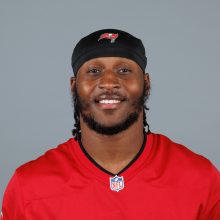 Tykee Smith78Grade
A year-two breakout for Tykee Smith resulted in him nearly doubling his tackling and passes defensed output while truly varying his positional versatility. Predominantly a slot player as a rookie, Smith played mostly as a safety but worked down in the nickel and in the box from a linebacker adjustment. He fits the run well from all levels, sorts through the trash in both phases, and closes to the ball carrier quickly with bad intentions. Smith's emergence helps this young group of secondary members by forming an excellent duo on the back end with Winfield to help bail them out if need be.
175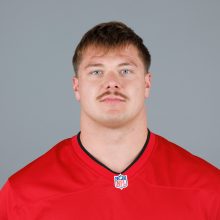 Luke Goedeke78Grade
Goedeke has battled multiple injuries over the last two seasons, including a torn plantar fascia that limited him to 11 starts in 2025. However, his on-field play has quietly settled into rock-solid starter territory. Despite one of the more sawed-off tackle builds, Goedeke has become a very good pass protector by maximizing timing, angles and hand usage. He uses a 45-degree set to reach his landmarks on schedule, then compensates for middling length with some of the league's craftier hands, including a high-low circle punch that allows him to evade, latch and clamp into rushers' frames. Once attached, his contact balance and light feet help him stay connected up the arc and redirect against counters. The limitations still show up against rushers who can attack his exposed chest with stutter-bulls or win quickly around the edge with well-timed ghost moves. In the run game, Goedeke is more solid than forceful, relying on balance, leg drive and strain to steer defenders long enough for concepts to hit. His frame creates some hard limitations, but his hand usage, balance and pass-protection craft make him a valuable starting right tackle when healthy.
174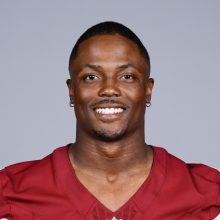 Terry McLaurin78Grade
Terry McLaurin established himself as a walking 1,000-yard receiver over the years. Additionally, he's proven to be a quarterback-proof receiver who can produce despite not having an elite-caliber passer under center. Last season, he played 10 games due to a lingering quad injury. McLaurin is a good No. 1 receiver with a strong route-running skill set to create needed separation. He wins from all receiver alignments in the formation. A healthy season from him and Jayden Daniels could result in a career year for McLaurin.
173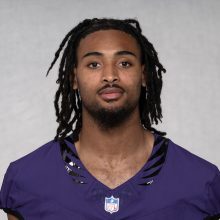 Nate Wiggins78Grade
One of the top up-and-coming man corners in the NFL, Wiggins saw some tough times near the end of the season that summed up the Ravens' 2025 struggles. While he showcased better route recognition in zone, instincts to drive on throws and routes, and turned over the ball more with three interceptions, being targeted the most times in the NFL (113) will wear down almost any corner. He gave up 811 yards and three touchdowns. Even with some end-of-season struggles, Wiggins has the intellectual prowess and ball skills to challenge receivers and take another step in year three.
172 Courtland Sutton78Grade
Cortland Sutton has excelled as the prototypical X and No. 1 wide receiver for the Denver Broncos. He's handled the high volume in their passing offense well, crossing the 1,000-yard mark three times in his career. Finally, he is no longer held back by inadequate quarterback play. He is the safety net for Bo Nix, helping him settle into the NFL in his first two seasons. Sutton is a three-level winner with sneaky speed to get over the top of the defense. He's proven with a good quarterback he is a walking 1,000-yard playmaker who's overcome a torn ACL earlier in his career.
171 Trey Hendrickson78Grade
Despite only playing in seven games last season, Hendrickson still showed plenty as a pass-rusher. The 2024 league sack-leader can turn speed-to-power, work the hands and is incredibly smooth for his size. However, the nine-year veteran has never been known for his run defense and relies on working around blocks or going unblocked to make quality contributions in that phase of the game.
170 Armand Membou78Grade
Membou started all 17 games as a rookie and immediately announced himself with a dominant Week 1 performance against T.J. Watt. An impressive physical profile translated quickly. Membou plays with natural leverage, core-strength and explosive power, giving him the ability to flip leverage late in reps and create full-body knockdowns at a rare rate for a young blocker. His burst and power also appeared on backside cutoffs, climbs and downfield finishes, where he could get defenders on their heels and steer them into displacement. Refinement and nuance remain a work in progress. In the run game, Membou can drop his eyes and get too heavy on contact, especially on frontside kickouts, leaving him susceptible to overextension. In pass protection, his outside hand can land too far down the middle of rushers, giving savvy edge defenders a path to set him up inside before attacking high side. Even with those technical cleanups remaining, Membou's rookie tape showed a starter-level floor, with rare physical flashes and enough high-end traits to project a notable upward trajectory.
169 Baker Mayfield78Grade
Baker Mayfield is one of the fiercest competitors in the NFL pound-for-pound. Last season, despite injuries piling up for the Buccaneers, he continued to battle and put them in position to win the division. Mayfield still has that gunslinger mentality, which has Jekyll-and-Hyde results. Four of the team's eight wins were game-winning drives or 4th quarter comebacks last season. Mayfield's arm strength still powers the football to all three levels of the field. He can drive the football with velocity. He's proven to be a good, quality starting quarterback that NFL teams can win with.
168 Garrett Wilson78Grade
Garrett Wilson was a consistent 1,000-yard receiver until last season, when he played only seven games. He injured his knee in Week 6 and re-aggravated it in Week 10. Wilson is a talented receiver who plays all over the formation. He is a good route-runner but has been held back by inadequate quarterback play over his career. Wilson separates from man and zone defenses well with good football IQ and tempo. He's a sudden and fluid route-runner who will test cornerbacks' movement skills. He's one of the biggest "what-ifs" in the NFL; hopefully, a good quarterback will walk through the Jets' doors before it's too late.
167 Tuli Tuipulotu78Grade
Tuipulotu made what will be his first of many Pro Bowls last season. He's gotten better and more productive as a pass-rusher every year so far, going from 4.5 sacks as a rookie to 13.5 sacks in 2025. The reason the USC product has a bright future in the NFL is that he can win in a variety of ways: turning speed to power, working the hands, with quickness around the edges, on stunts, and he does it from multiple alignments. Tuipulotu does have more work to do as a run defender, but he isn't bad in that phase of the game by any means.
166 Tee Higgins78Grade
Alongside Ja'Marr Chase, Higgins receives favorable matchups and puts defenses in conflict. Double Chase and leave him one-on-one, or play them honestly. Higgins has vice-grip hands and will pluck the ball out of the air with an aggressive mentality. He attacks and finds those soft spots in zone defenses quickly as a big target. Higgins is open against man coverage, even with a defender nearby; he opens throwing windows with his contested catch ability. He is not the greatest route-runner or natural separator, but he gets the job done, using his frame as a shield between the ball and the cornerback.
165 Justin Reid79Grade
Splitting his time on the back end and in the box for the Saints' defense, Justin Reid brought physicality, communication, and leadership with him to New Orleans. He was one of the veterans in a young secondary last season and allowed the lowest passer rating (76.8% according to NFLPro) in 2025 since his time in Houston. His well-rounded game and big nickel abilities were not tested as much as in previous seasons, with only 31 targets to his name. Reid is an underrated safety and a big-game player. If the Saints continue on the path they ended last season, he could see more big games in his future.
164 Stefon Diggs79Grade
Stefon Diggs, who signed with Washington late in the offseason, is a floor-raising veteran who has established himself as a WR1 throughout his career. Last season, he was reliable for Drake Maye in New England. While Diggs' air yards per target were the lowest of his career, he was the security blanket and excelled in the quick passing game. Diggs proved his route-running ages like fine wine. His quick separation from man and ability to find open grass quickly against zone defenses helped the Patriots' second-year quarterback. Diggs is a lesser athletic version of himself, but it didn't hinder him from producing and being a consistent playmaker in 2025.
163 Hunter Henry79Grade
Having a tight end like Hunter Henry helped Drake Maye's MVP candidacy, as he was one of the most impactful red zone threats in the NFL. Five of his seven touchdowns came inside the 20-yard line, along with a target percentage north of 30% on the season. Maye was looking for Henry in "gotta have it" situations all season long, and it proved beneficial. He averaged his best yards after the catch per reception of his career (5.6) last year, was a great post-route space finder, and a versatile receiver for the Patriots offense. Henry knows how to get open, and when you pair that with a quarterback that finds creative ways to get him the football, it's a dangerous combination.
162 Jalen Thompson79Grade
The Cardinals used Thompson in various ways to cover holes in their defense (due to injury) and to get more defensive backs on the field. While he can come down in the box, his size and ability are better suited to split field or post safety. He's a sound tackler and plays with play recognition and recovery skills on top of a defense. Thompson matches routes with the quarterback's eyes well and triggers downhill when the throwing motion starts. He and Budda Baker have been one of the best safety tandems in the NFL over the past few seasons, and now he's headed to Dallas to help shore up a defense that desperately needs it.
161 Ladd McConkey79Grade
Ladd McConkey is one of the best young slot receivers in the NFL. He is a reliable chain mover with precise route running to get open quickly. Out of the slot, he is a security blanket and keeps the offense on schedule. McConkey has a high football IQ for reading and attacking defenses post-snap. He is a patient, smart route-runner who excels against zone coverage. He finds grass and settles into the open space. McConkey lacks the functional strength to consistently play through contact at the catch point. Handsy cornerbacks will disrupt him at the line of scrimmage, placing more onus on the offensive playcaller to create easier releases into his routes. Good player with a safe floor.
160 Jake Ferguson79Grade
One of the most dangerous seam weapons in the NFL, Jake Ferguson continues to showcase his value with quarterback Dak Prescott. He has a great feel for the top of routes, whether using physicality or footwork, and gets his head around in a hurry to locate the ball. Ferguson's ball skills make him a fantastic red-zone threat and a trusted player through contact. He's not out there to block much, but he gets the job done and, on the move, provides kick-out blocks for the offense. Ferguson caught more balls and touchdowns than at any point in his career and is poised for another explosive year with the same offense going forward.
159 Christian Benford79Grade
Benford didn't have the start to 2025 he was hoping for after giving up three touchdowns over the first four weeks of the season and getting picked on a bit. But after the bye week, he turned things up and got into a groove that saw him give up only 158 yards over his last eight games played to end the regular season. He blitzed more often, generating two sacks in the process, and played faster all over the field. A much better zone defender than man corner, Benford is a sure tackler and one of the best run defenders at the cornerback position. It wasn't his best season in terms of ball production, but he'll look to carry his improved play into his fifth season.
158 Ed Oliver79Grade
When healthy, Oliver is one of the league's most disruptive interior defensive linemen. Some boom-or-bust element exists within his game, but the seven-year pro is a gap-shooter who can frequently be found in opposing backfields against both phases of the game. However, injuries rattled Oliver last season thanks to a sprained ankle, biceps tear and a meniscus issue before returning for a handful of snaps during the AFC Championship Game, only to leave said game early after re-aggravating the knee. Possible regression should be expected after the injury-fraught campaign.
157 Erik McCoy79Grade
McCoy was limited to seven starts for the second consecutive season, this time due to a torn biceps suffered in Week 7 after missing a large portion of 2024 with a groin injury. On the field, McCoy still looked like one of the league's better centers. He remains an explosive, athletic pivot with the movement skills to reach, climb, pull and create impact blocks in space, giving New Orleans a true run-game catalyst. In pass protection, McCoy plays with quickness, leverage and enough anchor to stay firm against most interior rushers, while his processing and range allow him to sort movement and stay connected through line games. He is not quite as refined with his hands as the elite centers, and his strike placement can create some variance against high-end interior rushers. Few glaring weaknesses can be found within his skill set. Availability is the issue. McCoy has played fewer than half the games over the last two seasons, turning what would otherwise be a clear high-end center profile into a more conditional evaluation entering the 2026 campaign.
156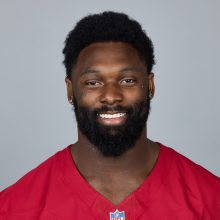 Josh Sweat79Grade
Sweat has been a productive pass-rusher for several years now, heading into his ninth NFL season with 55 career sacks. A big reason for that is he has several ways he can win, showing good speed off the edge, the ability to work the hands, and the combination of quickness and savviness to stem outside and beat the tackle inside or vice versa. The 2021 Pro Bowler isn't as impactful against the run, but he can beat tight ends at the point of attack or make tackles when unblocked on the backside of zone runs to contribute on early downs.
155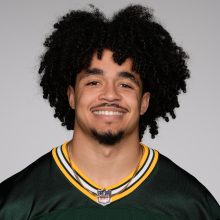 Evan Williams79Grade
Making a fantastic pair on the Packers' back end, Evan Williams mirrors Xavier McKinney in a lot of ways, but just hasn't seen as much ball yet in only his second NFL season. There are still some false steps and signs that he's thinking too much in coverage, but he feels the game very well. Williams handles rotations to any area of the field, has good range, and is an impact run defender. He started 15 games for the Packers last season and watched his ball production increase. As he gains more football knowledge and trusts his eyes in coverage, the arrow is pointing way up for Williams.
154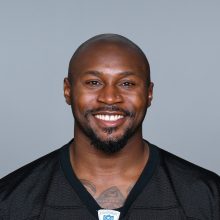 Jamel Dean79Grade
After facing a murderers' row of receivers last season, Dean had one of the best seasons in the NFL and turned it into a nice payday. He set career lows in passer rating allowed (41.3%) and yards allowed (260), and did a great job limiting yards after the catch. Reading route concepts, triggering on body language, and getting consistent, good depth as a zone defender regularly put Dean in a great position. He limited missed tackles and played a physical brand of football, and brought a good all-around performance in his seventh NFL season.
153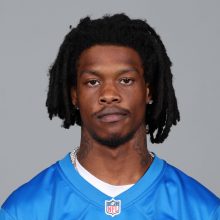 Jameson Williams79Grade
Jameson Williams has emerged as a strong complementary option alongside star receiver Amon-Ra St. Brown. He enters the 2026 NFL season coming off consecutive 1,000-plus-yard seasons. Williams is a dynamic playmaker with great straight-line speed to win vertically. He is a threat to take the top off the defense at any moment. The Lions' speedster is a versatile weapon and an easy target with manufactured touches. Williams has improved his route IQ and is a dangerous yards-after-catch threat in the open field. It didn't matter if he faced man or zone coverages; Williams made plays. He must clean up the drops to maximize his explosive potential.
152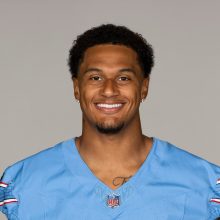 Alontae Taylor79Grade
An extremely versatile chess piece, Alontae Taylor is a havoc-creating nickel who has excellent football IQ and quick reaction time. He's a physical man-coverage defender who does a great job attacking the catch point and getting his head around. He tends to miss tackles and not always give his all against the run, but he's a high-energy player and gets his defense juiced up. He adds value as a blitzer with seven sacks over the past three seasons and routinely shows off his closing speed to the football. No matter where he's playing, he's a guy to watch out for.
151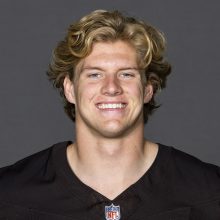 Carson Schwesinger79Grade
In the span of about two years, Schwesinger has gone from a linebacker who barely saw the field for UCLA to the 2025 NFL Defensive Rookie of the Year. That's a testament to his work ethic, which shows up on the field the most through his instincts. Against the run, the former Bruin isn't fooled by eye candy and is constantly in the right spot to make tackles near the line of scrimmage. Coverage is where Schwesinger has the biggest room for improvement heading into year two. His eye discipline and awareness need to improve in zone coverage, as he gave up a good amount of catches by not recognizing threats coming into his area or drifting out of his zone.
150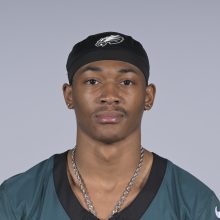 DeVonta Smith79Grade
DeVonta Smith is a talented and smooth-moving wide receiver with great instincts and IQ. He changes directions as a route-runner quickly and suddenly. Smith's routes have little wasted movement at the top to snap off and create space between him and the defender. His IQ against zone coverages is great; he manipulates spot droppers with pacing to find open grass. Smith's slender frame creates issues against physical defenders early in reps. He can be re-routed or slowed down by press coverage. He enters 2026 without AJ Brown as the number one threat for opposing defenses to key in on. It will be interesting to see how Smith handles WR1 duties and defensive attention.
149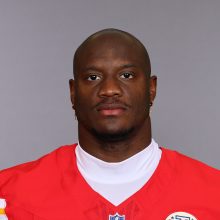 Kenneth Walker III79Grade
Kenneth Walker III is coming off his second 1,000-yard season and was named the Super Bowl MVP. He is a shifty runner with quick and sudden footwork. Walker is a smooth mover with outstanding vision. Walker's lateral agility and explosiveness create pathways to string together jump cuts outside to the perimeter. While he may not run a wide route tree, he is a capable receiving option out of the backfield. Walker's open field speed and acceleration highlight his dynamic playmaking ability. He has battled injuries throughout his career, keeping him from consistently being the full-time bell cow. Walker is a patient and dynamic running back who tips the scales in his offense's favor.
148 Jared Goff79Grade
Jared Goff has established himself as one of the better in-structure quarterbacks in the league. He excels within clean pockets that allow him to survey the field and find the open receiver. Goff is a timing-and-rhythm passer with a superpower: accuracy. Goff is coming off his fourth consecutive 4,400-plus-yard passing season with six 4,000-yard seasons over his eight-year career. The Lions' starter has struggled in outdoor games and while playing in the elements. Also, pressure highlights his lack of mobility in the pocket. If consistently pressured, his process is rushed, leaving decision-making vulnerable. Goff is a very good starter with a capped ceiling.